Where should you keep your pet's urn at home?
Pick a stable, dry spot out of direct sun, somewhere you pass every day but nobody brushes against. Keeping ashes at home is common: 37%[1] of people in one national survey said they'd keep cremated remains in an urn at home.
By the Pet Urns & Keepsakes editorial team · Updated September 24, 2026 · 5 min read · Sources
- Room-by-room pros and cons, from mantel to bedside
- Protecting the urn from sun, damp, cats and toddlers
- Simple ways to build a memorial corner around it
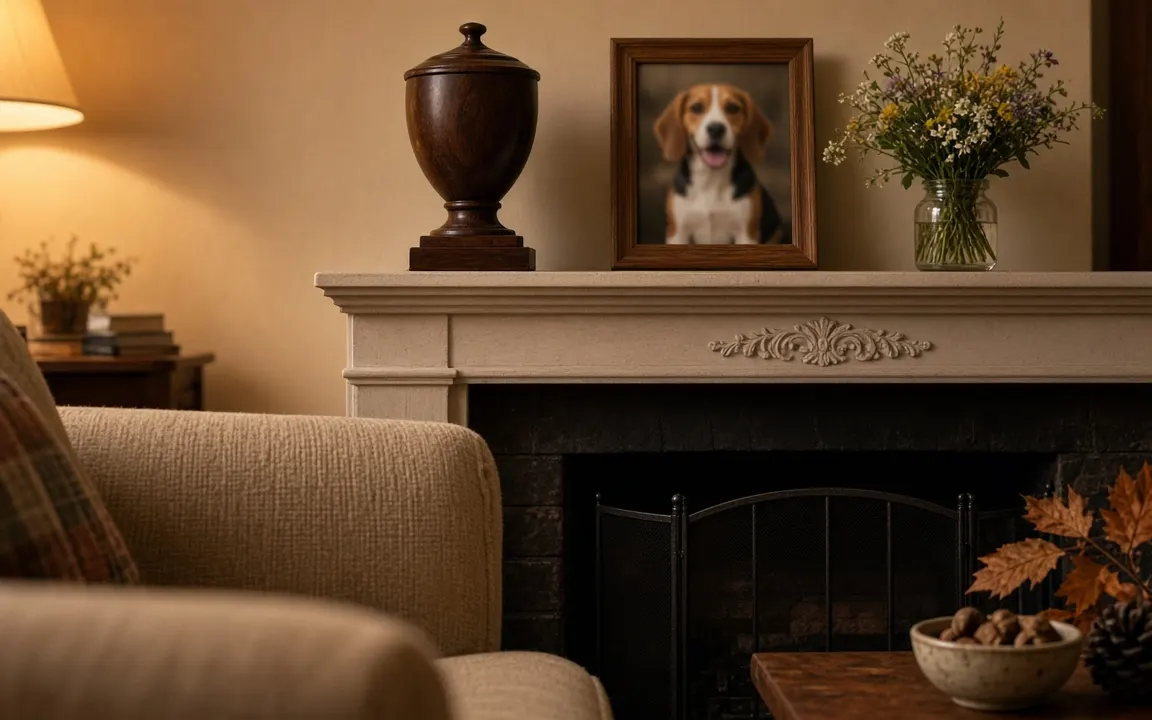
The short answer
What makes a good spot for a pet urn?
A good spot has four things: a solid, level surface, no direct sun or heat, low humidity, and enough height or enclosure that other pets and small children can't knock it over. After that, it's personal. Some people want the urn where they'll see it every morning; others find that too much at first and prefer a quieter corner.
There's no rule that says an urn must be on show. A closet shelf or a drawer lined with a favorite blanket is a respectful place too, and plenty of families move the urn out into view months later, when it feels comforting rather than raw.
Where does (or will) your pet's urn live?
Tap an answer to vote and see how others answered. Anonymous.
Room by room
Which room should the urn go in?
| Spot | Why people choose it | Watch out for |
|---|---|---|
| Living room mantel | Central, visible, a natural focal point | Heat from a working fireplace; candles too close |
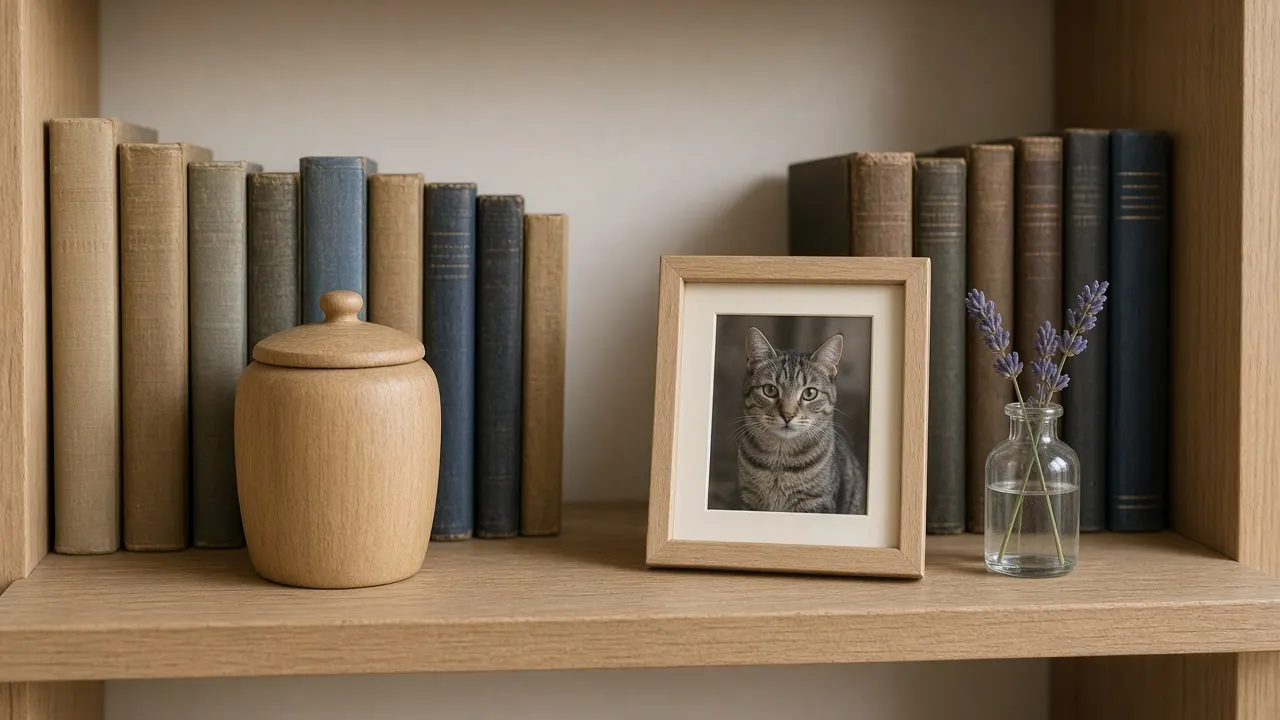
| Bookshelf | Quiet and part of everyday life | Shelf depth, and cats who walk along shelves |
| Bedside table | Close at night, where many pets slept | Being knocked by a sleepy hand or a lamp cable |
| Hallway console or entry | Greets you as you come home, as your pet did | Busy traffic, bags and coats brushing past |
| Home office | Company during the working day | Direct sun through a desk window |
| Closet or drawer | Private, calm, out of sight for now | Damp exterior walls; forgetting to tell family |
The place your pet loved is often the right answer. A dog who waited by the front window, or a cat who slept on the bookcase, gives you a spot that already means something. Just check it against the four basics above before you settle.
Safety
Will your shelf hold the urn safely?
The ashes themselves aren't heavy. Cremated remains weigh about 3-5% of body weight[2], so even a median giant-breed dog returns only around 3.8 lb[3] by our estimate. The urn is what adds weight: a stone or glass urn for a large dog can be several times heavier than the ashes inside it.
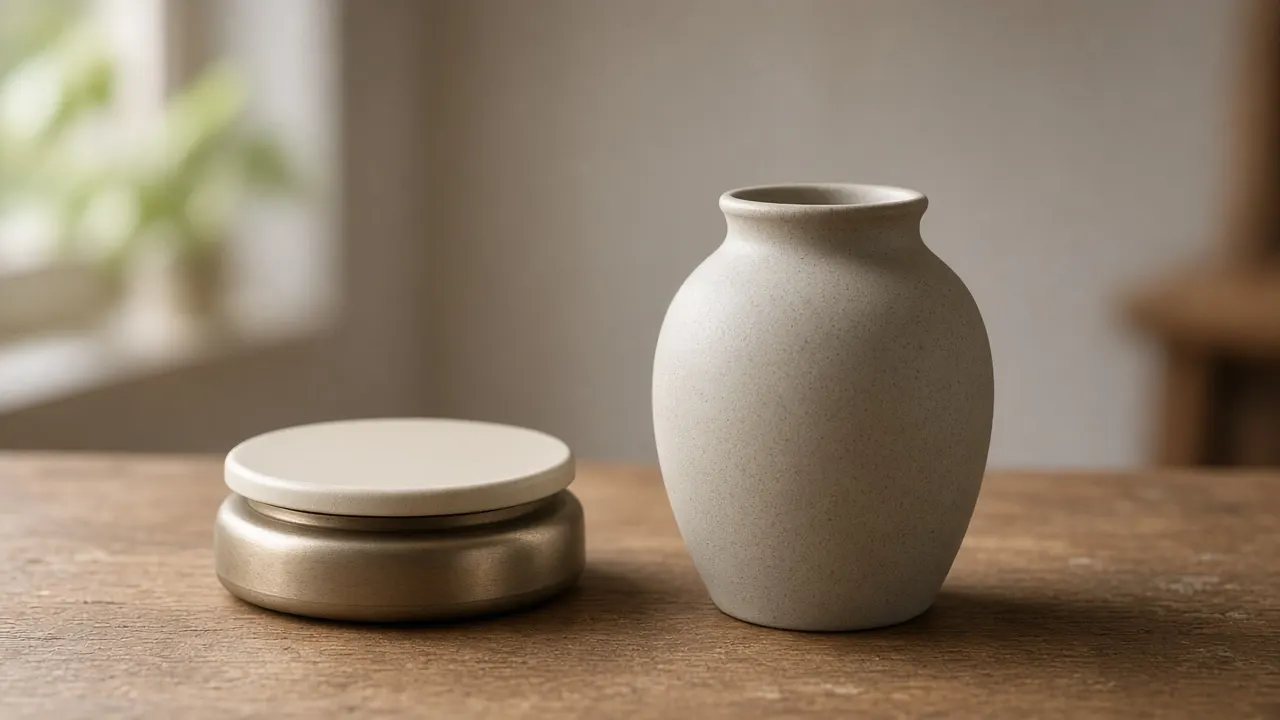
Free tool
Ashes weight estimator
See roughly how much ash to expect back, by species and body weight.
- Floating shelves hold less than they look. Check the bracket rating before placing a stone or glass urn on one; the ashes weight estimator tells you what the ashes add.
- Glass shelves in display cabinets are fine for wood and ceramic urns but can crack under a heavy marble base.
- Museum putty or wax under the base stops an urn sliding if a door slams or a dog's tail sweeps past. It's removable and cheap.
- Earthquake areas: a small lip on the shelf, or a clear acrylic stop, keeps an urn from walking off during shaking.
If you haven't chosen the urn yet, material affects all of this. Our pet urn materials guide compares how heavy and fragile each one is.
Sun, heat and damp
Does sunlight or humidity damage a pet urn?
Over months and years, yes, depending on the material. Strong sun fades printed photo panels, bleaches some woods and darkens others, and can warm a sealed glass urn noticeably. Radiators and working fireplaces dry out wood until joints open slightly. Damp, especially against an exterior wall or in a bathroom, makes wood swell and can tarnish unlacquered brass.
The ashes inside aren't affected by any of this; they're mineral and stable, and they usually stay sealed in their plastic bag inside the urn. It's the urn's finish you're protecting. For cleaning and polishing each material, see placing and caring for a pet urn at home.
Busy homes
How do you keep an urn safe from other pets and children?
Surviving pets are a common reason urns get knocked over. Cats in particular investigate anything new that smells familiar. Children, meanwhile, may want to hold the urn, which can be lovely when it's supervised and alarming when it isn't.
- Choose an urn with a screwed base or threaded lid rather than a loose push-fit lid.
- Keep the ashes in their sealed bag inside the urn, so a fall doesn't mean a spill.
- Place it at adult shoulder height or inside a glass-fronted cabinet.
- Give children a small keepsake of their own, such as a paw print or a photo, so the urn isn't the only thing they can hold.
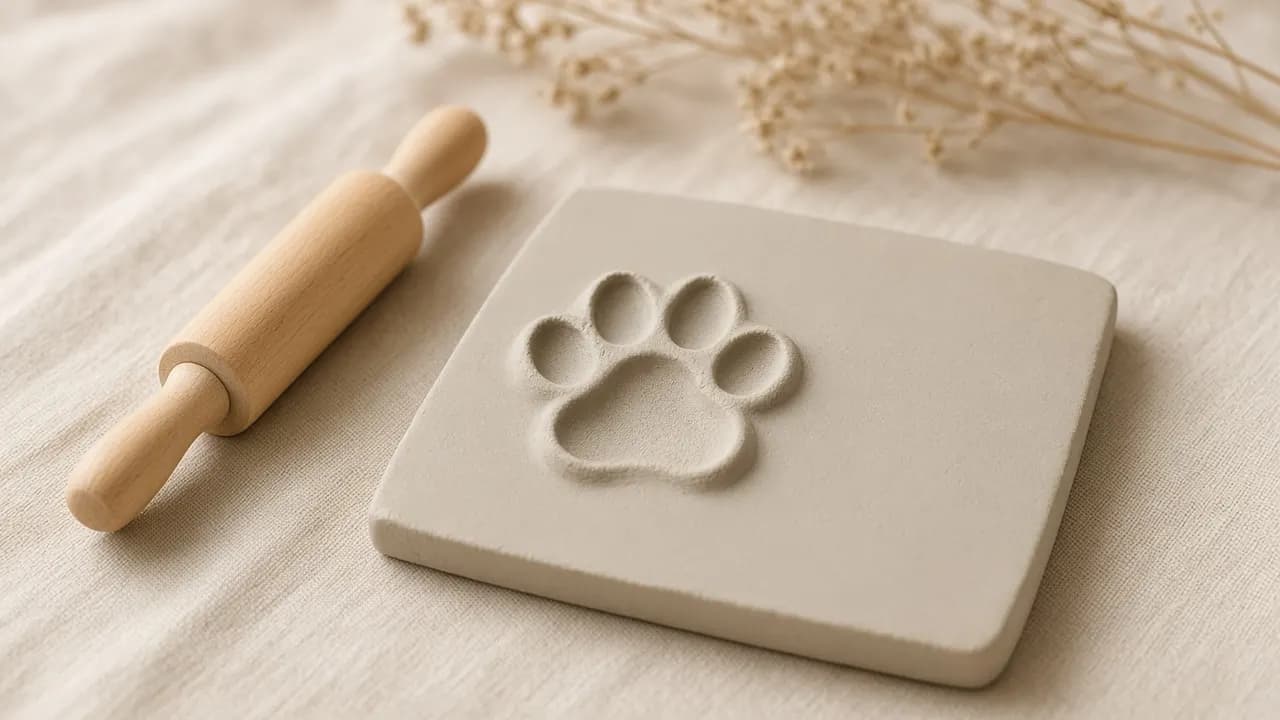
A paw print is often the thing children treasure most. The paw print keepsake chooser helps you pick a kind that suits your pet's size and coat.
Making it meaningful
How can you create a memorial corner around the urn?
Many families build a small arrangement rather than placing an urn on its own: a framed photo, the collar or ID tag, a favorite toy and perhaps a candle for anniversaries. It gives the loss a place to live in the house. That can matter a great deal when so much of the pain is about missing routines; in one large survey of bereaved owners, 72.6% said they'd lost their daily routine or sense of purpose[4].
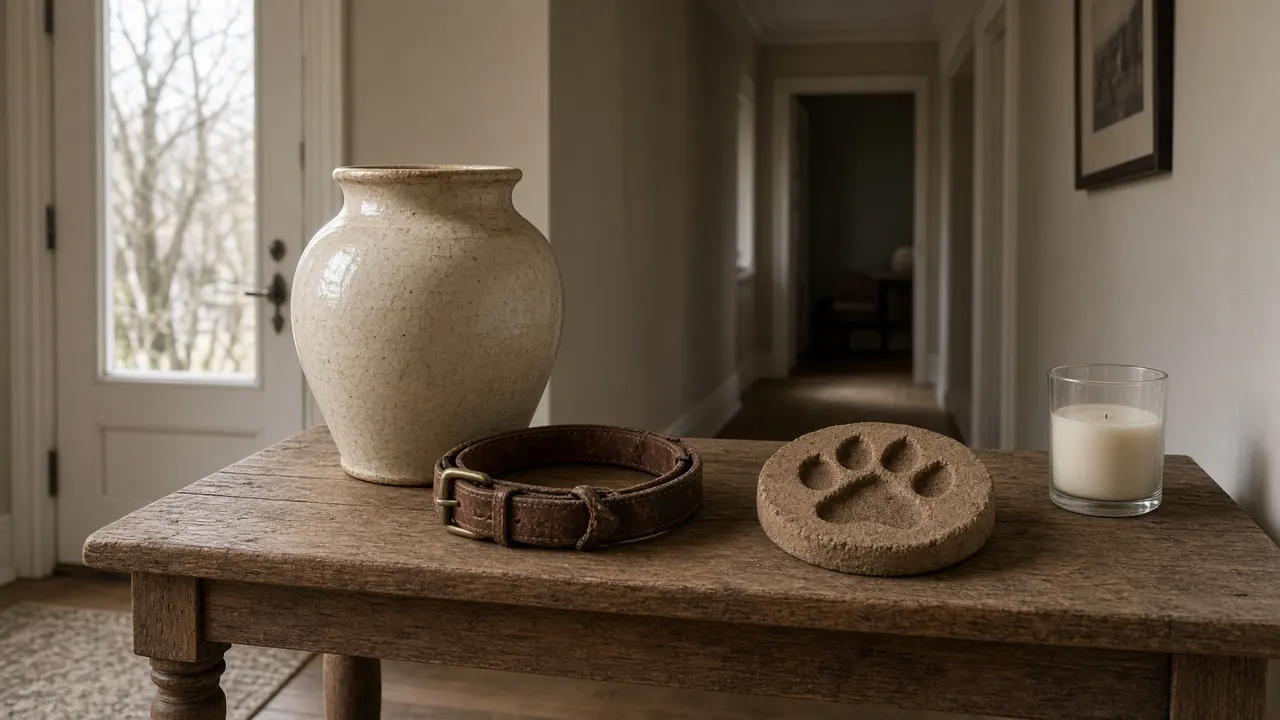
If more than one person wants to keep something, a small share of ashes in a keepsake urn can sit in each home while the main urn stays put. Primary urn or keepsake share explains how families divide those roles.
Later on
Can the urn go in the garden, or move house with you?
Most indoor urns shouldn't live outside. If you'd like a garden memorial, a weatherproof stone urn is one route, and our locations pages cover how local climate affects outdoor options; outdoor rock and sandstone pet urns cost around $300–$395[5] at one crematory. Another is to keep the urn indoors and place an engraved garden stone outside, which by our estimate can cost from about $39[6].
Moving the ashes into the garden itself is simpler than many people think. In England, GOV.UK's guidance on animal burials says you can bury or scatter one pet's ashes on your own land without permission; US rules vary by city and county. If the urn will travel by plane when you move, the TSA's page on cremated remains explains why a wood or plastic container is easiest to screen.
If you rent or expect to move, choose something portable and pack it as carefully as you'd pack glassware: bag inside, urn wrapped in towels, carried in the car rather than the moving truck. For longer journeys, see traveling and flying with pet ashes. And if you'd like help finding an urn that suits the space you have, tell us about it and we'll email options that fit.

Reader polls
What would you choose?
Vote anonymously and see how other readers answered. The results are live counts from people who visit this site, so they show real opinions, not a scientific sample.
Where does (or will) your pet's urn live?
Tap an answer to vote and see how others answered. Anonymous.
Where are (or will be) your pet's ashes?
Tap an answer to vote and see how others answered. Anonymous.
Do you keep more than one memorial for the same pet?
Tap an answer to vote and see how others answered. Anonymous.

Questions people ask
Is it bad luck to keep pet ashes in the house?
No. That idea comes from a few cultural and religious traditions, not from any practical concern. Keeping a pet's ashes at home is common and completely safe. If someone in your household feels uneasy, a closet shelf or a garden memorial can be a gentle compromise while you talk it through.
Should I keep my pet's urn in the bedroom?
If your pet slept with you, a bedside or dresser urn can feel comforting, and many people choose it. If it keeps you awake or makes mornings harder, move it somewhere you pass during the day instead. There's no wrong answer, and you can change your mind as often as you need.
Can I keep my pet's urn in a closet?
Yes. A closet or drawer is a private, respectful place, especially in the first weeks. Choose one on an interior wall so it stays dry, and let others in the household know where the ashes are so they're never moved by accident.
Will my other pets react to the urn?
Some sniff it or sit near it, especially cats, because the urn may carry familiar smells from bedding placed beside it. Most lose interest within days. To be safe, choose a closed urn with a secure lid, keep the ashes bagged inside, and place it where a jumping cat or wagging tail can't reach.
Is it safe to put a pet urn near a fireplace?
On the mantel of a decorative or rarely used fireplace, yes. Above a fire that's lit often, heat can dry and crack wooden urns, loosen glued plates and fade photo panels. Stone and metal cope better. Keep candles and open flames well away from wooden urns.
What should I do with the urn if I move house?
Carry it with you rather than sending it in a moving truck. Check the lid or base is secure, keep the ashes in their inner bag, wrap the urn in towels and place it in a box on a seat or footwell. Keep the cremation certificate with it in case you ever need to show what's inside.


Sources and our estimates
- [1] In NFDA's 2025 consumer research, 37% said they would keep cremated remains at home in an urn, and 33.5% would scatter them. Cremation.Green summary of NFDA 2025 Cremation & Burial Report, 2025.
- [2] Embrace notes cremated remains typically weigh about 3-5% of the pet's original body weight. Embrace Pet Insurance - Bury or Cremate Your Dog? Costs, Pros & Cons, 2025.
- [3] A median-weight giant-breed dog (48.8 kg / 108 lb) would be expected to return about 1.71 kg (3.8 lb) of cremated remains, needing an urn of about 108 cubic inches. Our estimate: 48.8 kg x 3.5% x 2.2046 lb/kg; urn = 108 lb x 1 cu in/lb. How we calculate.
- [4] After losing a pet, 72.6% lost their daily routine or sense of purpose, 69.8% had trouble concentrating and 65.9% had sleep problems. RSPCA — Pet Loss Survey Results, 2026.
- [5] Outdoor rock and sandstone pet urns cost $300–$395 at Final Gift; a scattering tube costs $18. Final Gift Pet Memorial Center – Memorial Products, 2026.
- [6] Engraved pet garden stones start at about $39 at the median of three US sellers. Our estimate: median of starting prices [$38 Adirondack, $38.95 Memorials.com, $89.99 Comfort Co.]. How we calculate.
Find an urn that suits the spot you have
Tell us what you need and where you are. We'll reply by email with clear options and prices so you can decide in your own time.