Wooden Pet Urns
Handcrafted hardwood urns in walnut, oak, cherry, and maple with personalized engraving options.
Wood, ceramic, stone, biodegradable, and photo urn categories with sizing context. For jewelry, garden stones, tree urns, or paw kits, use the matching specialty brand.

Confirm live quotes with independent providers or makers.
AI-created editorial image for education; not a photographed provider, facility, customer, or service result.
Optional deeper reading
Open the full long-form guide for terminology, process comparisons, evidence requests, trade-offs, and provider interview questions.
Urn selection goes sideways fast when families browse by aesthetics first and discover the capacity math later. The rule is simple — approximately one cubic inch of interior space per pound of body weight — but the emotional math is harder. You are not comparing dimensions on a spec sheet. You are choosing the object that will sit in your home for years, perhaps decades, holding what remains of a companion.
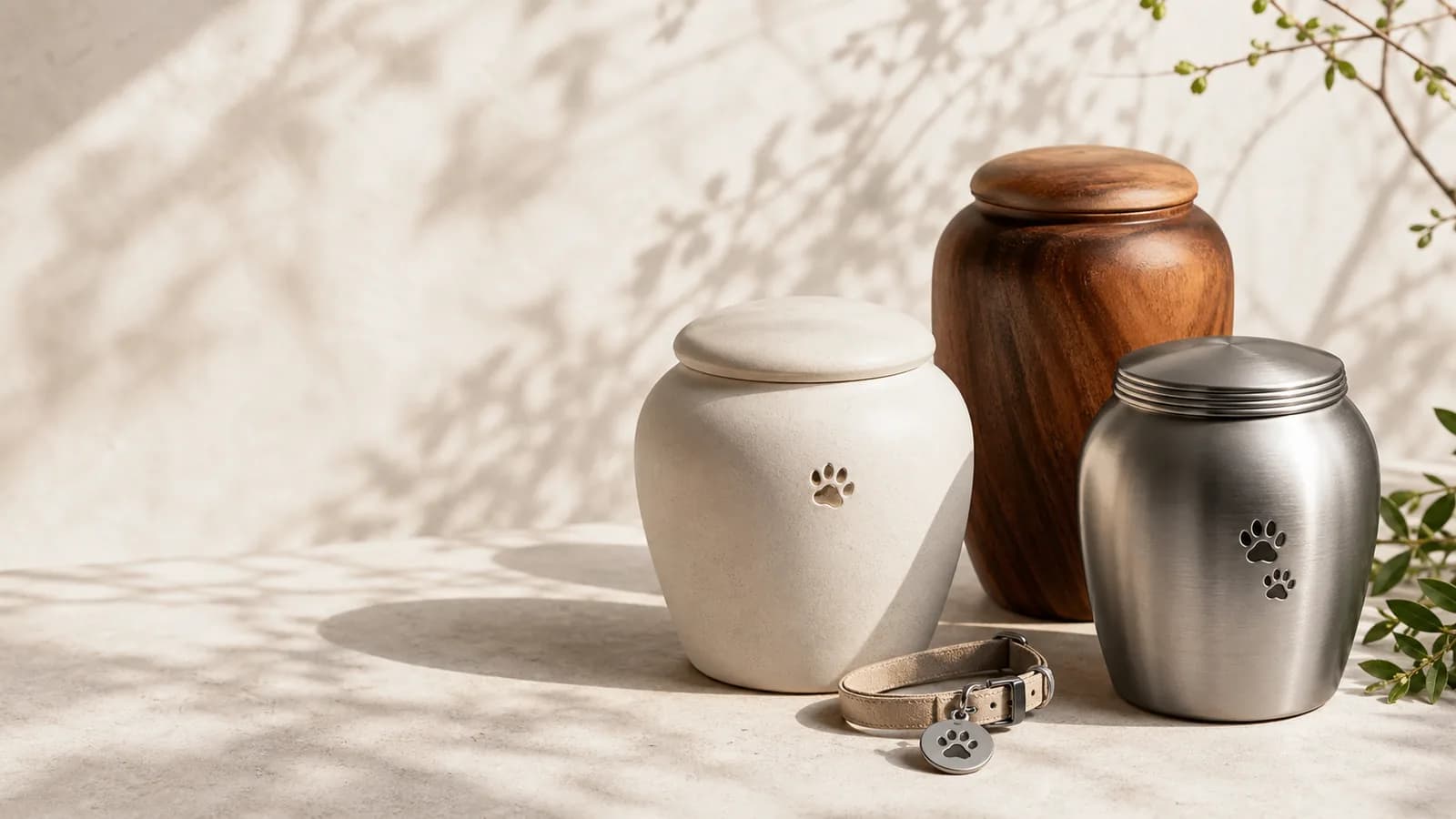
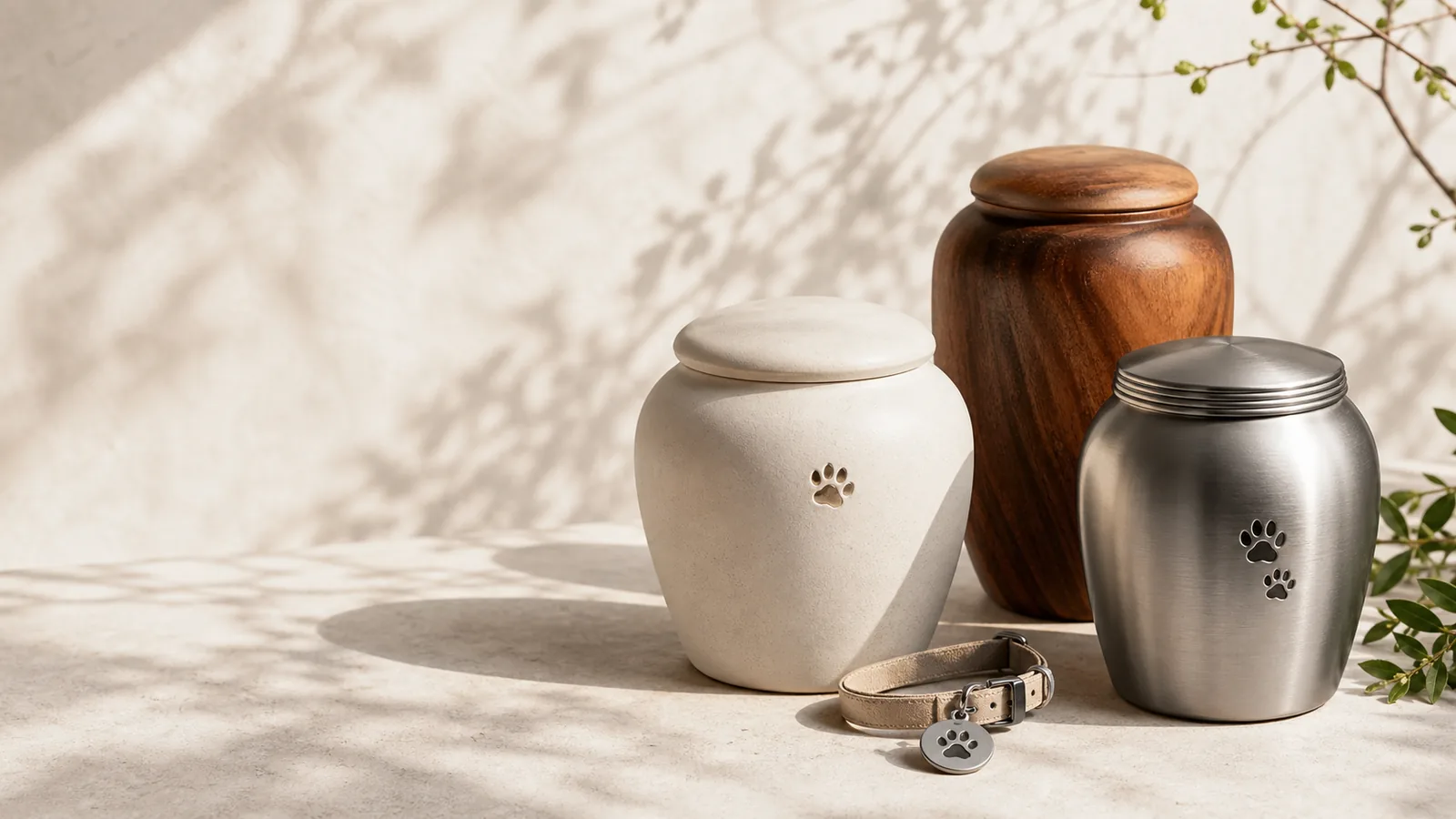
This guide breaks down the four major material categories that dominate the primary-urn market. Wood: handcrafted in walnut, oak, cherry, or maple, often with laser engraving and velvet lining. Warm on a shelf, graceful with age, and available in sizes from tiny keepsake boxes to large-capacity vessels. Ceramic: glazed, hand-painted, and sculptural, with a visual softness that wood doesn't deliver — but also more fragile in households with pets or children. Stone and granite: durable, weighty, often used for outdoor memorials (see our Memorial Stones brand) but also available as indoor mantel pieces. Biodegradable containers: designed to return to earth — plant fiber, water-soluble options, tree-planting kits — which deliberately reject the permanence that the other three categories promise.
Your material choice should answer one question: where will this urn live, and for how long? A walnut urn on a dry mantel will age gracefully for decades. A ceramic urn on a bathroom shelf near steam will fare worse. A biodegradable container buried in the garden begins its return immediately. Match the material to the environment, then choose the size, then — only then — worry about engraving fonts and wood finishes.
Engraving is a separate decision within the material decision. Laser engraving on wood is crisp and controlled. Chemical or sand-blast etching on stone produces deeper, rougher lettering that weathers outdoors. Ceramic engraving often happens before the final glaze firing, which means you need to commit to text before the vessel is made — not after you receive it. Photo frame urns merge engraving with a portrait inset, combining two tribute formats into one object. Every engraving choice involves lead time: confirm proofing process, error correction policy, and production window with the maker before placing an order.
Finally, know what this brand does NOT cover before you spend energy searching for it here. Ash-fill jewelry (pendants, rings, bracelets) lives on the Cremation Jewelry brand. Outdoor garden markers and benches live on Memorial Stones. Living tree-planting systems live on Bio Urns. Keeping those product categories separate means this guide can go deep on primary vessels without turning into a forty-category mail-order catalog with no real detail on any of them.
If you only have two minutes,measure your companion's weight, decide whether the urn lives indoors or outdoors, and pick wood (warm), ceramic (colorful), stone (forever), or bio (return-to-earth). Then confirm cubic-inch capacity before you buy. Everything else — finish, font, photo inset — is downstream from those four decisions.
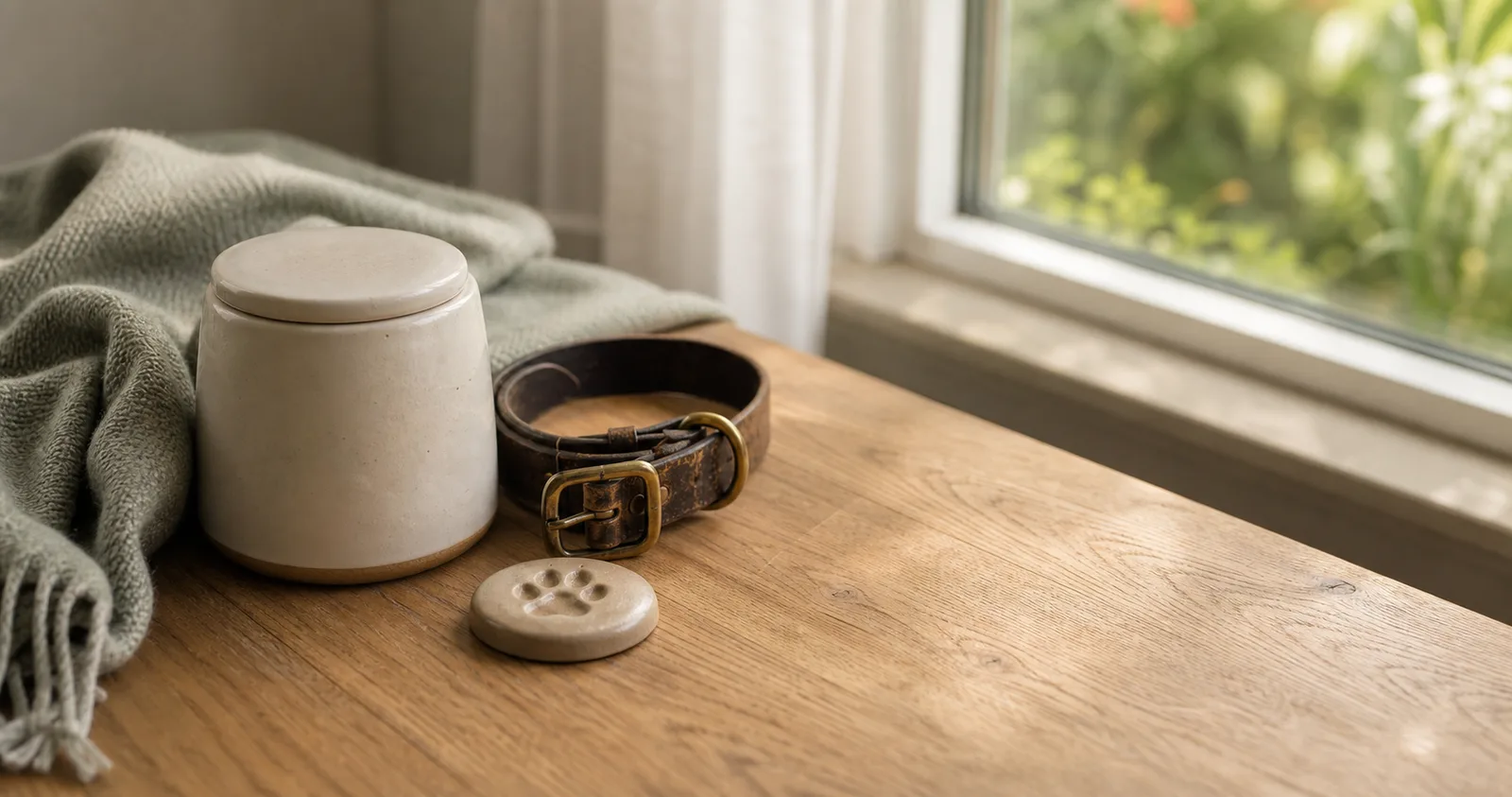
“I needed to know what size urn actually fit — not which one had the most five-star reviews in a category for a different pet.”
Even a simple wooden box involves material, capacity, engraving, and shipping decisions. Walk through these before clicking buy.
These product categories live on sibling brands. Use the right brand for the right product to avoid duplicate content across the network.
Pendants, rings, and bracelets that hold a teaspoon of ash. Handcraft timelines vary by maker.
Outdoor garden markers, river rocks, slate plaques, and benches. Weather-minded materials.
Plantable tree and garden systems that turn ashes into living memorials. Climate-zone dependent.
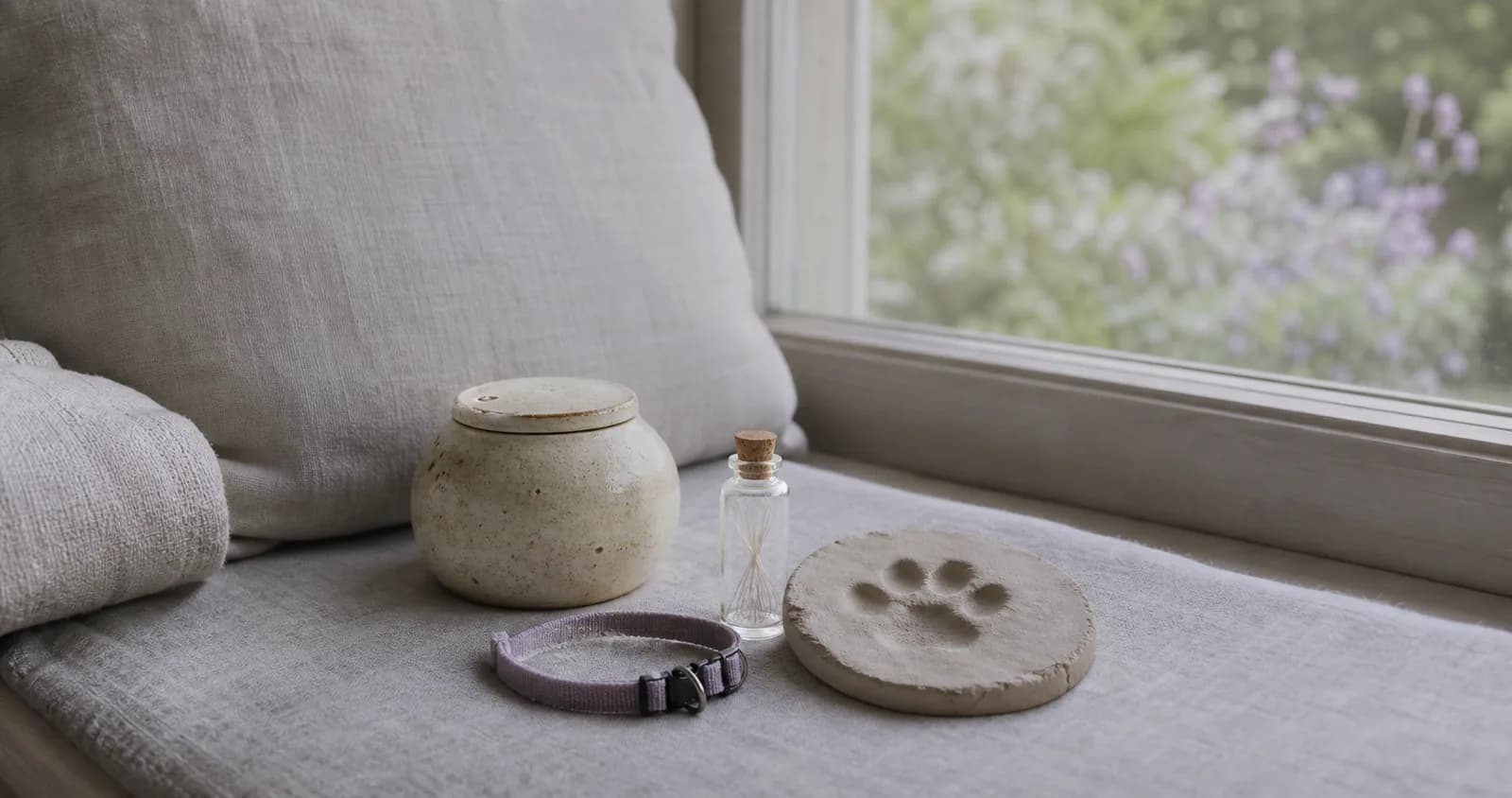
Clay, ink, metal, and glass impressions — not ash vessels but often displayed alongside them.
Three common urn sizes for three common weight classes. A 3 in³ keepsake fits a tiny companion. A 20 in³ vessel serves most cats and small dogs. An 80 in³ urn handles a large breed. Confirm the actual interior dimensions with the maker — external size can be misleading.
Read sizing guidesEach material family answers a different display question. Wood finishes age gracefully and feel warm under hand. Ceramic glazes bring color and sculpture into the room. Stone anchors a space with permanence. Match the material to where the urn will be seen — not where a catalog photo staged it.
Request material guidanceThe general rule is one cubic inch per pound of body weight. A 50-pound dog needs roughly a 50-cubic-inch interior. Always confirm actual interior dimensions with the maker — external measurements are not capacity. When in doubt, size up slightly rather than trying to compress.
Some urns have removable closures (threaded lids, slide-out bottoms); others are sealed permanently once filled. Ask the maker which closure type they use. Wood urns often have a removable bottom panel. Ceramic urns may need to be sealed with adhesive — once set, that is permanent.
Hardwood (walnut, oak) and sealed stone/granite both score well for indoor display. Ceramic is durable when glazed and kept away from impact zones. Biodegradable containers are designed NOT to last — they are for earth return, not mantel display. Choose durability based on display intent.
Most makers offer laser engraving (crisp, good for wood), rotary engraving (deeper, good for stone), or hand engraving (artistic, variable). You will typically submit text, approve a proof, and wait for production. Turnaround varies from a few days to several weeks depending on the maker's queue.
Solid walnut costs more than composite wood. Hand-thrown ceramic costs more than pressed ceramic. Polished granite costs more than basic river rock. The raw material drives the base price more than any other single factor.
Larger urns use more material and cost more to ship. A 3 in³ keepsake box and a 150 in³ large-breed vessel are rarely in the same pricing tier even when materials match.
Simple name-and-dates engraving is a flat add-on. Multi-line quotes, photo etching, or hand-done calligraphy engraving adds labor and lead time. Confirm the per-character or per-line cost before submitting text.
Velvet interior lining, UV-sealed finishes, custom stains, and sculpture work all add cost. These are optional — a plain finished hardwood urn with basic engraving is the functional floor price, and everything above that is aesthetic choice.
Brand-owned sizing and material guides — narrow on purpose, not a flood of thin pages.
Handcrafted hardwood urns in walnut, oak, cherry, and maple with personalized engraving options.
Elegant ceramic and stone urns with glazed finishes, hand-painted designs, and sculptural forms.
Eco-friendly urns made from sustainable materials that naturally return to the earth.
Personalized urns featuring your pet's photo, name, and special dates for a truly unique memorial.
Optional deeper reading
Explore the complete visual comparison, decision film, process timeline, and supporting planning facts.

Service Path Comparison
Original editorial context for service path comparison; not a provider, facility, customer, or service result.
AI-created editorial image for education; not a photographed provider, facility, customer, or service result.

Cremation Process Overview
Original editorial context for cremation process overview; not a provider, facility, customer, or service result.
AI-created editorial image for education; not a photographed provider, facility, customer, or service result.

Memorial Product Selection
Original editorial context for memorial product selection; not a provider, facility, customer, or service result.
AI-created editorial image for education; not a photographed provider, facility, customer, or service result.

Provider Interview Guide
Original editorial context for provider interview guide; not a provider, facility, customer, or service result.
AI-created editorial image for education; not a photographed provider, facility, customer, or service result.

Decision brief
Visual decision guide to memorial product aftercare service options.
AI-created editorial image for education; not a photographed provider, facility, customer, or service result.
Original AI-created editorial imagery. Illustrative only — not a provider, facility, customer, inventory item, or service result.

A clear comparison framework for Urn materials & sizing catalog, including evidence and fulfillment questions.
Start with the decision, not a sales claim.
Request process, price, timing, and return details.
Confirm provider or maker evidence directly.
A practical selection sequence for primary urns.
Estimate cubic inches needed. When unsure, choose the next size up.
Mantel display, travel, or earth return each favor different materials.
Confirm character limits and proofing with the seller before production.
Policies vary by maker. Keep ashes secure until the urn arrives if you’re ordering after cremation.
Follow material care notes — wood away from prolonged humidity; bio urns stored dry until planting.
Always check cubic inches against body weight before ordering.
Pendants and rings are owned by Cremation Jewelry so content doesn’t duplicate.
Walnut and cherry deepen over years — keep out of harsh sun and moisture swings.
If you want a permanent mantel piece, choose a durable urn — not a vessel meant to decompose.

Catalog-style guidance for primary urns. Other memorial formats live on sibling brands in this network.
I almost bought a beautiful urn that was 20 cubic inches too small.
Leave your details to request guidance. Someone may follow up within 1–2 business days. We do not publish a verified local provider list, and follow-up is not guaranteed.