Sharing your pet's ashes between the people who loved them
Cremated remains weigh about 3-5% of body weight[1], which is more to share than most families expect. Plan keepsakes, jewelry and a main urn so everyone gets a meaningful portion.
- Add a row for each person
- Keepsake urns, pendants, rings and scattering tubes
- See exactly what's left for the main urn
Ashes sharing planner
Plan who keeps what. We work in cubic inches, the unit urns and keepsakes are sold in (about 1 cu in per lb of body weight).
Left for the main urn
47 cu in (769 mL)
Out of about 50 cu in in total.
| Person | Keepsake | Ashes |
|---|---|---|
| Me | Keepsake urn | 3 cu in |
| Person 2 | Pendant | 0.05 cu in |
| Main urn | 47 cu in | |
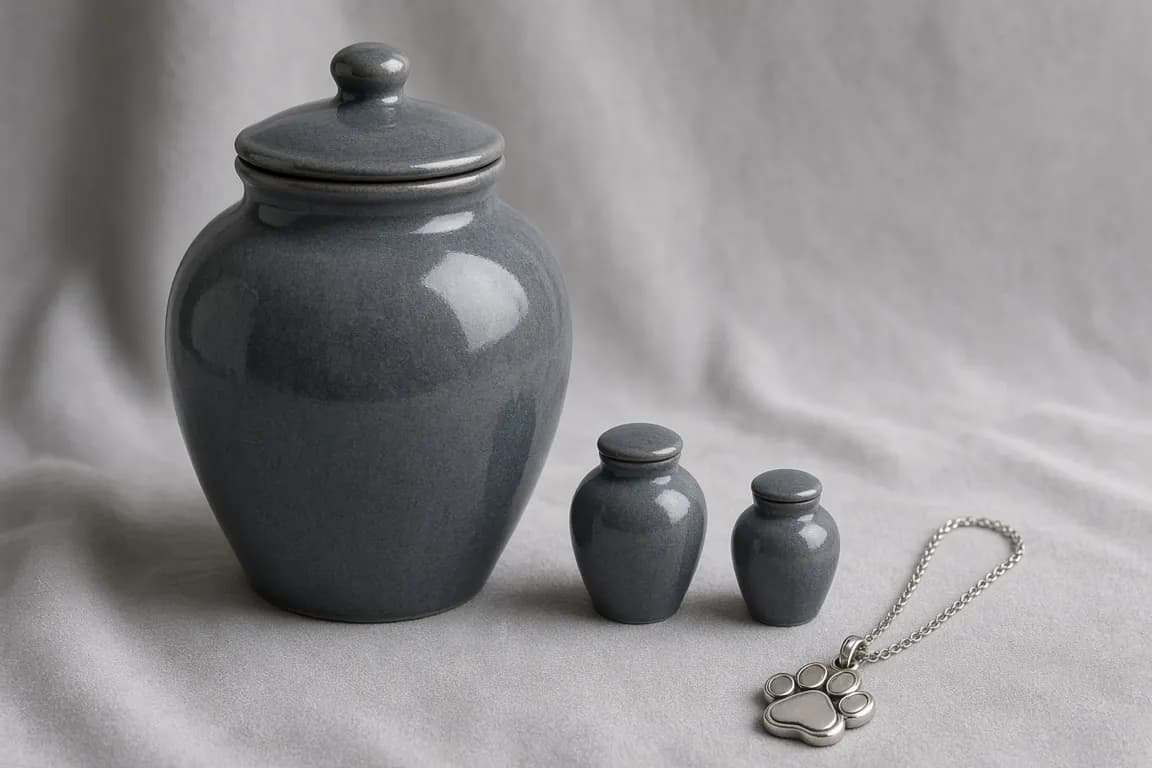
A pendant holds about a pinch of ashes and a ring even less, so jewelry barely changes what's left. Scattering tubes vary a lot in size; check the one you choose.
Source: Embrace Pet Insurance - Bury or Cremate Your Dog? Costs, Pros & Cons; Our estimate. keepsake capacities are typical sizes, so check the product you choose
Next step: Ask a local provider to divide the ashes for you →
Using the planner
How to use the ashes sharing planner
- Enter the total. Either type your pet's weight, and the planner assumes about one cubic inch of ashes per pound, or switch to "I know the volume" if the crematory told you.
- Add a row for each person. Give them a name if you like, then choose their keepsake: a keepsake urn, pendant, ring or small scattering tube.
- Set how many. Someone might want two pendants, one for themselves and one for a child.
- Read what's left. The planner shows how much remains for the main urn, and warns you if the plan uses more than you have.
Everything happens in your browser. Names you type aren't saved or sent anywhere, so it's safe to plan with real family names.
The method
The volumes the planner uses for each keepsake
The planner works in cubic inches, the unit urns and keepsakes are sold in. It uses the trade rule of about one cubic inch per pound of body weight for the total, and typical capacities for each item:
| Item | Typical capacity | Roughly |
|---|---|---|
| Keepsake urn | 3 cu in | about 3 tablespoons |
| Scattering tube (small) | 10 cu in | enough for a meaningful scattering |
| Pendant | 0.05 cu in | a pinch |
| Ring | 0.02 cu in | a few grains |
Real products vary, so if a seller lists a different capacity, trust the listing. Jewelry uses so little that even a whole family wearing pendants barely changes what's left. The jewelry ash capacity guide shows those tiny volumes in more detail.
Worked example
A worked example: one Golden Retriever, four households
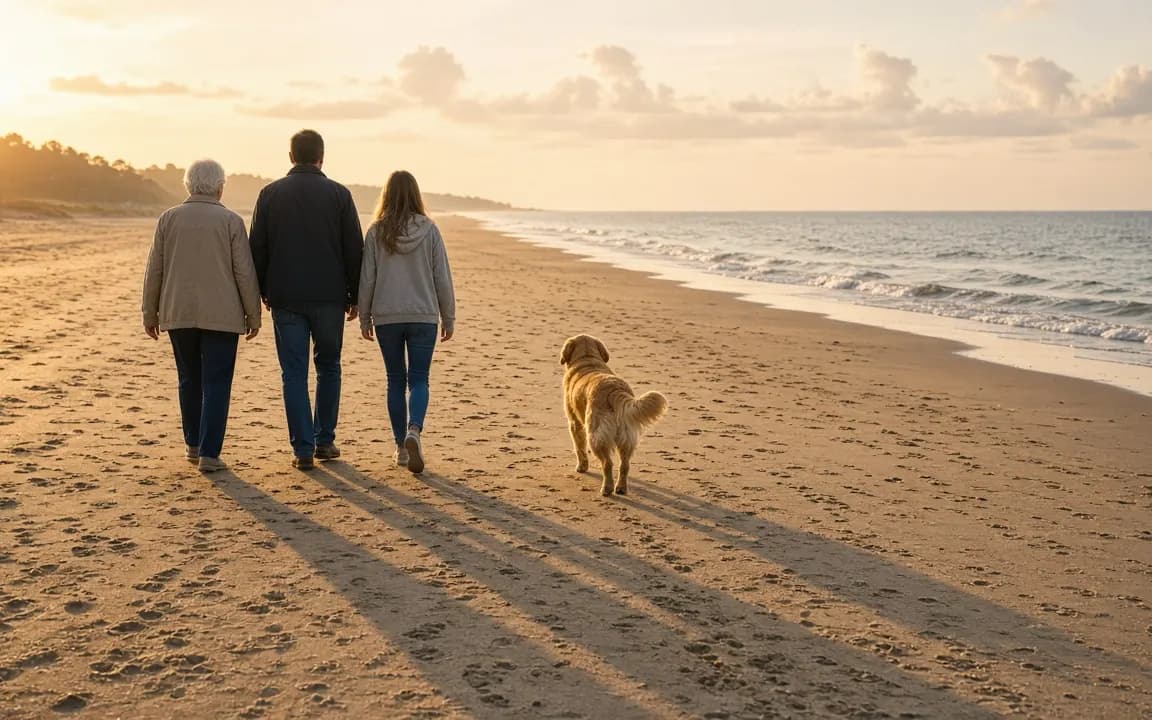
A 60 lb Golden Retriever gives about 60 cubic inches of ashes. The family plans a keepsake urn each for two adult children (6 cubic inches), three pendants for grandchildren (0.15), and one scattering tube for a walk along the beach the dog loved (10). That's about 16 cubic inches in total.
Roughly 44 cubic inches remain for the main urn at the parents' home. With a 10% margin, that's an urn of about 48 cubic inches, a medium size, rather than the large urn the whole dog would need. It's often cheaper, and it fits a smaller shelf.
Small pets are very different. A 12 lb cat returns only about 6.7 oz[3] of ashes by our estimate, so two or three keepsake urns can take most of it. If that's your situation, decide first whether you want a main urn at all.
Doing it
How ashes are actually divided, and who can do it
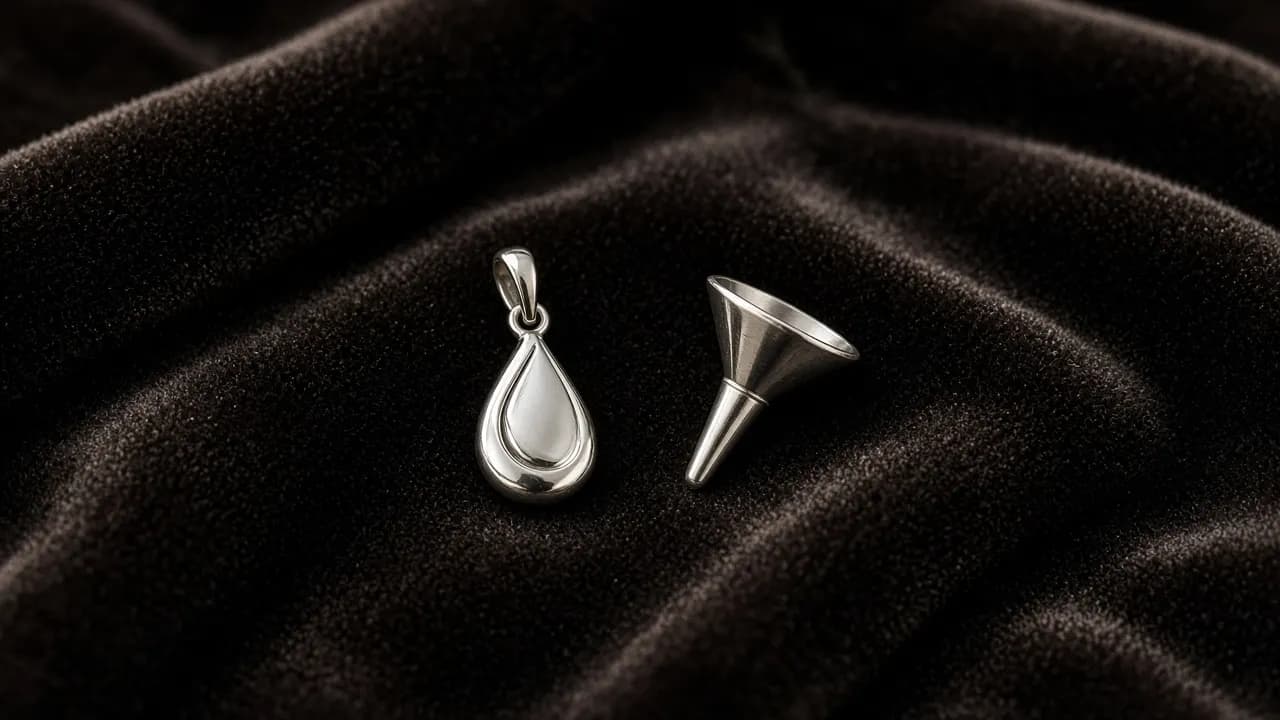
Many crematories will divide the ashes for you if you ask when you book, returning a main container plus the number of small portions you need. That's the tidiest option and avoids handling the ashes at home. If you'd rather do it yourself, work over a tray on a still day, using a clean spoon and a small funnel, and fill each keepsake before the main urn.
If part of the plan is scattering, check the rules first. In England, GOV.UK's animal burial guidance allows you to scatter or bury a single pet's ashes on your own land without permission, while the EPA's burial-at-sea rules cover human remains only and specifically exclude mixing in pet ashes. For somewhere public, ask the landowner or park first. Our travel article covers carrying a share further afield, and companion urns for two pets covers keeping two animals together.
Our guide to ash volume, temporary containers and shares covers packing shares to hand over in person. And our piece on choosing each vessel's role helps if you're unsure which piece should be the main memorial.
Will your pet's ashes stay together or be shared?
Tap an answer to vote and see how others answered. Anonymous.
Limits
What the planner can't decide for you
The planner uses an estimate of the total. The real volume depends on your pet's bones and how the crematory processes them, so leave a little spare rather than planning to the last cubic inch. It also can't settle the emotional side: who gets the main urn, or whether some people would rather have a photo or paw print than ashes.
12 cu in (cat); 70 cu in (dog)[4]
Next steps
Turning the plan into urns you can order
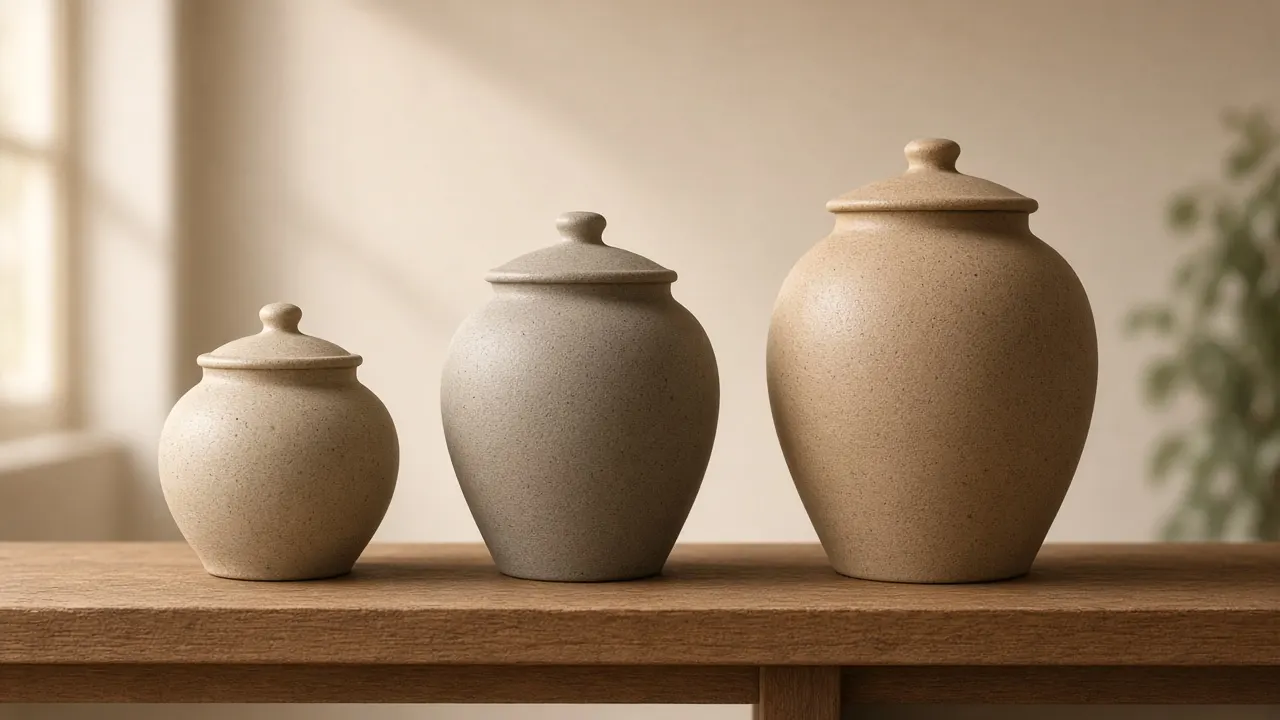
Once you know what's left, size the main urn with the calculator below. Matching keepsake sets are widely available in wood, ceramic and brass, and one industry report says personalized urns range from about USD 50–1,000+[5], so a set can suit most budgets.
Free tool
Urn size calculator
Find the urn volume you need from your pet's weight, plus keepsake and sharing options.
For the full list of styles, see urn types and personalization. Or send us your plan and we'll email matching main urns and keepsakes that fit it.

Reader polls
What would you choose?
Vote anonymously and see how other readers answered. The results are live counts from people who visit this site, so they show real opinions, not a scientific sample.
Will your pet's ashes stay together or be shared?
Tap an answer to vote and see how others answered. Anonymous.
Do you keep more than one memorial for the same pet?
Tap an answer to vote and see how others answered. Anonymous.
Who made (or will make) the aftercare decision in your household?
Tap an answer to vote and see how others answered. Anonymous.

Free tools to help you plan
Ashes sharing planner
Split ashes fairly between family members, keepsake urns and jewelry.
Urn size calculator
Find the urn volume you need from your pet's weight, plus keepsake and sharing options.
Jewelry ash capacity guide
How much ash fits in pendants, rings and glass, and how many pieces one pet can fill.
Questions people ask
Is it okay to divide a pet's ashes?
Yes. There's no rule or tradition that says a pet's ashes must stay together, and many families share them. What matters is that everyone involved is comfortable. If one person feels strongly that the ashes should stay whole, a photo or paw print keepsake can be a gentle alternative for others.
Can the crematory divide the ashes for us?
Often, yes. Ask when you book how many portions you need and roughly what size. Some providers charge a small fee or supply their own keepsake containers. Dividing at the crematory avoids handling the ashes at home, which many people prefer.
How much should go in a scattering tube?
It depends on the place and how visible you want the scattering to be. A small tube holding around 10 cubic inches is plenty for a meaningful scattering at a favorite spot. You don't need to scatter everything; many families scatter a portion and keep the rest.
What if we change our minds later?
Ashes kept in a threaded or screw-base urn can be redistributed later, so nothing is final until you seal it. Keep the main portion in its sealed bag inside the urn; that makes moving some into a keepsake or scattering later much simpler.


Sources and our estimates
- [1] Embrace notes cremated remains typically weigh about 3-5% of the pet's original body weight. Embrace Pet Insurance - Bury or Cremate Your Dog? Costs, Pros & Cons, 2025.
- [2] In NFDA's 2025 consumer research, 37% said they would keep cremated remains at home in an urn, and 33.5% would scatter them. Cremation.Green summary of NFDA 2025 Cremation & Burial Report, 2025.
- [3] A 12 lb cat would be expected to return about 6.7 oz (0.42 lb) of cremated remains. Our estimate: 12 lb x 3.5% x 16 oz/lb. How we calculate.
- [4] Using the industry rule of thumb of 1 cubic inch of urn space per pound of body weight, a 12 lb cat needs an urn of about 12 cubic inches; a 70 lb dog needs about 70 cubic inches. Our estimate: urn cu in = body weight lb x 1 (industry rule of thumb, not a measured value). How we calculate.
- [5] Personalized pet urns range from about USD 50 to more than USD 1,000. Astute Analytica via GlobeNewswire — Global Pet Preservation Services Market to Hit USD 112.7 Million by 2032 (Apr 2, 2024), 2024.
Get a matching urn and keepsake set
Tell us what you need and where you are. We'll reply by email with clear options and prices so you can decide in your own time.