Pet urn questions, answered plainly
Each article here answers one question in its first few lines, then explains the detail. The most-asked one is size: allow about one cubic inch of urn per pound your pet weighed, which puts a 70 lb dog at about 70 cubic inches[1].
- One question per article, answered up front
- Sourced prices and practical checklists
- Gentle guidance for the harder days too
Find your answer
Which article answers your question?
Articles are grouped below by where you are in the process. All of them are listed in full just after this section.
- Getting the size right: what size urn do I need for my dog and will the ashes actually fit.
- Choosing the urn: materials for real-life homes, what to engrave, the order checklist and urns for two pets.
- Once it's home: moving the ashes into the urn, cleaning and care, main urn or keepsakes and traveling with ashes.
- Timing and grief: choosing an urn in advance and when the decision can wait.
New articles are added when readers keep asking something our existing pages don't answer well. The four newest cover dog urn sizes by breed, moving ashes into an urn, flying with ashes and companion urns for two pets.
Latest articles
Practical, honest articles on costs, choices and remembering.
Choosing a pet urn before you need it: what to decide now and what to leave open
Choosing an urn while your pet is still with you can make the hardest week easier. What to decide now, what to leave open, and how to size it for an older pet.

Choosing an urn while you're grieving: why it's okay to wait
You don't have to pick an urn the week your pet dies. Why waiting is safe, what to do meanwhile, signs you're ready, and where to find support.
Can two pets share one urn? A guide to companion urns
Yes, two pets' ashes can share one urn, mixed or kept apart. How to size a companion urn, plan for a pet who's still alive, and word the engraving for two.
How to clean and care for your pet's urn so it lasts
Gentle cleaning for wooden, ceramic, glass, brass and marble pet urns, what never to use, how to fix a loose lid or faded photo, and planning the urn's future.
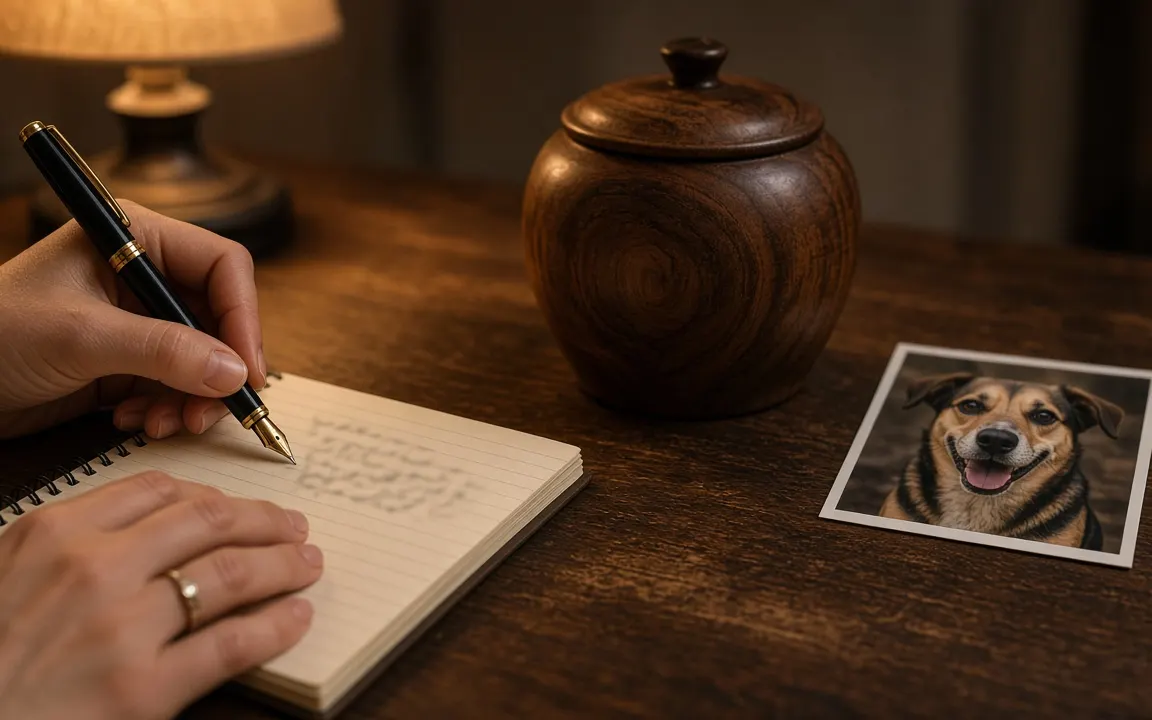
What to engrave on your pet's urn: wording, photos and small details
Short, personal wording ideas for a pet urn, how many words will fit, how to choose a photo that engraves well, and how to add a real paw print.
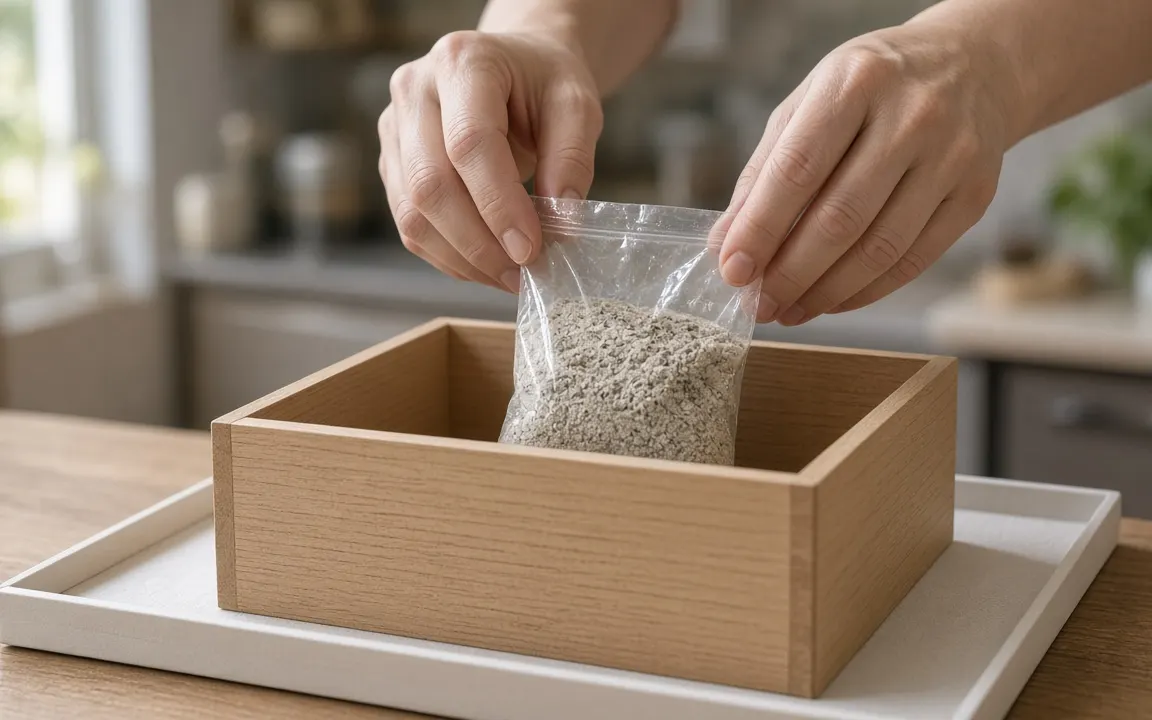
How to move your pet's ashes into an urn, gently and without spills
The easiest way is to place the sealed bag straight into the urn. If it won't fit, here's how to pour ashes calmly, fill keepsakes and seal the urn.
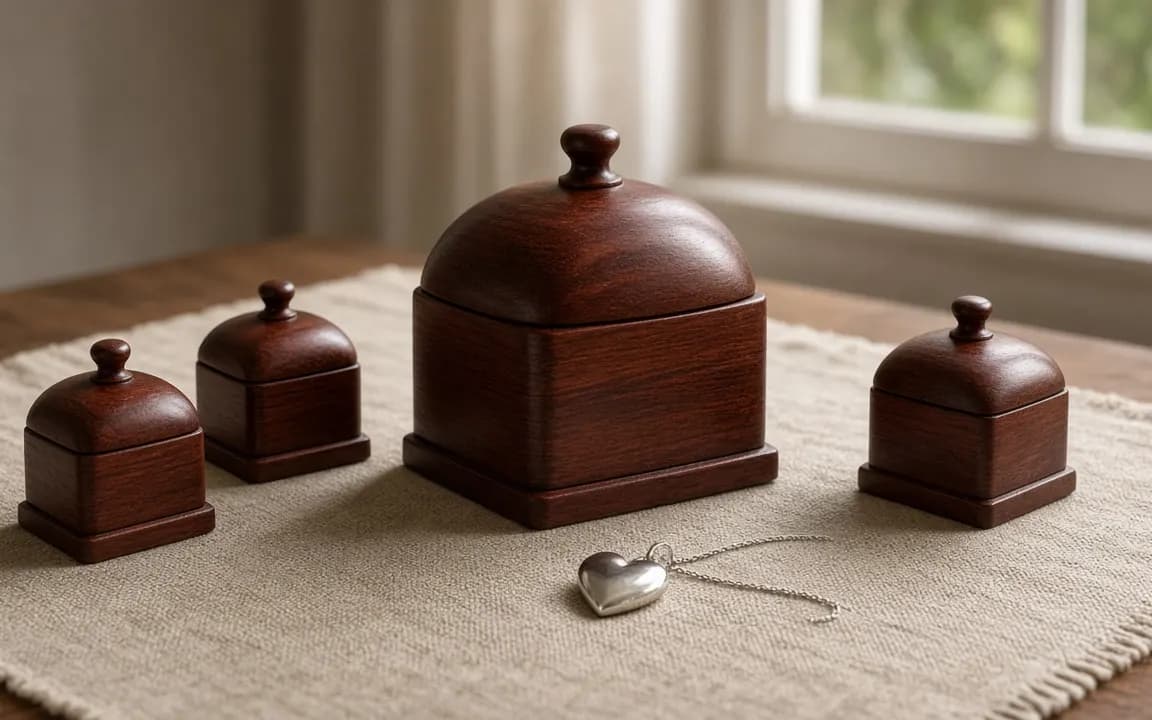
One main urn, keepsakes, or both? Deciding where your pet's ashes go
Should your pet's ashes stay together in one urn or be shared in keepsakes and jewelry? How families decide, what each option costs and how to avoid regret.

Can you travel or fly with your pet's ashes?
Yes, you can usually fly with pet ashes in a carry-on if the container can be X-rayed. What security needs, which urns cause trouble, and mailing options.

Buying a pet urn? Twelve things to confirm before you pay
Before you pay for a pet urn: capacity, opening, true total price, returns on engraved items, damage cover, delivery date and filling instructions, in one list.
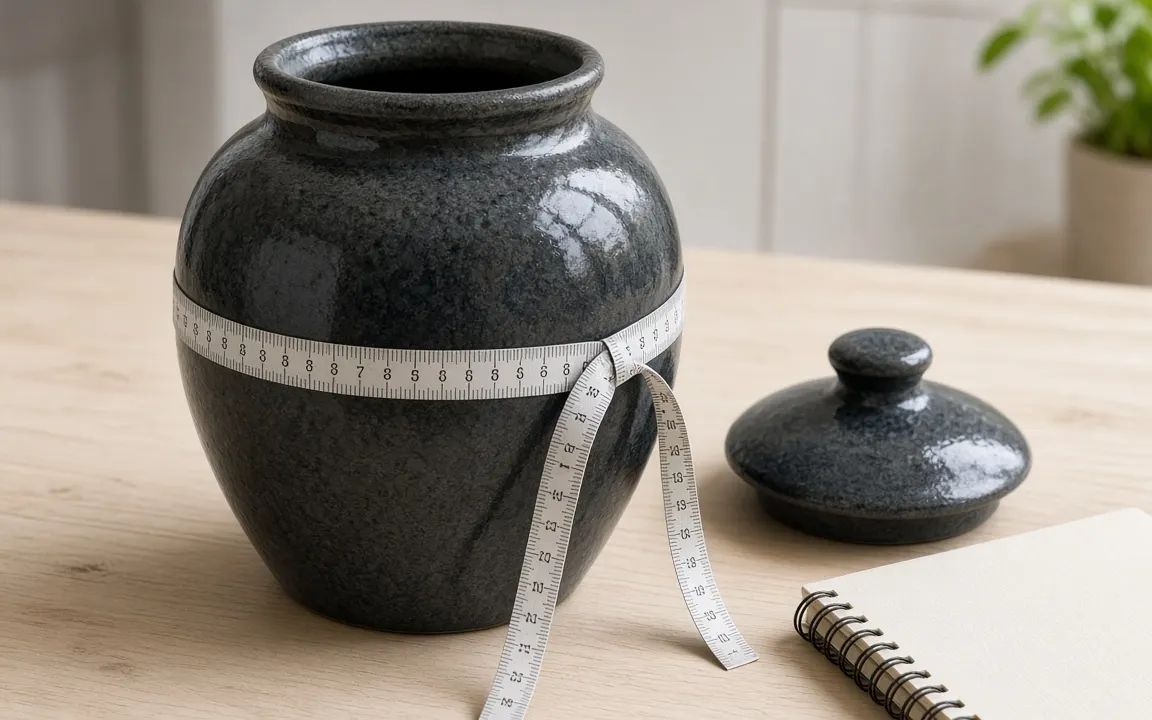
Will the ashes actually fit? How to check an urn's capacity and opening
Size labels like 'medium' mean different things at every shop. How to read cubic inches, check the opening and the inner bag, and avoid an urn that won't close.

Wood, ceramic, metal or glass? Choosing a pet urn material for the life you actually live
A pet urn material for toddlers and cats, for renters, for scattering later or for a humid climate. Plus what urns cost in the UK, Canada and Australia.

What size urn do you need for your dog?
Allow about 1 cubic inch of urn per pound your dog weighed, plus 10%. A breed chart from Chihuahua to Great Dane, what big dogs need, and when to size down.
In one line
What are the quick answers to the most common urn questions?
If you only need the headline, here it is. Each article goes into the detail, the exceptions and the costs.
| Question | Short answer |
|---|---|
| How big should the urn be? | About 1 cubic inch per pound of healthy body weight, plus 10% |
| How much ash will there be? | About 3-5% of body weight[2], usually in a sealed bag |
| Do I have to pour the ashes? | Usually not: the sealed bag goes straight into most urns |
| Can I fly with the ashes? | Yes in the US, if the container can be X-rayed |
| Can two pets share an urn? | Yes, mixed or in separate bags; size for their combined weight |
| How soon do I need an urn? | There's no deadline; the temporary container is safe indefinitely |

Blog or guides?
How are these articles different from the in-depth guides?
Blog articles answer one specific question and are quick to read. Our in-depth guides each take a whole decision, such as urn materials or engraving and photo urns, and cover it end to end. The two link to each other, so you can start wherever your question is.
Both follow the same rules. Figures come from named sources and sit beside their citation. When a number is our own calculation, it's labeled as our estimate. And we don't invent customer stories, reviews or ratings to make a point.
As a rule of thumb, start with the blog when you have a specific worry in front of you, such as a bag that won't fit through an urn's neck or a flight next week. Start with the guides when you're at the beginning and want to understand the whole decision before you spend anything. Either way, the free tools do the arithmetic.
Harder days
Why does an urn blog write about grief as well as capacity?
Because people rarely shop for an urn on an ordinary day. Grief is often stronger than expected: 66.9%[3] of bereaved owners in one large survey were surprised by how intense it was. That affects how people make decisions, and it's why several articles gently suggest waiting, planning ahead or asking for help.
It's also why memorials matter so much. One market study reports that 70% of pet owners consider memorialization significant[4]. An urn isn't just a container; it's somewhere for the loss to live in the house. Our articles try to respect that while still giving you the numbers you need.
If grief is sitting heavier than you expected, the Tufts pet loss support helpline and Cornell's pet loss resources are free to use. By our estimate, roughly 7 in every 100 UK adults[5] may have had a pet's death hit them harder than any human loss, so you're far from alone.
When did you (or would you) buy the urn?
Tap an answer to vote and see how others answered. Anonymous.
Work it out
Which free tools go with the articles?
Several articles link to a calculator that does the sums for you. The urn size calculator turns your pet's weight into cubic inches and a standard size. The ashes sharing planner splits one pet's ashes between a main urn and keepsakes. The memorial budget planner adds the urn, engraving and extras into one total.
Free tool
Urn size calculator
Find the urn volume you need from your pet's weight, plus keepsake and sharing options.
Keepsake prices are a common surprise, in both directions. Small keepsake urns typically cost $15 to $60[6], while a hand-crafted one can cost more than a full-size urn from the same maker[7]. The planners help you see those numbers before you commit.
Ask us
What if your question isn't covered here?
Send it to us. Use the form at the top of the page to tell us about your pet, where you are and what you're trying to decide. We'll reply by email with a straight answer and, if you'd like, urns that fit, from sellers who ship to you. We're an independent guide; we don't make urns or run crematories.
If you're choosing now, keeping the ashes at home is a very common choice: 37%[8] of people in one national survey said they'd keep cremated remains in an urn at home. Browse every kind of pet urn or see how other readers decided.

Reader polls
What would you choose?
Vote anonymously and see how other readers answered. The results are live counts from people who visit this site, so they show real opinions, not a scientific sample.
When did you (or would you) buy the urn?
Tap an answer to vote and see how others answered. Anonymous.
If you were choosing your pet's urn today, which material would you pick?
Tap an answer to vote and see how others answered. Anonymous.
Where are (or will be) your pet's ashes?
Tap an answer to vote and see how others answered. Anonymous.

Free tools to help you plan
Urn size calculator
Find the urn volume you need from your pet's weight, plus keepsake and sharing options.
Ashes sharing planner
Split ashes fairly between family members, keepsake urns and jewelry.

Memorial budget planner
Add up cremation, urn, keepsakes and a farewell so the total holds no surprises.
Questions people ask
How often are new articles added?
We add articles when readers keep asking a question our existing pages don't answer well, and we review older articles when prices or rules change. Each article shows the date it was last reviewed, so you can see how current it is.
Can I trust the prices mentioned in the articles?
They come from published price lists, cost guides and studies, named beside each figure. They're typical ranges, not quotes, and prices differ between sellers and countries. Always check the seller's current listing before you order.
Are these articles written for dogs, cats or all pets?
Most apply to any pet, because urns work the same way whatever the species. Where size matters, we give examples for cats, rabbits and dogs of different sizes, and one article focuses on dog urn sizes by breed.
Which article should I read first?
If your pet has just died, read the article on choosing an urn while grieving; it explains why there's no rush. If you're ready to shop, start with the dog sizing article or the capacity article, then the order checklist. If the urn has arrived, the transfer guide shows how to fill it.
Is it okay to read these before my pet has died?
Yes. Many people read ahead while a pet is old or unwell, and our article on choosing an urn in advance is written for that situation. Planning calmly often makes the harder days a little easier.
Do you recommend specific urn brands?
We don't rank or endorse brands. When you ask for help, we email options from sellers who serve your area, with capacity, price and delivery time, so you can compare them and choose for yourself.


Sources and our estimates
- [1] Using the industry rule of thumb of 1 cubic inch of urn space per pound of body weight, a 12 lb cat needs an urn of about 12 cubic inches; a 70 lb dog needs about 70 cubic inches. Our estimate: urn cu in = body weight lb x 1 (industry rule of thumb, not a measured value). How we calculate.
- [2] Embrace notes cremated remains typically weigh about 3-5% of the pet's original body weight. Embrace Pet Insurance - Bury or Cremate Your Dog? Costs, Pros & Cons, 2025.
- [3] 66.9% of respondents were surprised by how intense their grief was after losing a pet. RSPCA — Pet Loss Survey Results, 2026.
- [4] Astute Analytica reports 51% of pet owners are interested in personalized memorials and 70% consider memorialization significant. Astute Analytica via GlobeNewswire — Global Pet Preservation Services Market to Hit USD 112.7 Million by 2032 (Apr 2, 2024), 2024.
- [5] About 7 in every 100 UK adults may have had a pet's death hit harder than any human loss. Our estimate: 32.6% have lost a pet x 21% chose pet as most distressing. How we calculate.
- [6] Keepsake or mini pet urns cost about $15–$60, versus $25–$100 for small and $40–$200 for medium urns (Memorials.com). Memorials.com – Pet Urn Cost Guide, 2025.
- [7] A 1 oz keepsake urn can cost about a third more than a full-size wooden urn at the same crematory. Our estimate: CA$106 heart keepsake / CA$79 solid wood urn. How we calculate.
- [8] In NFDA's 2025 consumer research, 37% said they would keep cremated remains at home in an urn, and 33.5% would scatter them. Cremation.Green summary of NFDA 2025 Cremation & Burial Report, 2025.
Have a question we haven't answered?
Tell us what you need and where you are. We'll reply by email with clear options and prices so you can decide in your own time.