Will the ashes actually fit? How to check an urn's capacity and opening
Look for the internal capacity in cubic inches, then check that the opening is wide enough for the bag of ashes to pass through. Size names such as 'medium' vary from seller to seller, but the rule of about one cubic inch per pound of your pet's weight doesn't.
By the Pet Urns & Keepsakes editorial team · Updated September 24, 2026 · 4 min read · Sources
- Why size names can't be trusted on their own
- Converting cubic inches, milliliters and liters
- How to check the opening and the inner bag before you buy
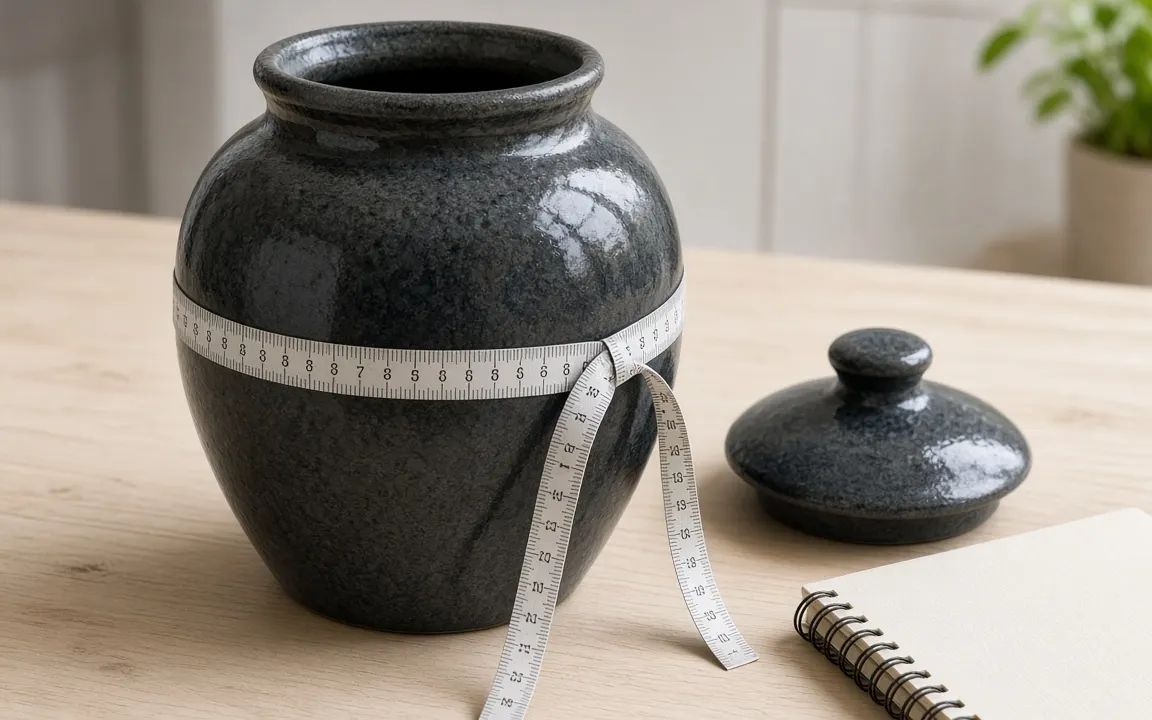
Size names
Why can't you trust 'small, medium and large' on an urn listing?
Because every seller defines them differently. One Canadian crematory sizes its ceramic urns from petite, for pets under 15 lb, up to large for 50 to 120 lb[1]. The same crematory's brass urns come in just two sizes: up to 50 lb and 50 to 100 lb[2]. A gift site's large might hold 60 cubic inches; a specialist's might hold 150.
Price tiers follow size loosely too. A US retailer's guide puts small pet urns at $25 to $100 and medium ones at $40 to $200[3], while extra-large urns for giant breeds run about $150–$500+[4]. The only figure that tells you whether your pet's ashes will fit is the internal capacity, ideally in cubic inches.
The rule
How much capacity does your pet need?
Urn makers work on about one cubic inch per pound of your pet's healthy body weight. Our worked example of that rule puts a 12 lb cat at about 12 cubic inches and a 70 lb dog at about 70[5]. The ashes weigh only around 3-5% of body weight[6], but ash is bulky, so volume is what matters.
Add about 10% on top, and a little more if you want to keep the ashes in their bag or add a small item such as the ID disc or a folded note. Going one size up is almost always safer than going down: a slightly roomy urn closes easily, while a tight one means pressing on the bag or leaving some ashes out.

Free tool
Urn size calculator
Find the urn volume you need from your pet's weight, plus keepsake and sharing options.
Very large dogs are where sizing goes wrong most often. Our estimate for a median giant-breed dog is about 3.8 lb[7] of ashes, needing roughly 108 cubic inches, beyond many urns sold simply as large. If you have a big dog, see what size urn do I need for my dog, which has a breed-by-breed chart.
That median giant-breed weight of about 108 lb comes from a peer-reviewed study of dog bodyweights, and the range ran up to 100 kg, so the biggest dogs can need far more.
Units
How do you convert cubic inches, milliliters and liters?
US sellers list cubic inches; UK, European and Australian sellers usually list milliliters or liters. One cubic inch is about 16.4 milliliters, so a liter is about 61 cubic inches.
Those factors come from the NIST unit conversion tables, which list one cubic inch as 16.387 mL, so the rounding in the table below is safe for shopping.
| Cubic inches | Milliliters | Roughly suits |
|---|---|---|
| 3 | 50 mL | A keepsake share, or a hamster or budgie |
| 20 | 330 mL | Most cats and rabbits, toy dogs |
| 60 | 980 mL (about 1 L) | Dogs up to about 55 lb |
| 120 | 1.97 L (about 2 L) | Dogs up to about 110 lb |
| 200 | 3.3 L | Giant breeds |
If a listing gives only liters, multiply by 61 to get cubic inches and compare with your pet's weight in pounds. Not sure of the weight? The ashes weight estimator works in kilograms as well as pounds.
The opening
Will the bag of ashes fit through the urn's opening?
This is the check most people miss. Pet ashes usually come back in a sealed plastic bag, and a bag holding a large dog's ashes is roughly the size of a bag of sugar. Urns open in three main ways, and each handles that bag differently.
- Bottom-loading box urns open with a panel on the underside. The opening is almost the full width of the urn, so the whole bag slides in easily. Most wooden urns work this way.
- Top-loading urns with a wide lid, such as many ceramic jars, take the bag if the mouth is broad enough. Measure it against the bag.
- Narrow-necked urns, such as vase shapes and many metal urns, often won't take the bag at all. You'd need to pour the ashes, or use a funnel and a smaller inner bag.
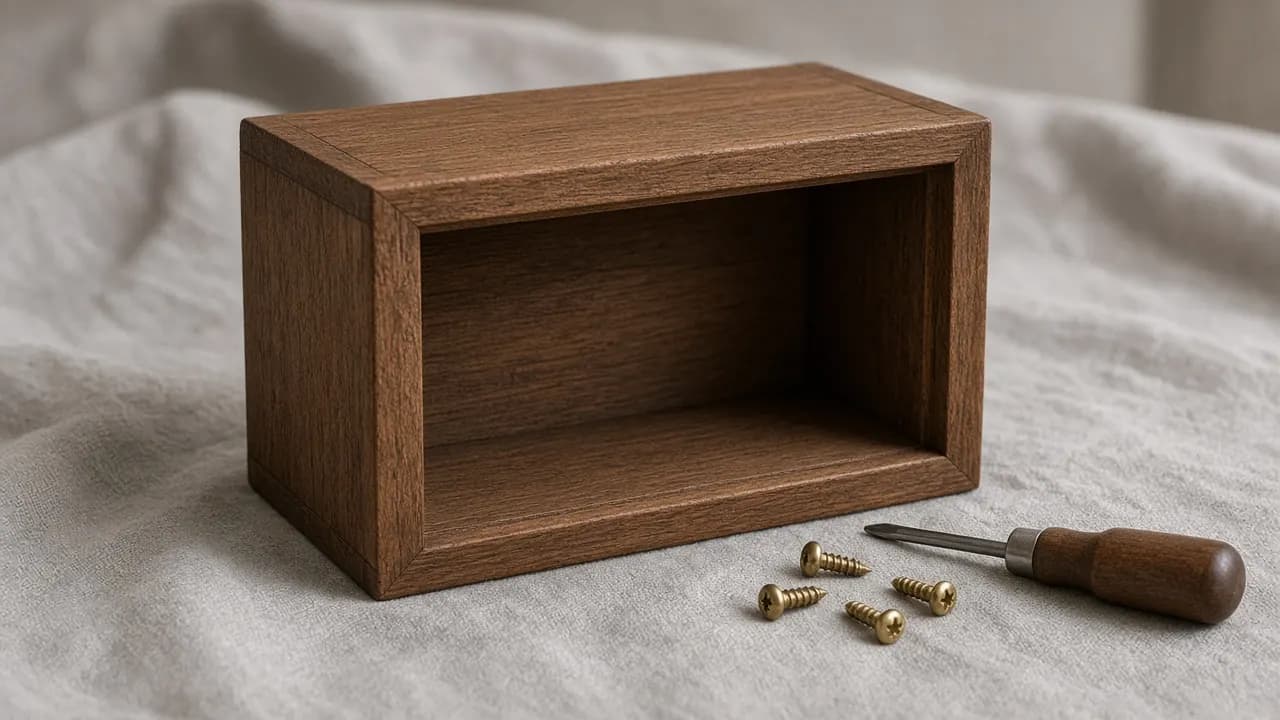
If you've fallen for a narrow-necked design, it isn't a dealbreaker. It just means a transfer. Our guide to transferring pet ashes into an urn shows how to do it without spills.
An example
What does a sizing mistake look like in practice?
Imagine a 48 lb Border Collie mix. A gift shop lists a lovely ceramic urn as medium, suitable for dogs, with a stated capacity of 40 cubic inches. By the rule, this dog needs about 48 cubic inches, or 53 with a margin. The ashes wouldn't fit comfortably, and the lid would sit proud of the rim.
A specialist's medium walnut box at 60 cubic inches, opening from the base, would take the whole bag with room for the ID disc. Same budget, same size name, very different result. That's why our pet urn order checklist puts capacity at the very top.
What worries you most about ordering an urn online?
Tap an answer to vote and see how others answered. Anonymous.

Reader polls
What would you choose?
Vote anonymously and see how other readers answered. The results are live counts from people who visit this site, so they show real opinions, not a scientific sample.
What worries you most about ordering an urn online?
Tap an answer to vote and see how others answered. Anonymous.
How would you move the ashes from the temporary container into the urn?
Tap an answer to vote and see how others answered. Anonymous.
Where are (or will be) your pet's ashes?
Tap an answer to vote and see how others answered. Anonymous.


Questions people ask
What happens if I buy an urn that's too small?
You have three options: return or exchange it if it isn't engraved yet, keep it as a keepsake and buy a larger main urn, or place the extra ashes in a second small urn. Don't force a lid closed on an overfull bag. It can split the bag or crack a ceramic rim.
Is it better to have an urn that's too big?
A little too big is fine and common. The bag of ashes sits inside with some space, and you can add a folded note, the collar tag or tissue paper to stop it shifting. A much larger urn just costs more and takes more shelf room, so aim for about 10 to 25% spare.
How many cubic inches is a cat urn?
Most cats need an urn of about 10 to 20 cubic inches, depending on their weight. A 10 lb cat needs about 11 cubic inches with a small margin; a big 18 lb Maine Coon closer to 20. Many sellers' small urns hold about 20 cubic inches, which suits most cats.
Do I have to take the ashes out of the bag?
No, and most people don't. Keeping the ashes in their sealed bag inside the urn protects against spills, keeps them together if you move the urn, and makes it easy to transfer them later. Just check the urn's opening is wide enough for the bag.
Can I measure the ashes myself?
You can estimate without opening anything. Multiply the inside length, width and height of the temporary box in inches for an upper limit, or ask the crematory for the weight of the returned ashes. If you do open the bag, a measuring cup works: one US cup is about 14.4 cubic inches.


Sources and our estimates
- [1] Okanagan Pet Cremation's ceramic ginger-jar pet urns cost CA$43–$70, from petite (under 15 lb) to large (50–120 lb). Okanagan Pet Cremation – Urns, 2026.
- [2] Brass pet urns at Okanagan Pet Cremation cost CA$99 (up to 50 lb) or CA$128 (50–100 lb); slate paw urns cost CA$99–$140. Okanagan Pet Cremation – Urns, 2026.
- [3] Keepsake or mini pet urns cost about $15–$60, versus $25–$100 for small and $40–$200 for medium urns (Memorials.com). Memorials.com – Pet Urn Cost Guide, 2025.
- [4] Horse urns cost about $150–$500+ in Memorials.com's pet urn guide, and extra-large urns of any kind about the same. Memorials.com – Pet Urn Cost Guide, 2025.
- [5] Using the industry rule of thumb of 1 cubic inch of urn space per pound of body weight, a 12 lb cat needs an urn of about 12 cubic inches; a 70 lb dog needs about 70 cubic inches. Our estimate: urn cu in = body weight lb x 1 (industry rule of thumb, not a measured value). How we calculate.
- [6] Embrace notes cremated remains typically weigh about 3-5% of the pet's original body weight. Embrace Pet Insurance - Bury or Cremate Your Dog? Costs, Pros & Cons, 2025.
- [7] A median-weight giant-breed dog (48.8 kg / 108 lb) would be expected to return about 1.71 kg (3.8 lb) of cremated remains, needing an urn of about 108 cubic inches. Our estimate: 48.8 kg x 3.5% x 2.2046 lb/kg; urn = 108 lb x 1 cu in/lb. How we calculate.
Get urns checked for capacity and fit
Tell us what you need and where you are. We'll reply by email with clear options and prices so you can decide in your own time.