What size urn do you need for your dog?
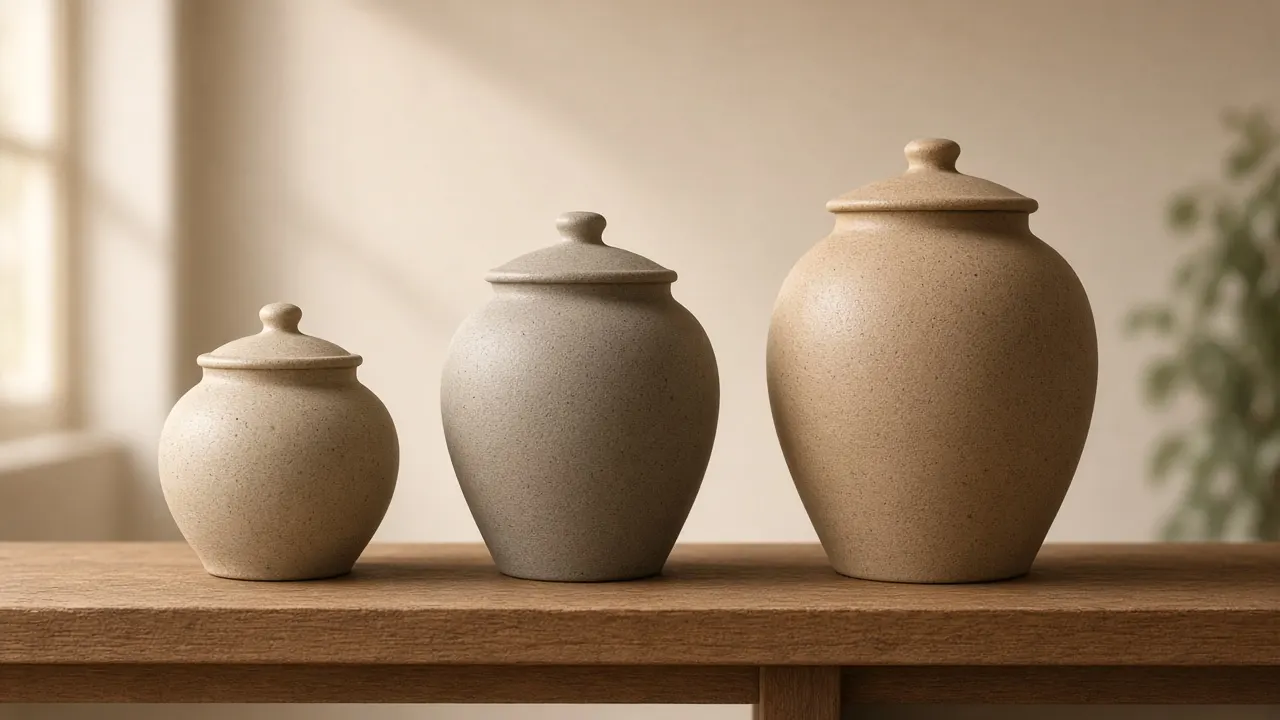
Allow about one cubic inch of urn space for every pound your dog weighed in good health, then add about 10%. A 50 lb dog needs an urn of about 55 cubic inches, and a giant breed can need 150 or more.
By the Pet Urns & Keepsakes editorial team · Updated September 24, 2026 · 4 min read · Sources
- A size chart from Chihuahua to Great Dane
- What large and giant dogs really need
- When a smaller main urn makes sense
The quick answer
How do you work out the right urn size for a dog?
Take your dog's healthy adult weight in pounds, and look for an urn with at least that many cubic inches of internal space. Then add about 10% so the lid closes without pressing on the bag of ashes. If you know the weight in kilograms, multiply by 2.2 first.
The rule works because dog ashes weigh about 3-5% of body weight[1] but take up far more space than their weight suggests. Bone fragments pack loosely. Our worked example of the rule puts a 70 lb dog at about 70 cubic inches[2], and the urn size calculator adds the margin and suggests a standard size.
Free tool
Urn size calculator
Find the urn volume you need from your pet's weight, plus keepsake and sharing options.
By breed
What size urn fits common dog breeds?
Weights within a breed vary a lot, especially between males and females and between show and working lines. Use this chart to get your bearings, then check against your own dog's weight.
| Breed | Typical adult weight | Urn capacity to look for | Common size name |
|---|---|---|---|
| Chihuahua, Yorkshire Terrier | 3 to 7 lb | 5 to 10 cu in | Keepsake or extra small |
| Dachshund, Shih Tzu | 10 to 32 lb | 15 to 35 cu in | Small |
| Beagle, Cocker Spaniel | 20 to 30 lb | 25 to 35 cu in | Small-medium |
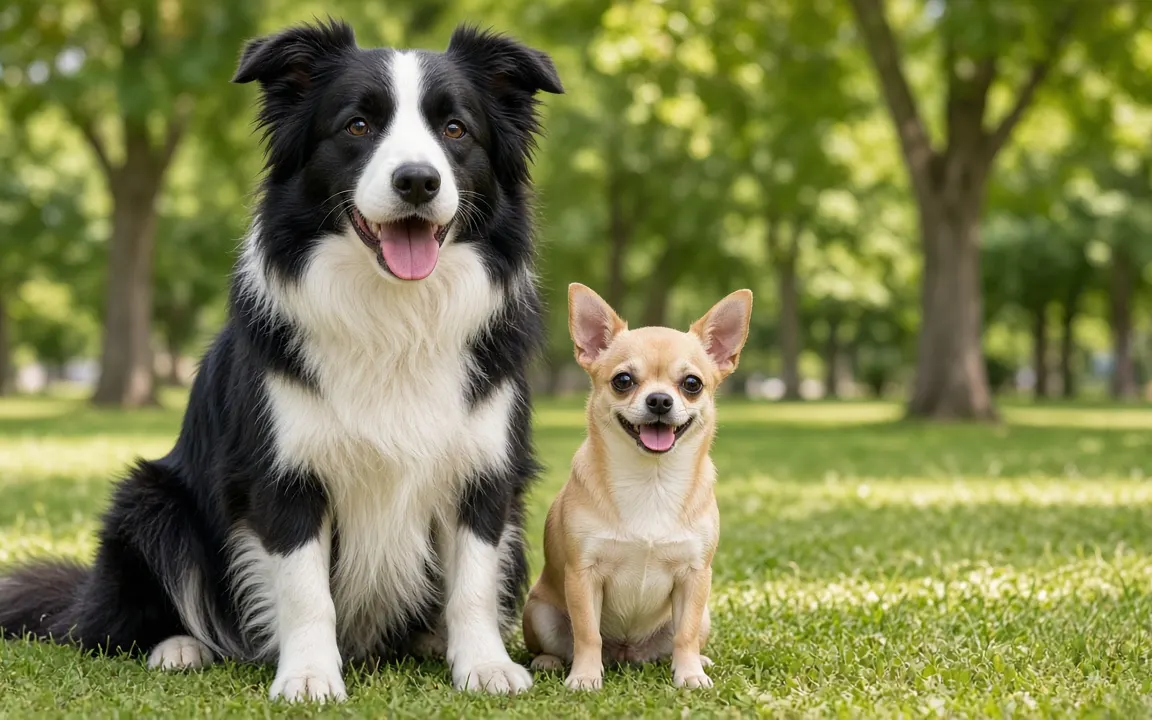
| Border Collie, Australian Shepherd | 30 to 60 lb | 35 to 65 cu in | Medium |
| Labrador, Golden Retriever | 55 to 80 lb | 60 to 90 cu in | Large |
| German Shepherd, Boxer | 50 to 90 lb | 55 to 100 cu in | Large |
| Rottweiler, Bernese Mountain Dog | 75 to 135 lb | 85 to 150 cu in | Large to extra large |
| Great Dane, Newfoundland, Mastiff | 100 to 200 lb | 110 to 220 cu in | Extra large |
For mixed breeds, go by weight rather than looks. A shaggy 40 lb doodle and a sleek 40 lb whippet cross return about the same amount of ash, because fur and soft tissue leave nothing behind.
If your dog was between two sizes on the chart, choose the larger. The price difference between neighboring sizes is usually small, and a little spare room lets you keep the ashes in their sealed bag with the ID tag or a handwritten note beside it.
The ashes
How much ash does a dog leave?
More than people expect by volume. A 30 kg (66 lb) dog typically leaves about 0.9-1.5 kg[3] of cremated remains, and our estimate for a median giant-breed dog of about 48.8 kg[4] is around 3.8 lb[5] of ashes, needing roughly 108 cubic inches of urn.
Bone density and age shift the figure a little, which is why the margin matters. If you'd like a range for your own dog, the ashes weight estimator works from weight in pounds or kilograms. For what the ashes arrive in and how to check the amount, see ash volume, temporary containers and shares.
Large and giant breeds
What if your dog was a large or giant breed?
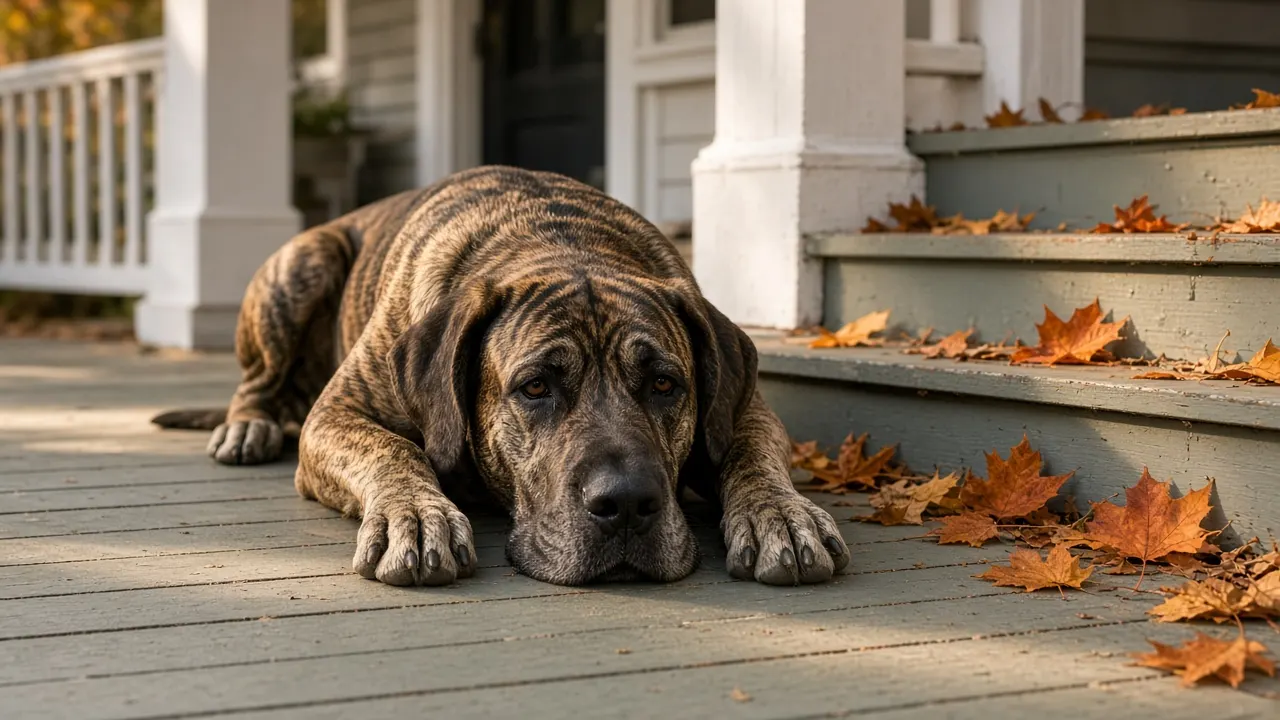
This is where most sizing mistakes happen. Many urns sold as large hold 100 to 120 cubic inches, which is fine for a Labrador but too small for a big Rottweiler, Great Dane or Newfoundland. Look for urns labeled extra large or with a stated capacity of 150 to 250 cubic inches.
That median giant-breed weight of 48.8 kg comes from a peer-reviewed study of dog bodyweights that found some giants reaching 100 kg, so weigh your own dog rather than trusting the breed average. Listings in liters convert easily with the NIST unit conversion tables: one liter is about 61 cubic inches.
Extra-large urns cost more, typically around $150–$500+[6] (per one large retailer), because they use more material. If that's beyond your budget, there are good alternatives:
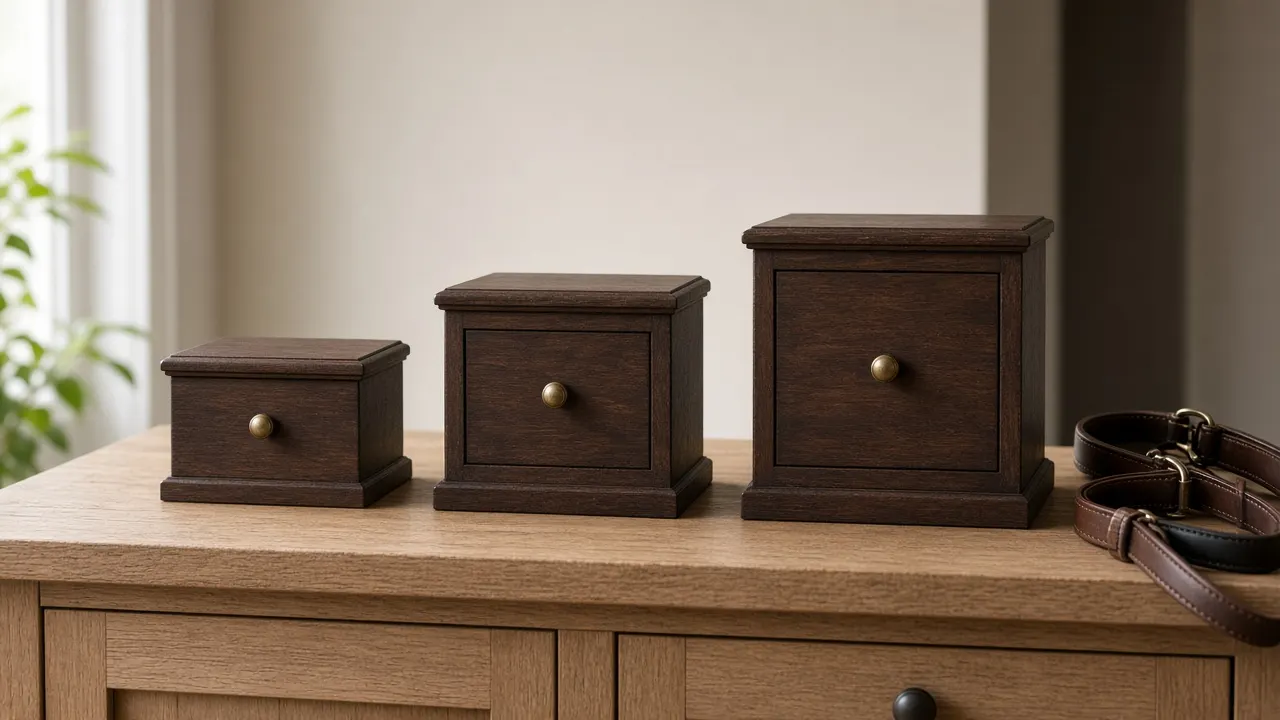
- A large wooden chest or memory box often holds more than a vase-style urn at the same price.
- Two medium urns for two family members, or one main urn plus a scattering share.
- A main urn for most of the ashes plus a keepsake for anyone who'd like a share.
Costs
How much do dog urns cost by size?
Size and material together set the price. One US retailer's guide puts small pet urns at $25 to $100 and medium urns at $40 to $200[7], with extra large at the top of the range. Wooden urns, the most common choice for dogs, typically run $30–$150[8] (per one large retailer).
It's worth knowing what's already included. Private cremation for dogs over 90 lb typically costs $350 to $450 in the US[9], and some packages include a basic urn that may not be big enough for a giant breed. Ask the capacity before you accept it. Our guide to wood, ceramic, metal and glass compared covers how material changes the price.
What would you expect to spend on the main urn itself?
Tap an answer to vote and see how others answered. Anonymous.
Exceptions
When is a smaller urn the right choice?
Only when part of the ashes will live somewhere else. If you're scattering half on a favorite trail, or two households are each keeping a share, size each urn for what it will actually hold. Pendants and glass keepsakes use only pinches, so they don't change the main urn's size.
For help deciding who keeps what, see primary urn or keepsake share. If another pet's ashes might join your dog's one day, can two pets share one urn explains how to size for both. And if you'd like someone to find urns in the right size, send us your dog's weight or browse every kind of pet urn.

Reader polls
What would you choose?
Vote anonymously and see how other readers answered. The results are live counts from people who visit this site, so they show real opinions, not a scientific sample.
What would you expect to spend on the main urn itself?
Tap an answer to vote and see how others answered. Anonymous.
If you were choosing your pet's urn today, which material would you pick?
Tap an answer to vote and see how others answered. Anonymous.
How much would you spend on a memorial item, beyond the cremation itself?
Tap an answer to vote and see how others answered. Anonymous.

Questions people ask
What size urn do I need for a 50 lb dog?
Look for an urn of about 55 cubic inches or more. That's the 50 cubic inches the rule suggests, plus about 10% so the lid closes easily. Most sellers' medium urns, around 60 cubic inches, will fit a 50 lb dog comfortably.
What size urn do I need for a 100 lb dog?
Aim for about 110 to 120 cubic inches. Many large urns hold around 120, which is just right, but check the stated capacity because some large urns are smaller. If your dog was well over 100 lb, choose an extra-large urn of 150 cubic inches or more.
Should I use my dog's weight at the end, or when they were healthy?
Use the healthy adult weight. The amount of ash depends mainly on bone, which changes little when an older dog loses muscle or fat. Sizing for the lighter final weight can leave you with an urn that's too small.
What if I don't know my dog's weight?
Check the vet records, a pet insurance claim or the cremation paperwork, which often lists weight. If none of those have it, estimate from the breed chart and round up. You can also ask the crematory to tell you the weight of the returned ashes.
What size urn do I need for a puppy or young dog?
Use the same rule with the weight your puppy had reached: about one cubic inch per pound, plus a margin. A young dog's bones are less dense, so the ashes may be at the lower end of the usual range. A small or keepsake-sized urn is often enough for a very young puppy.
Is it better to buy an urn that's too big for my dog?
Slightly too big is fine and far better than too small. Aim for about 10 to 25% extra space. The ashes stay in their sealed bag inside, and you can add a folded note, the ID tag or some tissue so the bag doesn't shift.
How many cubic inches is a large dog urn?
There's no standard. Some sellers call 90 cubic inches large; others mean 120 or more. That's why it's worth ignoring the size name and checking the stated internal capacity against your dog's weight in pounds.


Sources and our estimates
- [1] Embrace notes cremated remains typically weigh about 3-5% of the pet's original body weight. Embrace Pet Insurance - Bury or Cremate Your Dog? Costs, Pros & Cons, 2025.
- [2] Using the industry rule of thumb of 1 cubic inch of urn space per pound of body weight, a 12 lb cat needs an urn of about 12 cubic inches; a 70 lb dog needs about 70 cubic inches. Our estimate: urn cu in = body weight lb x 1 (industry rule of thumb, not a measured value). How we calculate.
- [3] A 30 kg (66 lb) dog typically leaves about 0.9-1.5 kg of cremated remains, which helps size urns on location pages. Our estimate: 30 kg x 3% = 0.9 kg; 30 kg x 5% = 1.5 kg. How we calculate.
- [4] Giant-breed dogs had a median adult bodyweight of 48.8 kg (about 108 lb), with a range up to 100 kg. O'Neill DG et al. Giant dog breeds under primary veterinary care in the UK: demography, common disorders and mortality. Companion Animal Health and Genetics, 2026 (PMID 42351280), 2026.
- [5] A median-weight giant-breed dog (48.8 kg / 108 lb) would be expected to return about 1.71 kg (3.8 lb) of cremated remains, needing an urn of about 108 cubic inches. Our estimate: 48.8 kg x 3.5% x 2.2046 lb/kg; urn = 108 lb x 1 cu in/lb. How we calculate.
- [6] Horse urns cost about $150–$500+ in Memorials.com's pet urn guide, and extra-large urns of any kind about the same. Memorials.com – Pet Urn Cost Guide, 2025.
- [7] Keepsake or mini pet urns cost about $15–$60, versus $25–$100 for small and $40–$200 for medium urns (Memorials.com). Memorials.com – Pet Urn Cost Guide, 2025.
- [8] Memorials.com puts wooden pet urns at $30–$150. Memorials.com – Pet Urn Cost Guide, 2025.
- [9] CareCredit lists US communal cremation at $150-$200 and private at $350-$450 for pets over 90 lb. CareCredit (Synchrony) - How Much Does Pet Cremation Cost? (Sept 2023), 2023.
Get dog urns in the right size
Tell us what you need and where you are. We'll reply by email with clear options and prices so you can decide in your own time.