Wood, ceramic, metal, stone or glass: which pet urn material fits your plans?
Choose the material by where the urn will live and whether it ever needs to move. Wooden pet urns typically cost $30–$150[1] and ceramic ones $20–$100[2] (per one large retailer), so the choice is rarely about price alone.
By the Pet Urns & Keepsakes editorial team · Updated September 24, 2026 · 6 min read · Sources
- Price ranges for every common urn material
- How each one ages indoors, outdoors and in the ground
- What to check when two urns look identical online
The short answer
Which pet urn material should you choose?
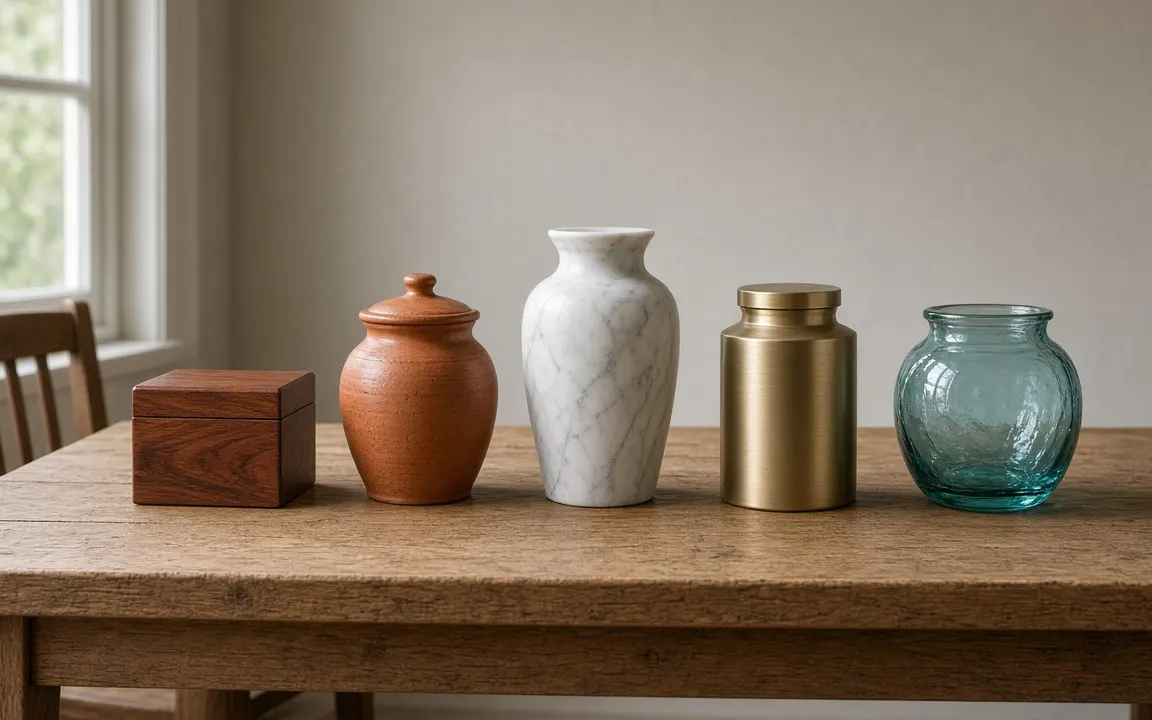
For an urn that stays indoors on a shelf, solid hardwood or glazed ceramic suits most homes and budgets. If it may go outside or into a garden later, choose stone or a sealed metal. If you plan to bury or scatter the ashes within a year, a biodegradable urn or even the plain temporary container makes more sense than paying for something built to last decades.
Price follows weight and handwork more than sentiment. Here's how the main materials compare in one US retailer's pet urn cost guide, which is a sensible starting point before you look at individual makers.
| Material | Typical price | Feels like |
|---|---|---|
| Biodegradable (paper, salt, plant fiber) | $15–$80[3] | Temporary by design |
| Ceramic or porcelain | $20–$100[2] | Colorful, handmade, a little fragile |
| Wood | $30–$150[1] | Warm, domestic, easy to engrave |
| Metal (brass, aluminum, pewter) | $40–$200[4] | Compact, sturdy, often screw-top |
| Marble and natural stone | $80–$300[5] | Heavy, cool, one of a kind |
By our estimate, marble tends to cost around three times as much as ceramic[6], a gap that shows up both in retail guides and on crematory price lists. That extra money buys weight and permanence, not extra capacity, so size the urn first with the urn size calculator and then pick the material. The memorial budget planner shows how each choice changes the total once engraving and delivery are added.
Hardwood
How do wooden urns hold up over the years?
Wood is the most common pet urn for a reason. Walnut, oak, cherry and maple look at home on a bookshelf, take laser engraving cleanly and are light enough to lift with one hand. Most wooden box urns open from the underside with two or four small screws, so the bag of ashes slides in and the panel is closed out of sight.
Crematories that sell urns directly often price wood at the friendlier end. One Northeast US network lists wooden pet urns at $55–$290[7], with most around $98. The cheapest are usually cedar or pine; the dearest add a photo window or carved panel.
- Ask if it's solid wood or veneer. Veneer over MDF looks the same in photos but chips at the corners and can't be sanded if it's scratched.
- Keep it out of strong afternoon sun. Cherry darkens and walnut lightens over a few years on a sunny windowsill.
- Avoid bathrooms and exterior walls. Damp makes wood swell, and a base panel that swells can be hard to reopen.
Wood suits people who want a quiet, homely memorial and may add engraving later. Our guide to engraving and photo urn lead times explains what each kind of personalization adds to the wait.
Ceramic and porcelain
Are ceramic and porcelain urns fragile?
Glazed ceramic is tougher than it looks once it's in place, but it's the material most likely to arrive chipped. A heavy lid rattling against a thin rim in transit is the usual culprit. Ask how the urn is packed, and open the box somewhere soft on the day it arrives so you can report damage quickly.
Ceramic is where you'll find color, hand-thrown shapes and figurine urns shaped like a sleeping cat or a sitting dog. Prices spread widely: one crematory network sells figurine and paw designs for $90 to $95 and tall vase urns for $255 to $290[8], while a well-known online retailer priced its personalized pottery pet urns at $189[9] each.
One more ceramic point: decorative glazes aren't made to food-safety standards, which is why the FDA's guidance on lead-glazed pottery warns against eating from some traditional and antique pieces. That's no concern for an urn, since the ashes stay sealed in their bag, but it's a good reason never to hand a decorative urn on later as a kitchen jar.
Stone and metal
What about marble, stone and metal urns?
Marble and natural stone are the heavyweights. A large marble urn can weigh more than a cat or small dog, which is reassuring on a mantel and awkward on a floating shelf. Every piece has its own veining, so yours won't match the listing photo exactly. Retail prices run $80–$300[5], and one crematory lists marble pet urns at $260 to $345[10].
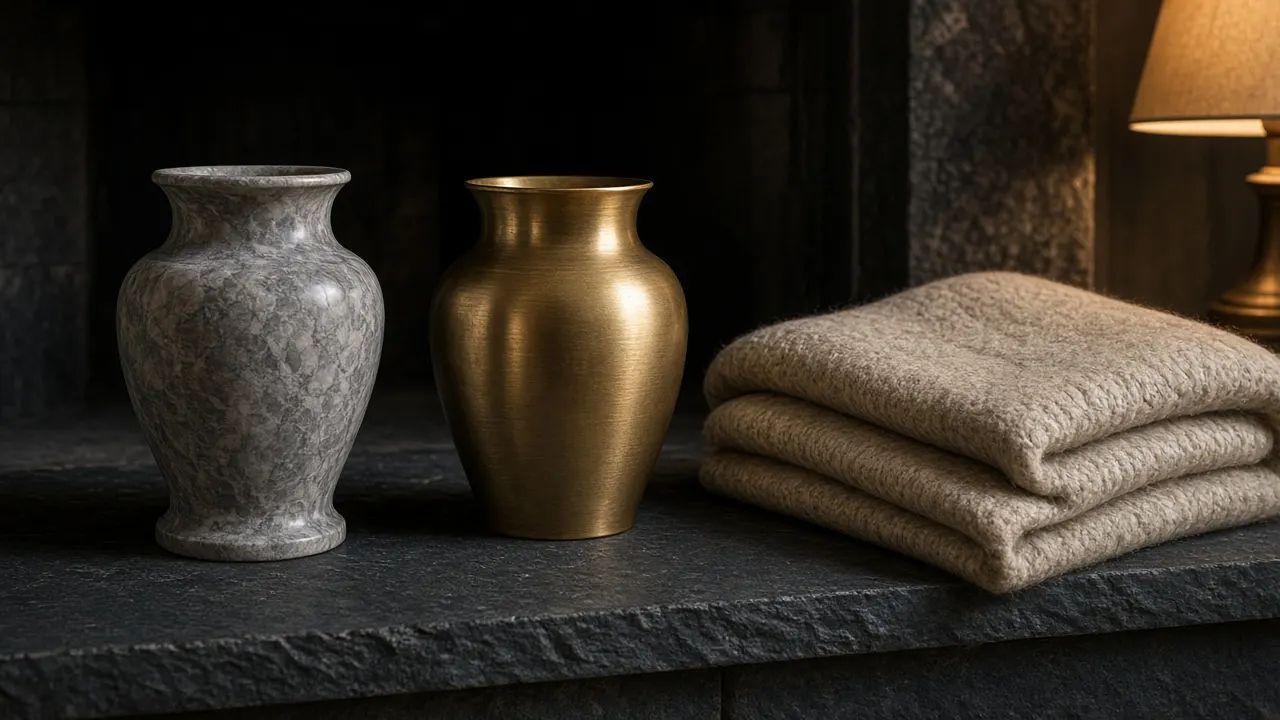
Metal urns are the compact option. Brass, aluminum and pewter urns are usually cast with a threaded lid, so they hold ashes securely and cope with being moved. Retail prices sit around $40–$200[4] (per one large retailer). Polished brass slowly darkens unless it's lacquered, and cheaper cast aluminum can dent if dropped on tile. Metal is a sensible pick if you move house often. If you'll ever fly with the ashes, though, a dense metal urn is the kind most likely to cause trouble at airport security; traveling and flying with pet ashes explains why.
Glass
Is glass a good choice for pet ashes?
There are two quite different things sold as glass pet memorials. A glass urn is a hand-blown vessel with a sealed compartment that holds the ashes, usually in a bag, behind colored or frosted glass. Glass pet urns run about $50 to $250[11], and they're the most striking in a sunny spot.
Ashes-in-glass art, such as paperweights, orbs and hearts, is not an urn at all. The ashes are fused into the glass, and each piece uses only about 1/8–1/2 tsp[12] (per one urn retailer's guide). It's a keepsake that sits alongside a main urn rather than replacing it, and studios typically ship it 2–8 weeks[13] after receiving the ashes.
Glass urns suit someone who wants color and light. They're not the pick for a busy hallway or a home where things get knocked over, and they're usually heavy enough to need a solid shelf.
Garden, burial and water
Which materials can go outdoors or in the ground?
Very few urns are built for sun, frost and rain. Natural stone and granite handle weather well, and outdoor rock or sandstone pet urns cost around $300–$395[14] at one crematory. Sealed metal can work in a sheltered spot. Wood, ceramic with a push-fit lid and most glass urns are indoor pieces, and water will find its way into them.
If the plan is to bury the ashes, a biodegradable urn is designed to break down within months. Retail examples run $15–$80[3], and a wider industry survey quoted by a funeral site puts them at $70–$260[15]. Pet ashes are strongly alkaline, with a pH of ~11.7[16], so they can harm roots if they're placed straight against a young plant. Tree-planting urns include a soil mix for that reason.
Burial rules depend on where you are. In England, GOV.UK's guidance on animal burials lets you bury a single pet's ashes on your own land without permission; in the US, check with your city or county. For water, the EPA's burial-at-sea rules apply to human remains only, so ask your state or local authority about a pet's ashes.
For how to keep an urn safe in a particular room, including sun, heat and damp, see displaying the primary vessel at home.
Before you order
How do you compare two urns that look alike online?
Photos flatten everything, so a $60 urn and a $180 urn can look almost identical on a phone screen. Before you pay, ask the seller five plain questions:
- What is the internal capacity in cubic inches, not just the size name?
- Is it solid material, veneer, resin or a composite made to look like stone?
- How does it open, and will the returned bag of ashes fit through the opening?
- What does it weigh empty, and does it need a wall anchor or a sturdy shelf?
- What happens if it arrives damaged, and is it returnable once engraved?
Free tool
Urn size calculator
Find the urn volume you need from your pet's weight, plus keepsake and sharing options.
Our materials by situation article looks at the same choice from the other side: families with pets and toddlers, renters, and people planning to scatter later. If filling the urn yourself feels daunting, how to transfer pet ashes into an urn walks through it gently. And if you'd rather have someone else do the comparing, tell us what you're looking for and we'll reply with options.
If you were choosing your pet's urn today, which material would you pick?
Tap an answer to vote and see how others answered. Anonymous.

Reader polls
What would you choose?
Vote anonymously and see how other readers answered. The results are live counts from people who visit this site, so they show real opinions, not a scientific sample.
If you were choosing your pet's urn today, which material would you pick?
Tap an answer to vote and see how others answered. Anonymous.
What would you expect to spend on the main urn itself?
Tap an answer to vote and see how others answered. Anonymous.
Which memorial feels most like your pet?
Tap an answer to vote and see how others answered. Anonymous.

Questions people ask
What is the most durable material for a pet urn?
Natural stone, granite and cast metal are the hardest-wearing. They resist knocks and, in the case of granite and sealed metal, weather too. Durability isn't everything, though: a marble urn is heavy and a metal one can feel cold. For an indoor urn that won't be moved often, solid hardwood lasts for decades with nothing more than dusting.
Is a wooden or ceramic urn better for a cat?
Both work well because cats need small urns, typically around 20 cubic inches or less. Wood is lighter and easier to engrave with a name and dates. Ceramic gives you more color and shape, including cat figurines. If you have another cat who jumps on shelves, choose a wooden box or a ceramic urn with a threaded or sealed lid.
Can you put a pet urn outside in the garden?
Only if it's made for it. Granite, natural stone and some sealed metal urns cope with frost and rain. Wood, most ceramic and glass urns will let water in or crack in freezing weather. If you want a garden memorial, a stone urn or a burial of the ashes with a marker above usually lasts better than an indoor urn left outside.
Why are marble pet urns so much more expensive?
Marble is quarried, cut and polished rather than molded, and it's heavy to ship. Across a retail guide and a crematory price list, marble pet urns cost roughly three times as much as ceramic ones. Some cheaper urns are cultured marble or resin made to look like stone, so ask the seller which you're buying.
Do metal urns keep ashes safer than wooden ones?
A threaded metal lid is very secure, which helps if the urn will travel or be moved often. A well-made wooden urn with a screwed base panel is just as safe on a shelf. In both cases the ashes usually stay inside their sealed plastic bag, which is the real protection against spills.
Are resin or composite urns a bad choice?
Not necessarily. Cast resin is used for many breed figurines and lifelike cat and dog urns, and it's lighter and less breakable than ceramic. The downside is that it can look less natural up close and may fade in direct sun. It's a fair choice if the likeness of your pet matters more than the material itself.


Sources and our estimates
- [1] Memorials.com puts wooden pet urns at $30–$150. Memorials.com – Pet Urn Cost Guide, 2025.
- [2] Memorials.com puts ceramic pet urns at $20–$100. Memorials.com – Pet Urn Cost Guide, 2025.
- [3] Memorials.com's pet urn cost guide puts biodegradable pet urns at $15–$80. Memorials.com – Pet Urn Cost Guide, 2025.
- [4] Memorials.com puts metal pet urns at $40–$200. Memorials.com – Pet Urn Cost Guide, 2025.
- [5] Memorials.com puts marble and stone pet urns at $80–$300. Memorials.com – Pet Urn Cost Guide, 2025.
- [6] Marble pet urns cost about 3 times ceramic ones, consistently across a price guide and a crematory price list. Our estimate: Memorials.com midpoints marble $190 / ceramic $60 = 3.2×; Final Gift marble $260 / ceramic figurine $90 = 2.9×. How we calculate.
- [7] Final Gift, a pet cremation network serving the Northeast US, lists wooden pet urns from $55 (cedar scroll) to $290 (photo urn), with most around $98. Final Gift Pet Memorial Center – Memorial Products, 2026.
- [8] Final Gift's ceramic pet urns cost $90–$95 for figurine and paw designs and $255–$290 for vase urns. Final Gift Pet Memorial Center – Memorial Products, 2026.
- [9] Urns.com's personalized pottery (ceramic) pet urns were each priced at $189. Urns.com – Ceramic pet urns, 2026.
- [10] Final Gift's metal pet urns cost $96–$265, and marble urns $260–$345. Final Gift Pet Memorial Center – Memorial Products, 2026.
- [11] Memorials.com puts photo pet urns at $40–$150 and glass pet urns at $50–$250. Memorials.com – Pet Urn Cost Guide, 2025.
- [12] Ashes-in-glass pet memorials use only about 1/8 to 1/2 teaspoon of ashes. Funeral.com – Ashes in Glass for Pets, 2026.
- [13] Ashes-in-glass studios typically ship pieces 2–8 weeks after receiving the ashes. Funeral.com – Ashes in Glass for Pets, 2026.
- [14] Outdoor rock and sandstone pet urns cost $300–$395 at Final Gift; a scattering tube costs $18. Final Gift Pet Memorial Center – Memorial Products, 2026.
- [15] Funeral.com cites U.S. Funerals Online that biodegradable urns typically cost about $70–$260. Funeral.com – How Much Do Cremation Urns Cost in 2025, 2025.
- [16] Cremated remains have a very high pH of approximately 11.7, which is toxic to plants without amendment. Larkspur Conservation — Giving Cremated Remains a New Life Through Science, 2024.
Get urn options in the material you prefer
Tell us what you need and where you are. We'll reply by email with clear options and prices so you can decide in your own time.