Choosing an urn while you're grieving: why it's okay to wait
You don't need to choose an urn straight away. Your pet's ashes are safe in their temporary container for as long as you need, and grief often hits harder than people expect: 66.9%[1] of bereaved owners in one survey were surprised by how intense it was.
By the Pet Urns & Keepsakes editorial team · Updated September 24, 2026 · 4 min read · Sources
- Why the temporary container is enough for now
- Small, gentle things you can do in the meantime
- How to tell when you're ready to choose
First things first
Do you have to choose an urn right away?
No. After a private cremation, the ashes come home sealed in a plastic bag inside a simple box, tin or jar. That container is designed to keep them safe indefinitely. Nothing about the ashes will change if you leave them there for a month, a season or a year.
It's common to feel you're letting your pet down by leaving them in a plain box. You aren't. A thoughtful choice made later honors them far more than a rushed one made through tears. If a crematory offers an urn upgrade and you're not sure, it's fine to say you'll decide another time.
If the crematory has already included an urn in the package, that's fine too. You can use it for now and replace it later, or keep it for a small share of the ashes. Nothing you choose in the first weeks has to be permanent, and plenty of families change their minds once the fog lifts.
Grief
Why do decisions feel so hard right after losing a pet?
Because grief uses up the energy decisions need. Losing a pet removes the routine that shaped every day, and the effects are physical as well as emotional. In a large RSPCA survey of bereaved owners, 72.6% lost their daily routine or sense of purpose, 69.8% had trouble concentrating and 65.9% had sleep problems[2].
66.9%[1]
66.9% of respondents were surprised by how intense their grief was after losing a pet.
34.5%[3]
34.5% of bereaved pet owners were told 'it's just a pet'.
56.7%[4]
56.7% of bereaved pet owners in the RSPCA survey could not find the support they needed.
Add the people who don't understand; in the same survey 34.5%[3] were told it was just a pet. It's no wonder that comparing capacities and engraving fonts feels impossible. That's not a failing. It's a sign to give yourself time.
You're in large company. By our estimate, about 110,000 US pet owners a year[5] may go on to meet the criteria for prolonged grief disorder after a pet dies, and roughly 850,000 bereaved households[6] may not find the support they need. Waiting to choose an urn is a reasonable response to that weight, not a failure.
In the meantime
What can you do while you're not ready to choose?
Small things help more than big decisions right now. None of these commit you to anything:
- Write down your pet's healthy weight from the vet records, so sizing is easy when you're ready.
- Gather your favorite photos into one album, which is also where a photo urn will start.
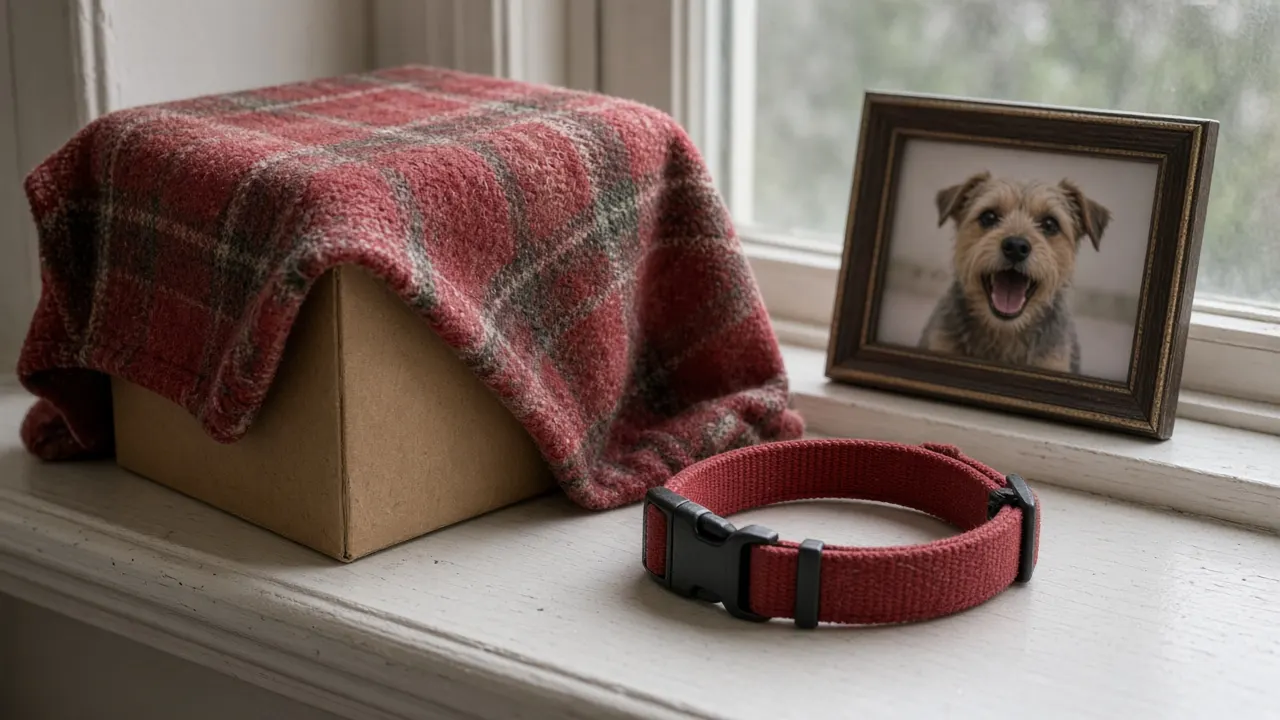
- Keep the collar, tag or a toy somewhere you can hold them.
- Note the words that come to you, nicknames, sayings, the way you said goodnight, for engraving later.
- Talk to people who understand, whether friends who've lost pets or a pet-loss support line.
What helped you most in the first weeks?
Tap an answer to vote and see how others answered. Anonymous.
Readiness
How will you know when you're ready to choose an urn?
There's no set timetable. Some people are ready within days because choosing something beautiful feels like a way to care for their pet. For others it takes months; a study of pet owners found nearly one in three grieved for at least six months[7]. Signs you might be ready include:
- You can look at urns online with curiosity rather than dread.
- You find yourself picturing where the urn would sit.
- You're able to talk about your pet and smile at a memory.
- Family members are asking about keepsakes and you'd like to include them.
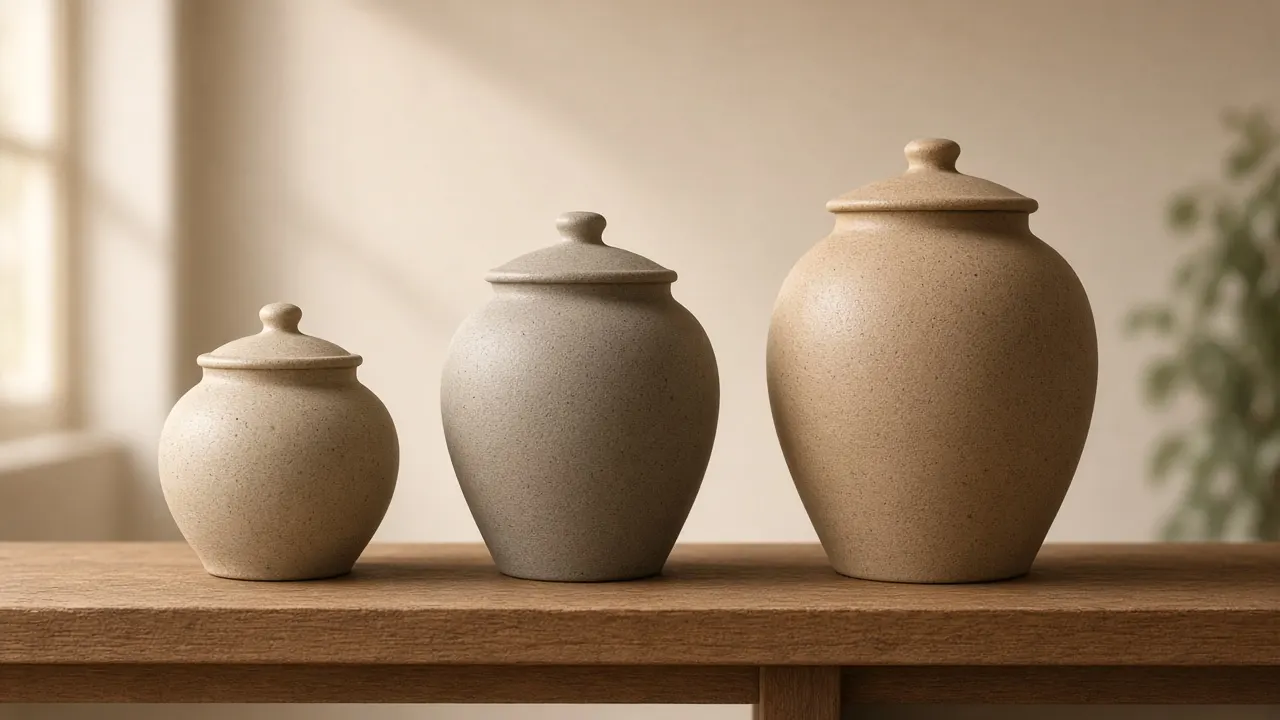
When that moment comes, start with size. The urn size calculator needs only your pet's weight, and wood, ceramic, metal and glass compared helps narrow the style without trawling hundreds of listings.
Free tool
Urn size calculator
Find the urn volume you need from your pet's weight, plus keepsake and sharing options.
Families
What if your family is ready at different times?
It happens often. One partner wants the urn chosen this week; the other can't face it. A child wants a keepsake now; a parent needs more time. A gentle compromise is to pick one small thing now, such as a keepsake for whoever needs it most, and leave the main urn for later.
The ashes sharing planner shows how little a keepsake uses, so taking a small share now doesn't affect the main urn later. For how families divide those roles, see primary urn or keepsake share.
Support
Where can you find support if the grief feels heavy?
Pet loss support lines exist because so many people struggle to find understanding elsewhere. In the US, Tufts University's Pet Loss Support Helpline is free and volunteer-staffed[8], and Cornell runs a free hotline and pet loss resources staffed by veterinary students trained by grief counselors[9]. In the UK, Blue Cross runs a free, confidential pet bereavement phone and email service that's open 365 days a year[10].
If your grief feels overwhelming for a long time, or you're finding it hard to function, talk to your doctor or a counselor. That isn't overreacting; it's looking after yourself.
The urn is a way to keep them close. There's no prize for choosing it quickly.
Whenever you're ready, you can browse every kind of pet urn, read about choosing an urn in advance if another pet is getting older, or simply send us a note. We'll reply by email, gently, with no deadline attached.

Reader polls
What would you choose?
Vote anonymously and see how other readers answered. The results are live counts from people who visit this site, so they show real opinions, not a scientific sample.
When did you (or would you) buy the urn?
Tap an answer to vote and see how others answered. Anonymous.
What helped you most in the first weeks?
Tap an answer to vote and see how others answered. Anonymous.
What was the hardest part of losing your pet?
Tap an answer to vote and see how others answered. Anonymous.

Questions people ask
How long can pet ashes stay in the temporary container?
Indefinitely. The ashes are sealed in a plastic bag inside the box or jar and won't deteriorate. Some families keep them in the original container for years, or permanently. Just keep the box somewhere dry, and tell others in the household where it is.
Is it disrespectful to leave my pet's ashes in the box they came in?
Not at all. What matters is how you feel about your pet, not the container. Many people wrap the box in a favorite blanket, place a photo beside it or tie the collar around it, which makes it a meaningful memorial while you decide on anything more permanent.
What if I bought an urn in a hurry and don't like it now?
You can change it. Transfer the ashes, still in their bag, to a new urn, and keep the first one for a keepsake share or give it away. If it was engraved, some people keep it as a secondary memorial. Choosing again isn't a failure; it's part of finding what feels right.
Should I wait until after the first anniversary to choose an urn?
Only if that feels right to you. Some people like to mark the anniversary by choosing or unveiling the urn, which gives the day a purpose. Others are ready long before. There's no rule; the ashes are safe either way.
How do I explain the ashes to my children while we wait?
Keep it simple and honest: this box holds what's left of our pet's body after cremation, and we'll choose a special home for it together. Letting children help pick the urn, or make a drawing to keep beside it, often helps them feel included.
Is it normal to feel guilty while choosing an urn?
Yes, very. Many people feel that shopping for an urn is too ordinary an activity for something so painful, or worry about spending too much or too little. Guilt is a common part of pet grief. Choosing slowly, and involving people who loved your pet, usually makes the decision feel more like an act of care.


Sources and our estimates
- [1] 66.9% of respondents were surprised by how intense their grief was after losing a pet. RSPCA — Pet Loss Survey Results, 2026.
- [2] After losing a pet, 72.6% lost their daily routine or sense of purpose, 69.8% had trouble concentrating and 65.9% had sleep problems. RSPCA — Pet Loss Survey Results, 2026.
- [3] 34.5% of bereaved pet owners were told 'it's just a pet'. RSPCA — Pet Loss Survey Results, 2026.
- [4] 56.7% of bereaved pet owners in the RSPCA survey could not find the support they needed. RSPCA — Pet Loss Survey Results, 2026.
- [5] Each year about 110,000 U.S. pet owners may go on to meet prolonged grief disorder criteria after a pet dies. Our estimate: 1.5M pet cremations (proxy for pet deaths with an engaged owner) x 7.5% PGD rate. How we calculate.
- [6] Roughly 850,000 bereaved U.S. pet households a year may not find the grief support they need. Our estimate: 1.5M pet cremations x 56.7% couldn't find support. How we calculate.
- [7] A 2009 Bulletin of the Menninger Clinic study of 106 pet owners found nearly 1 in 3 grieved for at least six months. SHRM — Grieving a Pet's Death: Should Workers Get Time Off? (2016), 2009.
- [8] Tufts University's Pet Loss Support Helpline (508-839-7966) is free and volunteer-staffed, 6–9 pm ET Monday to Thursday, with 24-hour voicemail. Tufts Cummings School of Veterinary Medicine, 2026.
- [9] Cornell's free Pet Loss Support Hotline (607-218-7457) is staffed by veterinary students trained by professional grief counselors. Cornell University College of Veterinary Medicine, 2026.
- [10] Blue Cross's Pet Bereavement Support Service in the UK is a free, confidential phone and email helpline open 365 days a year. Wikipedia – Blue Cross (animal charity), 2026.
Ask for urn ideas, with no rush at all
Tell us what you need and where you are. We'll reply by email with clear options and prices so you can decide in your own time.