Pet urns and keepsakes in Reading
Around 2,950 dogs and cats are lost in Reading each year, by our estimate. If yours is one of them, this page explains urn sizes, prices and engraving, with no rush to decide.
- Sized from your pet's weight
- Local crematory urns vs online makers
- No obligation, we reply by email
Reading, Pennsylvania
Pet urns in Reading: the local picture
Freeze-thaw cycles in Berks County crack soft stone and push garden markers out of level. Granite, bronze and dense glazed ceramic hold up much better outdoors. A living memorial is best planted in April or May, once the ground has thawed; a flowering dogwood, a lilac or a hardy rose all grow well in local soils and give a family something to watch return each spring.
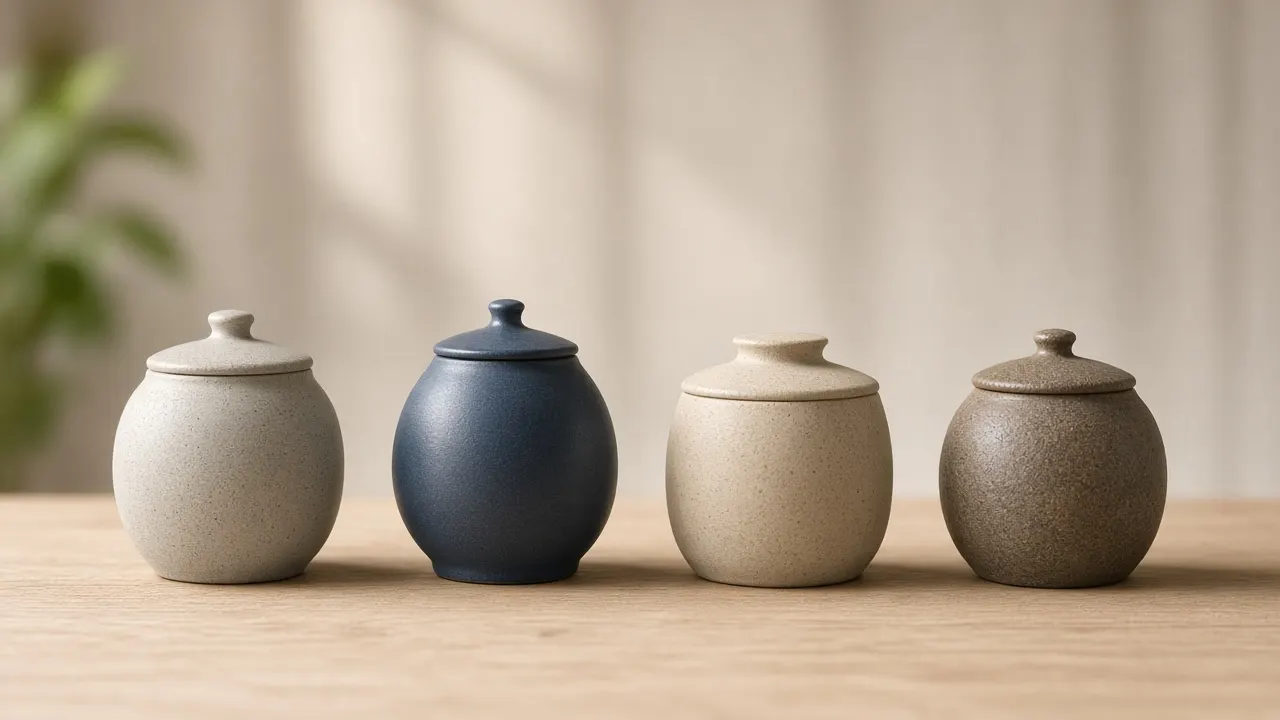
Reading's rowhouses leave little room for a garden, so most memorials here are kept inside: a small urn on the windowsill, a paw print framed near the front door, a pendant or bracelet with a trace of ashes. When grown children in other towns want a share, a set of miniature urns lets each of them hold a little. Check capacities first, since sizes vary a great deal between makers.
The monument company that makes headstones for the cemetery is an overlooked option in towns like Reading. Many will cut a small granite marker or engrave a stone urn for a pet, and they know which stone stands up to local weather. Ask for a quote on a simple flat marker if the ashes will be buried on your land; it can be ready within a few weeks.
Reading's population is around 95,832, the 4th-largest of the 36 Pennsylvania communities we cover. Philadelphia, roughly 48 miles off, is the closest larger centre, and a share of the providers who cover Reading run from there.
Reading sits within easy reach of Pottstown (16 miles), Phoenixville (25 miles) and Lebanon (26 miles). A provider based in any of them will usually collect from Reading; ask what the mileage adds to the bill.
Our estimate
35,500
Estimated dog- or cat-owning households in Reading
How we calculated this
95,832 ÷ 2.5 = 38,333 households; × 53% (dog) + 39% (cat) = 35,500. Multi-pet homes count once.
Our estimate
2,950
Reading families who lose a dog or cat each year (estimate)
How we calculated this
35,500 dog/cat-owning homes ÷ average lifespan (dog: 12.69 yrs + cat: 11.18 yrs) ≈ 2,950 a year. The real figure is unlikely to be lower.
53%[1]
53% of US households own a dog, which is about 71 million households.
12.69 years[2]
US dogs have an average life expectancy at birth of 12.69 years.
39%[3]
39% of US households own a cat, which is about 53 million households.
11.18 years[4]
US cats seen at Banfield hospitals have an average life expectancy at birth of 11.18 years.
The numbers above come from Montoya et al. 2023, Frontiers in Veterinary Science and American Pet Products Association (APPA) 2025 State of the Industry, if you'd like to read the original sources.

How Pennsylvania thinks about cremation and urns
Cremation is common but not universal in Pennsylvania, where about 61.3%[5] of people are cremated. Pet crematories here usually sell a solid core range of urns rather than a huge catalog, so families who want something unusual, like a figurine or a marble urn, often buy online. The local range is still worth seeing first, since those urns are chosen to fit the ashes that crematory returns.
For the Pennsylvania figure we rely on NFDA 2024 Cremation & Burial Report state projections (via Occasional Sage) (2024). Read it as a picture of local custom around death and remembrance in Reading rather than as pet data.
Timing a burial or scattering in Reading
Winter storms slow deliveries, especially in the weeks around the holidays. If you're ordering an engraved urn in January, add a margin of a week or more to the seller's estimate. When a glass or glazed ceramic urn arrives after a cold journey, leave the box indoors for an hour or two before unpacking so the piece warms up gradually; sudden temperature changes can crack glass.
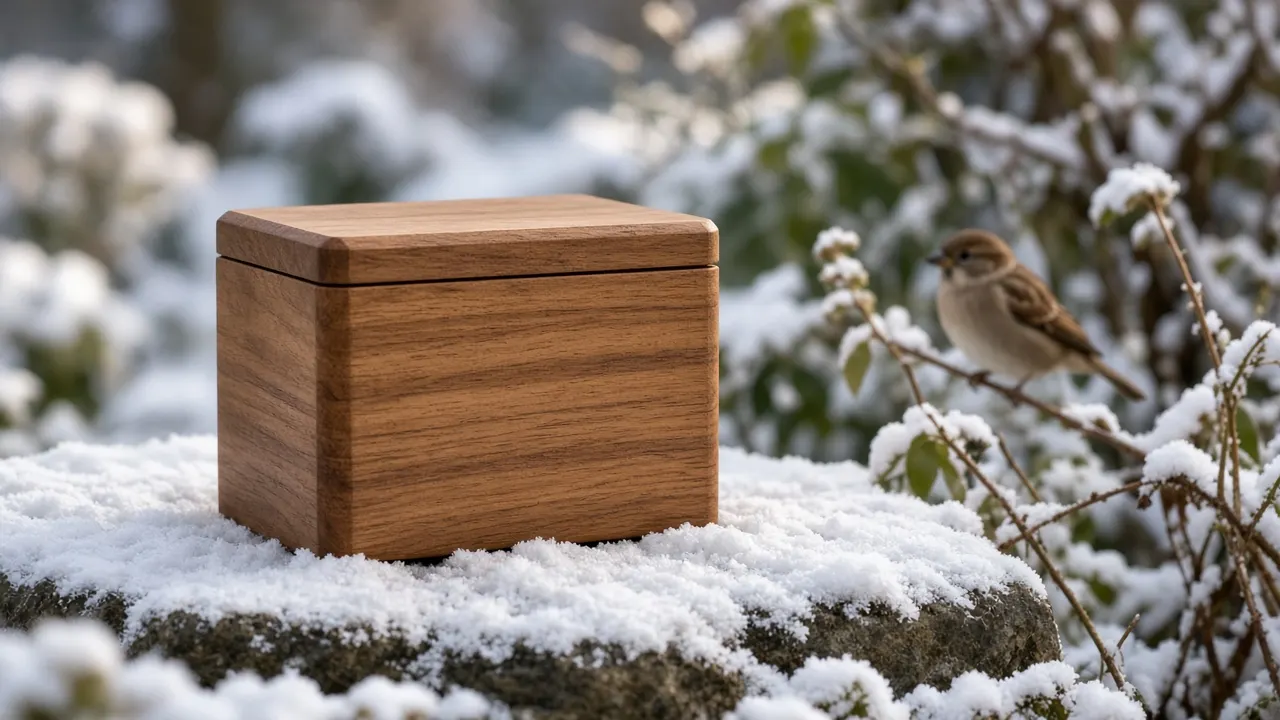
Indoor heating matters as much as the cold outside. Forced-air vents and radiators dry the air, and a wooden urn placed right next to one can shrink, crack or open at the joints. Keep wooden urns a few feet from heat sources and out of the path of hot air. Metal, stone and ceramic don't mind dry air, which is one reason they're popular in cold places.
Pet urn and engraving prices for Reading
One industry report says personalized pet urns range from about $50 to more than $1,000[6], and most of that spread comes from hand work: a sculpted figurine or a commissioned ceramic takes far longer than a laser-engraved box. Basic urns start at around $50[7]. For most Reading families, the sweet spot is a solid wooden or ceramic urn with name engraving, well under $200 all in.
For a line-by-line price table, see the Pennsylvania overview; for what's included in each option, see our services.

Free tool
Memorial budget planner
Add up cremation, urn, keepsakes and a farewell so the total holds no surprises.
Scattering and burial rules in Pennsylvania
Pet ashes are sterile, mineral remains, so the rules around them are lighter than for burying a body. Still, a few things are worth checking before you scatter or bury: who owns the land, whether a park or beach has its own policy and, if you'll bury an urn, whether it's biodegradable. Here's what applies in Pennsylvania.
Not sure which office covers Reading? The Pennsylvania local government directory is the official list.
We keep Pennsylvania's burial and scattering rules in one place: the Pennsylvania rules summary. Before a home burial in Reading, also ask the city whether local ordinances add anything.
Step by step in Reading
- Bring the ashes home as they are. That interim box is closed and secure; they can stay in it as long as you like.
- Weigh up how many people want a share. Before any order goes in, settle whether a spouse, a grown child living elsewhere or a grandparent would like a portion.
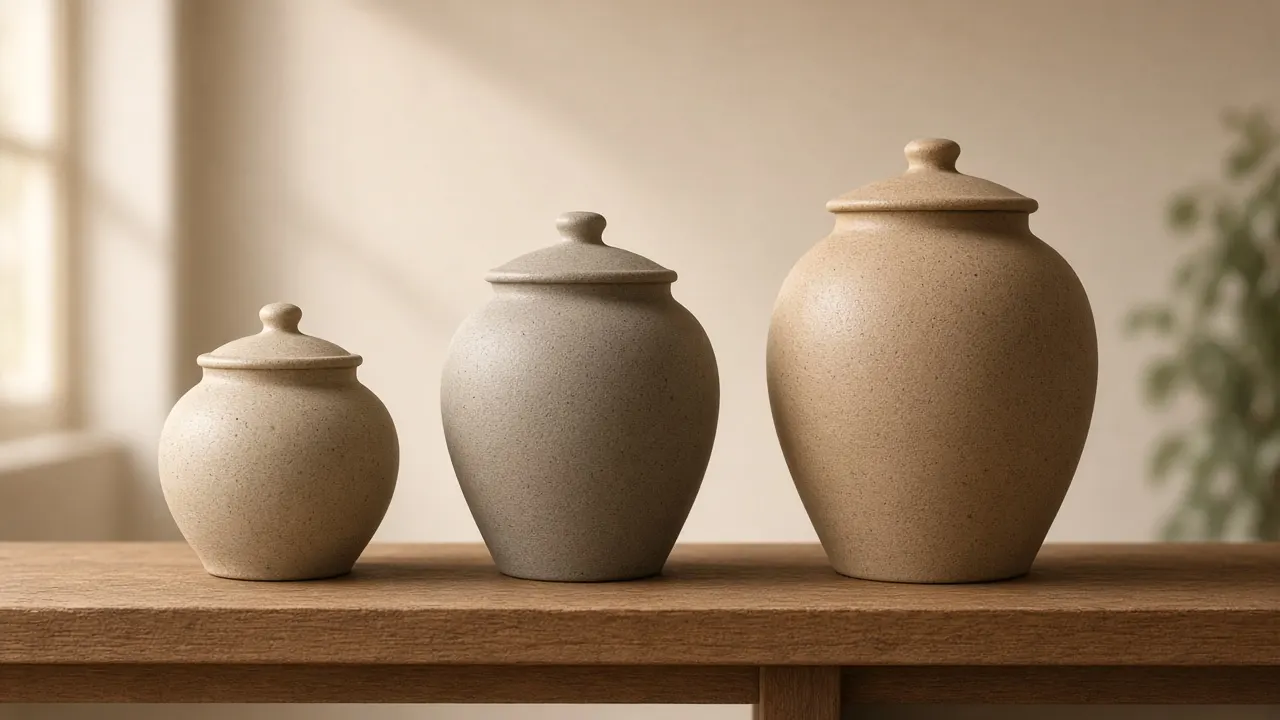
- Work out the capacity you need. Allow about one cubic inch per pound of your pet's healthy weight, or use the urn size calculator.
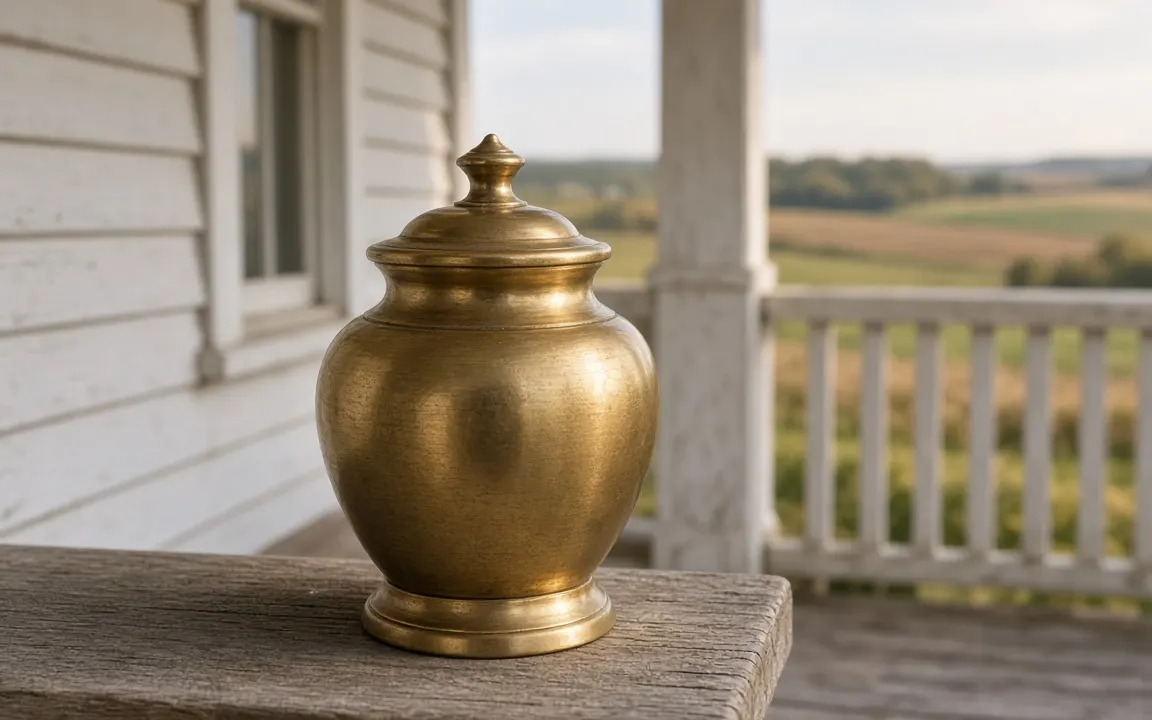
- Choose the material for the room it will live in. A warm room suits wood, a colorful one ceramic; brass fits a narrow shelf and stone lasts longest.
- Approve a written proof before anything is engraved, reading the name letter by letter a second time.
- Move the ashes in their sealed bag straight into the urn, or ask the crematory to do it for you.
Remembering your pet, in Reading and beyond
Many Reading families come from Puerto Rico, the Dominican Republic and elsewhere in Latin America, and home altars with candles, photos and flowers are part of how some households remember loved ones. A pet's urn or photo fits naturally there. If you'd like a paw impression or a clipping of fur to go with it, ask for it before cremation; the rest can be chosen at your own pace.
try the free planning tools, For a plain comparison of the choices, open services, or look at how readers voted in our polls, read our guides and latest articles. If you live between Reading and Erie, Bethlehem, Philadelphia and Scranton, either page applies. Every other community in Pennsylvania, and all of the United States, is listed too.

Reader polls
What would you choose?
Vote anonymously and see how other readers answered. The results are live counts from people who visit this site, so they show real opinions, not a scientific sample.
If you were choosing your pet's urn today, which material would you pick?
Tap an answer to vote and see how others answered. Anonymous.
Where does (or will) your pet's urn live?
Tap an answer to vote and see how others answered. Anonymous.
If you had to decide today, which aftercare would you choose for your pet?
Tap an answer to vote and see how others answered. Anonymous.

Free tools to help you plan
Memorial budget planner
Add up cremation, urn, keepsakes and a farewell so the total holds no surprises.
Urn size calculator
Find the urn volume you need from your pet's weight, plus keepsake and sharing options.
Ashes sharing planner
Split ashes fairly between family members, keepsake urns and jewelry.
Questions people ask
How does Reading's weather affect pet aftercare?
July is the hottest month in Reading, with average highs around 85°F, so prompt collection matters most then. Average lows drop below freezing in January, February, March and December, which can make digging a grave hard until spring.
Which nearby towns can I compare with Reading?
The closest communities we cover are Pottstown (about 16 miles), Phoenixville (about 25 miles) and Lebanon (about 26 miles). Providers based in those places often serve Reading too. Ask each one for a written total that includes collection, so the distance is priced in.
How many pet owners live in Reading?
By our estimate, about 35,500 households in Reading have at least one dog or cat, and around 2,950 are lost each year. We calculate this from the city's population of about 95,832, the average household size and national ownership and lifespan figures, so treat it as a floor rather than an exact count.
Where are the providers that serve Reading actually based?
Some are local, and some run from Philadelphia, about 48 miles away. That is normal for a town this size. What matters is the collection time they quote for Reading and whether the drive is priced into the total, so ask both up front.
Can two pets share one urn?
Yes. Companion urns are made to hold two sets of ashes, sometimes in separate compartments. Many families prefer matching single urns instead, because pets rarely die at the same time and a companion urn can sit half empty for years. If you do choose a shared urn, size it for both pets' combined weight.
How do I make sure the engraving is right?
Ask for a written or digital proof before anything is engraved, and check the spelling of your pet's name, the dates and any line breaks. Have someone else read it too. Engraving can't be undone. Our guide to engraving and photo urn lead times explains what to check at each step.


Sources and our estimates
- [1] 53% of US households own a dog, which is about 71 million households. American Pet Products Association (APPA) 2025 State of the Industry, 2025.
- [2] US dogs have an average life expectancy at birth of 12.69 years. Montoya et al. 2023, Frontiers in Veterinary Science - Banfield Pet Hospital life expectancy tables (13.3 million dogs, 2.4 million cats, 2013-2019), 2023.
- [3] 39% of US households own a cat, which is about 53 million households. American Pet Products Association (APPA) 2025 State of the Industry, 2025.
- [4] US cats seen at Banfield hospitals have an average life expectancy at birth of 11.18 years. Montoya et al. 2023, Frontiers in Veterinary Science - Banfield Pet Hospital life expectancy tables (13.3 million dogs, 2.4 million cats, 2013-2019), 2023.
- [5] The NFDA projected Pennsylvania's cremation rate at 61.3% for 2024. NFDA 2024 Cremation & Burial Report state projections (via Occasional Sage), 2024.
- [6] Personalized pet urns range from about USD 50 to more than USD 1,000. Astute Analytica via GlobeNewswire — Global Pet Preservation Services Market to Hit USD 112.7 Million by 2032 (Apr 2, 2024), 2024.
- [7] CareCredit says basic pet urns start at around $50, and private cremation ashes usually come back within a week or two. CareCredit – How Much Does Pet Cremation Cost?, 2023.
- [8] Name-and-dates engraving adds about 36% to the price of a mid-priced wooden pet urn. Our estimate: midpoint engraving $32.50 ($25–$40) / midpoint wood urn $90 ($30–$150). How we calculate.
Get help choosing your pet's urn
Tell us what you need and where you are. We'll reply by email with clear options and prices so you can decide in your own time.