An urn for your pet, in Houston
By our count, roughly 73,500 Houston families say goodbye to a dog or cat each year. This is a plain guide to the urn that comes next: size, material, cost and delivery.
- Honest price ranges for Houston
- Indoor and outdoor options for your climate
- Scattering basics for Texas
Houston, Texas
What choosing an urn is like in Houston
Houston is one of the most diverse cities in the country, and memorial traditions reflect that. Some families add a pet to a Día de los Muertos ofrenda with marigolds and treats, others keep a photo and incense on a home altar in the Vietnamese or Chinese tradition, and many simply keep an urn and collar on a shelf or wear a pendant holding a little of the ashes. Any of these works. Keep a small portion of ashes aside if relatives want to share.
Hurricane season is a practical consideration for Houston memorials. If you keep ashes at home, a sealed urn or a secondary waterproof container is sensible, and a small keepsake urn or pendant is easy to take with you in an evacuation. Paw prints, fur clippings and photos can be scanned or copied and stored somewhere safe. Ask for paw prints before cremation, since they can't be made afterward.
In a busy city, a lot of families pick up their pet's ashes on the way home from work, which means the first real look at the temporary container happens at a kitchen table. It's worth knowing what to expect: usually a sealed bag inside a box or tin, labeled with your pet's name. Nothing about it is urgent. Put it somewhere safe and quiet, and come back to the urn decision when you feel able.
Houston's population is around 2,397,315, the largest of the 325 Texas communities we cover.
If you want to compare providers, look at Jacinto City (8 miles), Galena Park (9 miles) and South Houston (10 miles). Distance matters because pickup fees and the time until the ashes come back both grow with the drive.
Our estimate
880,000
Estimated dog- or cat-owning households in Houston
How we calculated this
2,397,315 ÷ 2.5 = 958,926 households; × 53% (dog) + 39% (cat) = 880,000. A household with several pets counts once.
Our estimate
73,500
Houston families who lose a dog or cat each year (estimate)
How we calculated this
880,000 dog/cat-owning homes ÷ average lifespan (dog: 12.69 yrs + cat: 11.18 yrs) ≈ 73,500 a year. The real figure is unlikely to be lower.
53%[1]
53% of US households own a dog, which is about 71 million households.
12.69 years[2]
US dogs have an average life expectancy at birth of 12.69 years.
39%[3]
39% of US households own a cat, which is about 53 million households.
11.18 years[4]
US cats seen at Banfield hospitals have an average life expectancy at birth of 11.18 years.
To check the figures yourself, see Montoya et al. 2023, Frontiers in Veterinary Science and American Pet Products Association (APPA) 2025 State of the Industry.
How Texas thinks about cremation and urns
About 55.7%[5] of people in Texas are cremated, so cremation and burial both have a place here. For pets, cremation is by far the more practical choice, and many families in Houston end up with an urn even if their own family tradition leans towards burial. Some bridge the two by burying the urn itself, in a garden or a pet cemetery, which gives a graveside feeling without a full burial.
NFDA 2024 Cremation & Burial Report state projections (via Occasional Sage) (2024) is where the Texas figure comes from. It counts people; we use it because attitudes to cremating a pet in Houston tend to follow attitudes to cremation generally.
Seasons, scattering and delivery in Houston
For an outdoor memorial in Houston's heat, choose stone, granite or a metal rated for outdoor use and place it in partial shade. Dark granite gets hot to the touch in August but won't be damaged. If you're planting a tree with a biodegradable urn, avoid planting at the height of summer: young trees struggle in May, June, July, August and September, and a cooler season gives the roots time to settle.
Houston summers are hot, with August highs averaging about 94°F. Heat doesn't harm ashes, but it does age urns. A wooden urn on a sunny windowsill will fade within a season or two, printed photo panels bleach and some resin figurines can soften in a very hot room or car. Choose a spot on an inside wall, away from west-facing windows, and draw the blinds on the hottest afternoons.
Urn prices by material, and what adds to them
Keepsakes are cheaper than you might think, and the sets are cheaper still. Keepsake or mini pet urns typically cost $15–$60[6] (per one large retailer); one widely cited figure puts a single keepsake at about $28 and a set of six at about $115[7]. Watch out for tiny premium pieces, though: at one crematory, a 1 oz heart keepsake cost about a third more than its full-size wooden urn[8].
The full price table by product is on our Texas page, and the services page explains what each option includes.

Free tool
Memorial budget planner
Add up cremation, urn, keepsakes and a farewell so the total holds no surprises.
Scattering and burial rules in Texas
Keeping a small share of the ashes in jewelry or a keepsake raises no legal questions at all. Rules matter only if you plan to post ashes, carry them abroad or leave them somewhere other people also use. For any travel, keep the crematory's certificate with the ashes. Here's what applies in Texas.
City of Houston Solid Waste Management publishes Houston's official guidance. Note that it deals with public collection, not with booking a private cremation. To find your county or city office in Texas, start with the official Texas local government directory.
Start with the Texas rules, which cover burial, scattering and oversight for the whole state, and treat Houston's local ordinances as a possible extra layer.
Step by step in Houston
- Leave the temporary container sealed right up until the new urn is in your hands and looked over.
- Read how the urn opens. Many wooden urns open from the base with small screws; many metal ones have a threaded lid.
- Lay out a towel or tray on a table, and have a spoon or funnel ready in case you need it.
- Place the sealed bag inside with its top folded down; cut it open only if it truly can't go in.
- Close and secure the urn; a small dab of adhesive on a threaded lid stops curious hands and paws.
- Recycle or keep the temporary box; plenty of people store it alongside the paperwork, since it's part of the story.
Keepsakes, displays and living memorials
Houston's big yards make garden memorials popular: an engraved stone under a live oak, a plaque in a flowerbed, or a tree planted over a biodegradable urn. Apartment and townhome residents often choose a compact urn, a photo urn or a piece of cremation jewelry instead. For outdoor memorials, pick materials that handle intense sun, humidity and heavy downpours, and site them above ground that floods.
the planning tools turn your pet's details into figures, or compare your instinct with the poll results, go deeper with the guides or catch up on recent articles, For a plain comparison of the choices, open services. If you live between Houston and Fort Worth, El Paso, Austin and Dallas, either page applies. Every other community in Texas, and all of the United States, is listed too.

Reader polls
What would you choose?
Vote anonymously and see how other readers answered. The results are live counts from people who visit this site, so they show real opinions, not a scientific sample.
Where does (or will) your pet's urn live?
Tap an answer to vote and see how others answered. Anonymous.
How would you move the ashes from the temporary container into the urn?
Tap an answer to vote and see how others answered. Anonymous.
If you had to decide today, which aftercare would you choose for your pet?
Tap an answer to vote and see how others answered. Anonymous.

Free tools to help you plan
Memorial budget planner
Add up cremation, urn, keepsakes and a farewell so the total holds no surprises.
Urn size calculator
Find the urn volume you need from your pet's weight, plus keepsake and sharing options.
Ashes sharing planner
Split ashes fairly between family members, keepsake urns and jewelry.
Questions people ask
How many pet owners live in Houston?
By our estimate, about 880,000 households in Houston have at least one dog or cat, and around 73,500 are lost each year. We calculate this from the city's population of about 2,397,315, the average household size and national ownership and lifespan figures, so treat it as a floor rather than an exact count.
How does Houston's weather affect pet aftercare?
August is the hottest month in Houston, with average highs around 94°F, so prompt collection matters most then. Winters are mild, with average lows staying above freezing, so outdoor burial or scattering is usually possible year round.
How do Texas attitudes to cremation compare?
NFDA 2024 Cremation & Burial Report state projections (via Occasional Sage) (2024) puts the Texas human cremation rate at about 55.7%[5]. We show it on the Houston page because pet aftercare choices tend to track it: where cremation is normal for people, communal and private pet cremation are both easy to find.
Which nearby towns can I compare with Houston?
The closest communities we cover are Jacinto City (about 8 miles), Galena Park (about 9 miles) and South Houston (about 10 miles). Providers based in those places often serve Houston too. Ask each one for a written total that includes collection, so the distance is priced in.
Is it safe to open the bag of pet ashes?
Yes. Cremated remains are dry, sterile bone fragments with no smell, and handling them carries no health risk. They're coarser and heavier than most people expect, a little like pale sand. If you do open the bag, work indoors over a tray, away from open windows and fans, and keep pets out of the room. Wash your hands afterwards, as you would after gardening.
What size urn does my dog or cat need?
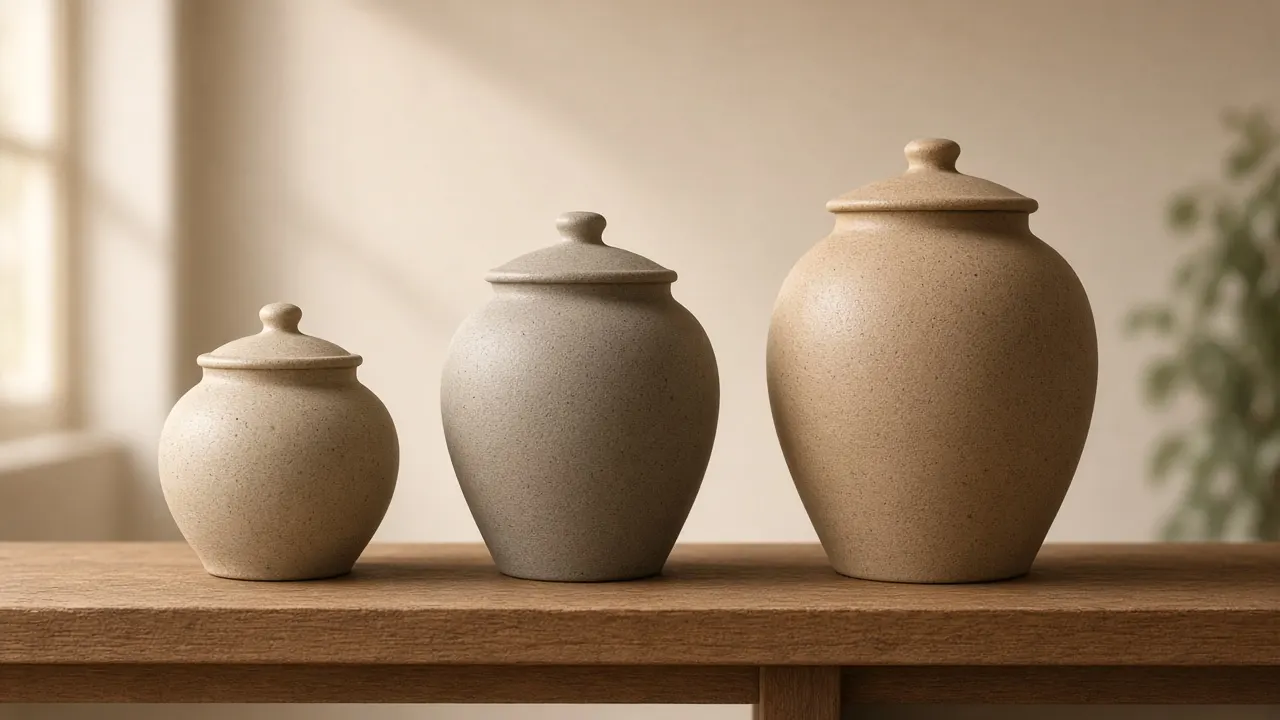
The usual rule is one cubic inch of urn space for every pound your pet weighed when healthy. By that rule, a 12 lb cat needs about 12 cubic inches and a 70 lb dog about 70[10]. Add about 10% for room to close the lid. The urn size calculator works it out for you.


Sources and our estimates
- [1] 53% of US households own a dog, which is about 71 million households. American Pet Products Association (APPA) 2025 State of the Industry, 2025.
- [2] US dogs have an average life expectancy at birth of 12.69 years. Montoya et al. 2023, Frontiers in Veterinary Science - Banfield Pet Hospital life expectancy tables (13.3 million dogs, 2.4 million cats, 2013-2019), 2023.
- [3] 39% of US households own a cat, which is about 53 million households. American Pet Products Association (APPA) 2025 State of the Industry, 2025.
- [4] US cats seen at Banfield hospitals have an average life expectancy at birth of 11.18 years. Montoya et al. 2023, Frontiers in Veterinary Science - Banfield Pet Hospital life expectancy tables (13.3 million dogs, 2.4 million cats, 2013-2019), 2023.
- [5] The NFDA projected Texas's cremation rate at 55.7% for 2024. NFDA 2024 Cremation & Burial Report state projections (via Occasional Sage), 2024.
- [6] Keepsake or mini pet urns cost about $15–$60, versus $25–$100 for small and $40–$200 for medium urns (Memorials.com). Memorials.com – Pet Urn Cost Guide, 2025.
- [7] A single keepsake urn costs around $28 and a set of six around $115, per U.S. Funerals Online figures cited by Funeral.com. Funeral.com – How Much Do Cremation Urns Cost in 2025, 2025.
- [8] A 1 oz keepsake urn can cost about a third more than a full-size wooden urn at the same crematory. Our estimate: CA$106 heart keepsake / CA$79 solid wood urn. How we calculate.
- [9] At a $50 average, engraving is about half the price of a typical $98 wooden pet urn from a crematory catalog. Our estimate: $50 (average engraving) / $98 (Final Gift typical wood urn). How we calculate.
- [10] Using the industry rule of thumb of 1 cubic inch of urn space per pound of body weight, a 12 lb cat needs an urn of about 12 cubic inches; a 70 lb dog needs about 70 cubic inches. Our estimate: urn cu in = body weight lb x 1 (industry rule of thumb, not a measured value). How we calculate.
Tell us about your pet and your space
Tell us what you need and where you are. We'll reply by email with clear options and prices so you can decide in your own time.