An urn for your pet, in Seattle
By our estimate, about 290,000 households in Seattle share their home with a dog or cat, and roughly 24,000 of those pets die each year. Many of their ashes come home needing an urn. Here's how to choose one well.
- Wood, ceramic, marble and brass compared
- Tips for moving ashes safely
- Ideas for apartments and houses
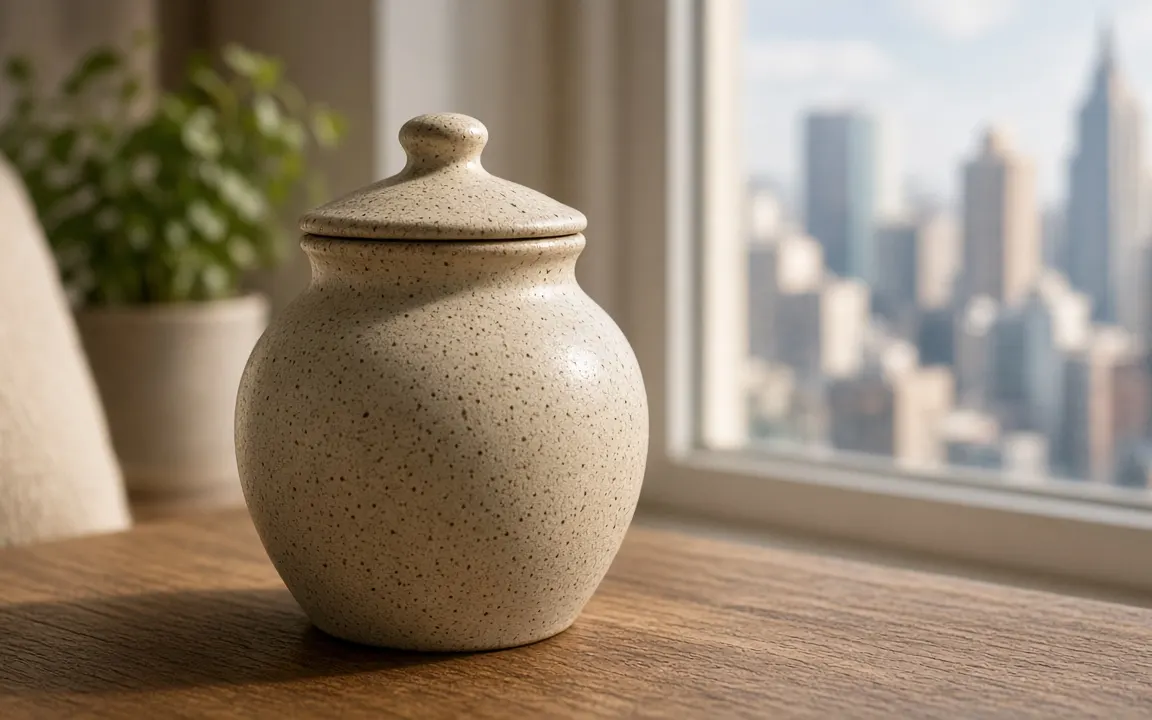
Seattle, Washington
How Seattle families shop for a pet urn
Many Seattle owners picture Puget Sound, the Cascades or the slopes below Mount Rainier when they imagine scattering ashes. Parks, beaches and national forest land each have their own rules, so look them up before you set out and choose a quiet moment away from swimmers and busy trailheads. A water-soluble urn lowered from a kayak or a shoreline you have permission to use is a common Northwest choice.
Seattle has a strong glass-art tradition, and ash-infused glass pieces, from small orbs to pendants, are a popular way to keep a pet close in a compact apartment. Wooden urns made from Northwest woods such as cedar or maple, engraved river stones and framed nose or paw prints are other local favorites. Whatever you choose, find out from your provider the likely amount of ash, since a large animal returns many times more than a small one.
In a busy city, a lot of families pick up their pet's ashes on the way home from work, which means the first real look at the temporary container happens at a kitchen table. It's worth knowing what to expect: usually a sealed bag inside a box or tin, labeled with your pet's name. Nothing about it is urgent. Put it somewhere safe and quiet, and come back to the urn decision when you feel able.
Seattle is home to about 784,777 people, the largest of the 67 Washington communities we cover.
If you want to compare providers, look at Mercer Island (6 miles), Bellevue (6 miles) and Kirkland (8 miles). Distance matters because pickup fees and the time until the ashes come back both grow with the drive.
Our estimate
290,000
Estimated dog- or cat-owning households in Seattle
How we calculated this
784,777 ÷ 2.5 = 313,911 households; × 53% (dog) + 39% (cat) = 290,000. A household with several pets counts once.
Our estimate
24,000
Seattle families who lose a dog or cat each year (estimate)
How we calculated this
290,000 dog/cat-owning homes ÷ average lifespan (dog: 12.69 yrs + cat: 11.18 yrs) ≈ 24,000 a year. Treat it as a minimum.
53%[1]
53% of US households own a dog, which is about 71 million households.
12.69 years[2]
US dogs have an average life expectancy at birth of 12.69 years.
39%[3]
39% of US households own a cat, which is about 53 million households.
11.18 years[4]
US cats seen at Banfield hospitals have an average life expectancy at birth of 11.18 years.
Sources for the statistics above: American Pet Products Association (APPA) 2025 State of the Industry and Montoya et al. 2023, Frontiers in Veterinary Science.
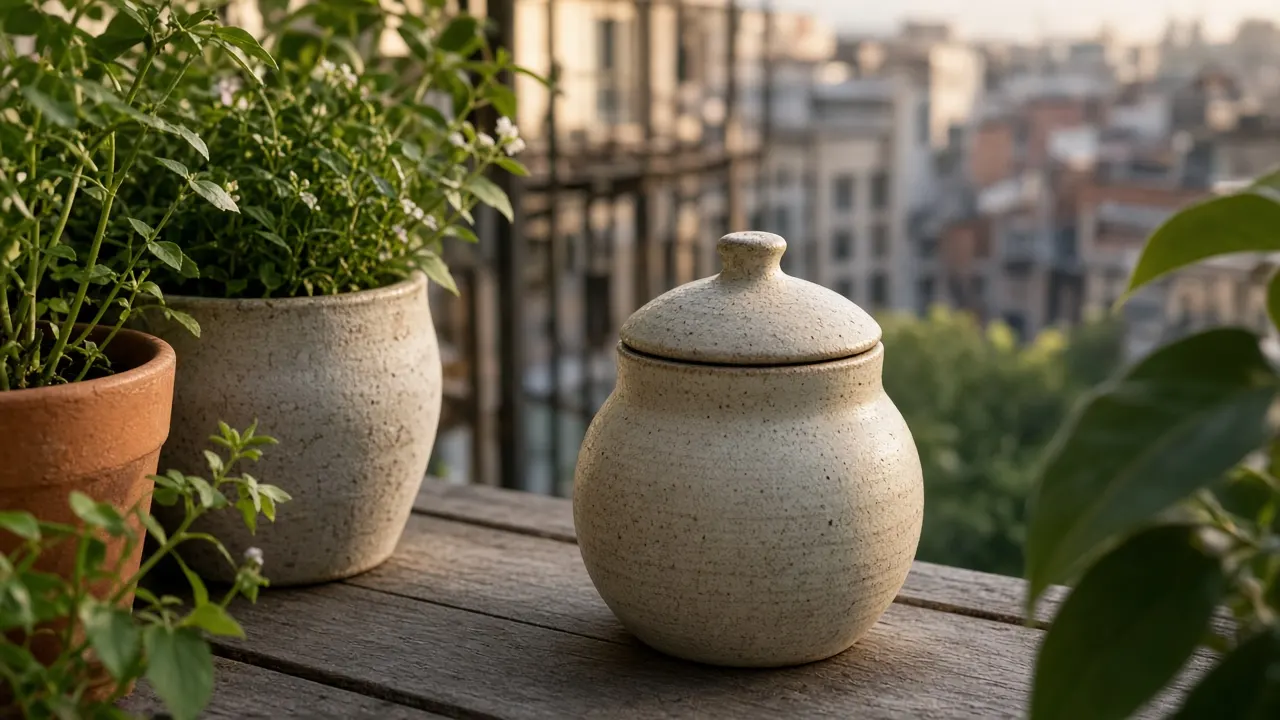
Local cremation habits and the urn question
With roughly 79.1%[5] of people in Washington cremated, the question locally isn't whether to keep ashes but how. That's where urn choice comes in. Many people here have inherited a relative's urn and have strong opinions about what they'd do differently: a smaller size, a lid that screws shut, a material that doesn't show dust. Those lessons apply just as well to a pet.
The Washington percentage above is from Direct Cremate (citing CANA) (2024) and refers to human funerals. Treat it as context for Seattle, not as a count of pets.
Keeping an urn safe through Seattle's seasons
In a mild climate, what most often catches people out is a damp spell around November. A cardboard temporary container stored in a garage or shed can soften, and paper-based biodegradable urns can start breaking down before they're ever used. Keep both inside the house, in a cupboard or on a shelf, until the day you need them.
Seattle's climate is fairly gentle, so the weather rarely rushes any urn decision. You can bury, plant or scatter almost any time of year. The one month to plan around is November, usually the wettest: soaked ground makes digging messy, and scattering in rain is harder than it sounds. A dry, still morning in almost any other month works well.
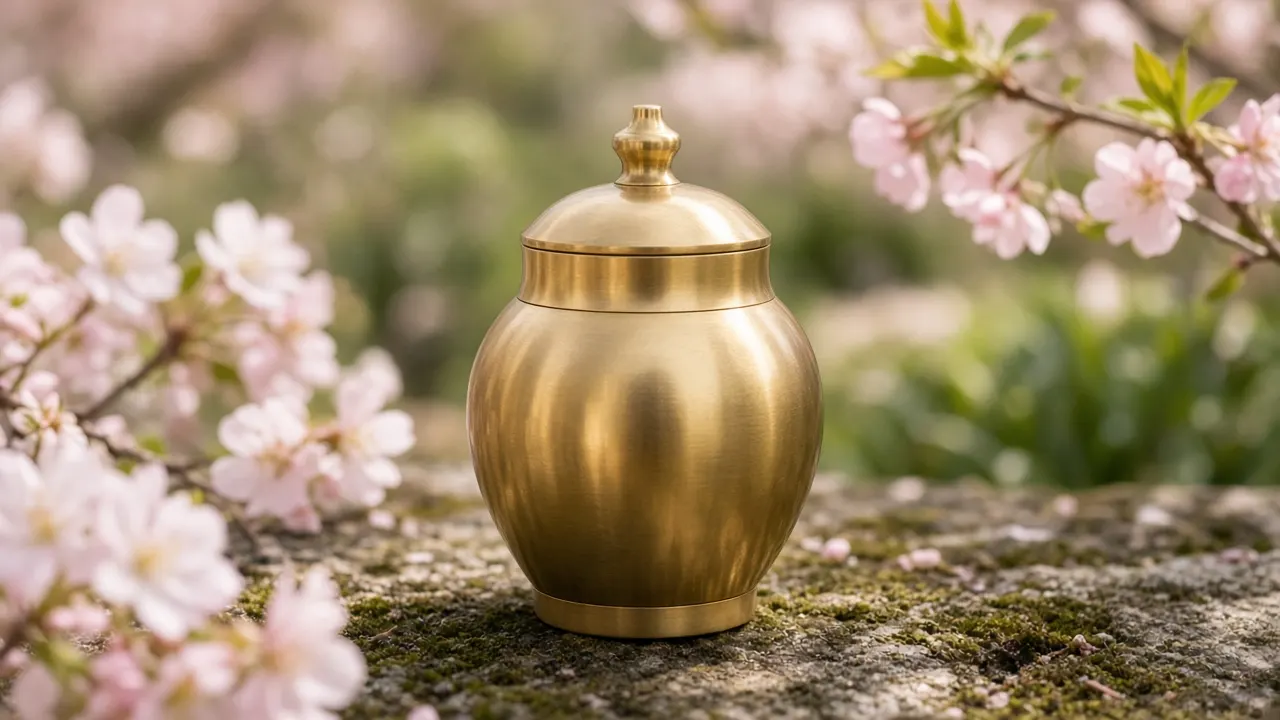
Pet urn and engraving prices for Seattle
Keepsakes are cheaper than you might think, and the sets are cheaper still. Keepsake or mini pet urns typically cost $15–$60[6] (per one large retailer); one widely cited figure puts a single keepsake at about $28 and a set of six at about $115[7]. Watch out for tiny premium pieces, though: at one crematory, a 1 oz heart keepsake cost about a third more than its full-size wooden urn[8].
The Washington price table breaks costs down by product; our services page explains what sits behind each line.
Free tool
Memorial budget planner
Add up cremation, urn, keepsakes and a farewell so the total holds no surprises.
Scattering and burial rules in Washington
Water is the place families ask about most. Scattering on a lake, a river or the sea feels natural to many people, but local authorities and park managers can have their own requirements, and some ask that only water-soluble urns are used. The general notes for Washington follow; whoever manages that stretch of water has the final say.
Seattle's own guidance is published by Seattle Animal Shelter; it covers public collection, which is separate from arranging a private cremation. To find your county or city office in Washington, start with the official Washington local government directory.
For Washington's rules on burying a pet at home or scattering ashes, see the Washington guide. Local rules in Seattle can be stricter than the state's, especially in homeowners' associations and rentals.
From temporary container to urn
- Leave the temporary container sealed until the urn has arrived and you've checked it.
- Read how the urn opens. A wooden urn often has a screwed panel underneath, while a metal one usually unscrews at the top.
- Lay out a towel or tray across a table, with a funnel or spoon within reach should the bag need decanting.
- Place the sealed bag inside with its top folded down; cut it open only if it truly can't go in.
- Close and secure the urn; on a threaded lid, a touch of glue keeps children and other pets from working it loose.
- Recycle or keep the temporary box; plenty of people store it alongside the paperwork, since it's part of the story.
Keeping your pet close in Seattle
Anything left outdoors in Seattle will be rained on for months, so garden memorials need to be made of stone, metal or glazed ceramic rather than painted wood. Moss will creep over a flat granite marker within a few seasons, which many people find beautiful rather than untidy. On a covered porch or balcony, a planter of ferns with a small engraved stake works well for renters.
browse in-depth guides or recent articles, See what each option includes on our services page, or look at how readers voted in our polls, try the free planning tools. You can also browse every city in the United States. Nearby, we also cover Vancouver, Tacoma, Spokane and Bellevue, and every city in Washington.

Reader polls
What would you choose?
Vote anonymously and see how other readers answered. The results are live counts from people who visit this site, so they show real opinions, not a scientific sample.
If you were choosing your pet's urn today, which material would you pick?
Tap an answer to vote and see how others answered. Anonymous.
Where does (or will) your pet's urn live?
Tap an answer to vote and see how others answered. Anonymous.
If you had to decide today, which aftercare would you choose for your pet?
Tap an answer to vote and see how others answered. Anonymous.

Free tools to help you plan
Memorial budget planner
Add up cremation, urn, keepsakes and a farewell so the total holds no surprises.
Urn size calculator
Find the urn volume you need from your pet's weight, plus keepsake and sharing options.
Ashes sharing planner
Split ashes fairly between family members, keepsake urns and jewelry.
Questions people ask
Can a provider from a neighbouring town collect from Seattle?
Usually yes. Mercer Island is about 6 miles away, Bellevue is about 6 miles away and Kirkland is about 8 miles away, all inside a normal collection radius. Get the mileage written into the quote so there is no surprise on the day.
Is Seattle big enough to have several pet aftercare providers?
Probably, on the numbers. By our estimate about 290,000 Seattle households keep a dog or cat and around 24,000 lose one each year, which is enough steady demand to support more than one provider. We derive that from population (about 784,777), household size and national ownership and lifespan figures.
Why does the Seattle page quote a human cremation rate?
Because it is the best local signal we have. Direct Cremate (citing CANA) (2024) reports about 79.1%[5] of Washington residents are cremated. There is no official pet equivalent, and inventing one would be worse than quoting a real, clearly labelled number.
How does Seattle's weather affect pet aftercare?
August is the hottest month in Seattle, with average highs around 77°F, so prompt collection matters most then. Winters are mild, with average lows staying above freezing, so outdoor burial or scattering is usually possible year round.
Do I have to buy an urn right away?
No. After a private cremation, the ashes come back in a sealed temporary container, usually a bag inside a box or tin, and they're safe in it indefinitely. Many families in Seattle wait a few weeks, or even months, before choosing an urn. Waiting often leads to a better choice, because the first days after a loss aren't the easiest time for design decisions.
How do I stop a delivered urn from going missing in my building?
Ask the seller to require a signature, have it sent to your workplace or choose a local pickup point. If your building has a package room, let the front desk know a fragile item is coming. Open the box the same day and report any damage straight away, since most sellers set a short window for claims.


Sources and our estimates
- [1] 53% of US households own a dog, which is about 71 million households. American Pet Products Association (APPA) 2025 State of the Industry, 2025.
- [2] US dogs have an average life expectancy at birth of 12.69 years. Montoya et al. 2023, Frontiers in Veterinary Science - Banfield Pet Hospital life expectancy tables (13.3 million dogs, 2.4 million cats, 2013-2019), 2023.
- [3] 39% of US households own a cat, which is about 53 million households. American Pet Products Association (APPA) 2025 State of the Industry, 2025.
- [4] US cats seen at Banfield hospitals have an average life expectancy at birth of 11.18 years. Montoya et al. 2023, Frontiers in Veterinary Science - Banfield Pet Hospital life expectancy tables (13.3 million dogs, 2.4 million cats, 2013-2019), 2023.
- [5] Washington had a 79.1% cremation rate in 2024, among the highest in the US. Direct Cremate (citing CANA), 2024.
- [6] Keepsake or mini pet urns cost about $15–$60, versus $25–$100 for small and $40–$200 for medium urns (Memorials.com). Memorials.com – Pet Urn Cost Guide, 2025.
- [7] A single keepsake urn costs around $28 and a set of six around $115, per U.S. Funerals Online figures cited by Funeral.com. Funeral.com – How Much Do Cremation Urns Cost in 2025, 2025.
- [8] A 1 oz keepsake urn can cost about a third more than a full-size wooden urn at the same crematory. Our estimate: CA$106 heart keepsake / CA$79 solid wood urn. How we calculate.
- [9] Marble pet urns cost about 3 times ceramic ones, consistently across a price guide and a crematory price list. Our estimate: Memorials.com midpoints marble $190 / ceramic $60 = 3.2×; Final Gift marble $260 / ceramic figurine $90 = 2.9×. How we calculate.
Ask for urn and keepsake ideas by email
Tell us what you need and where you are. We'll reply by email with clear options and prices so you can decide in your own time.