Choosing a pet urn in Cheyenne
By our estimate, about 24,500 households in Cheyenne share their home with a dog or cat, and roughly 2,050 of those pets die each year. Many of their ashes come home needing an urn. Here's how to choose one well.
- No rush: ashes are safe as they are
- Written proofs before engraving
- Help splitting ashes fairly
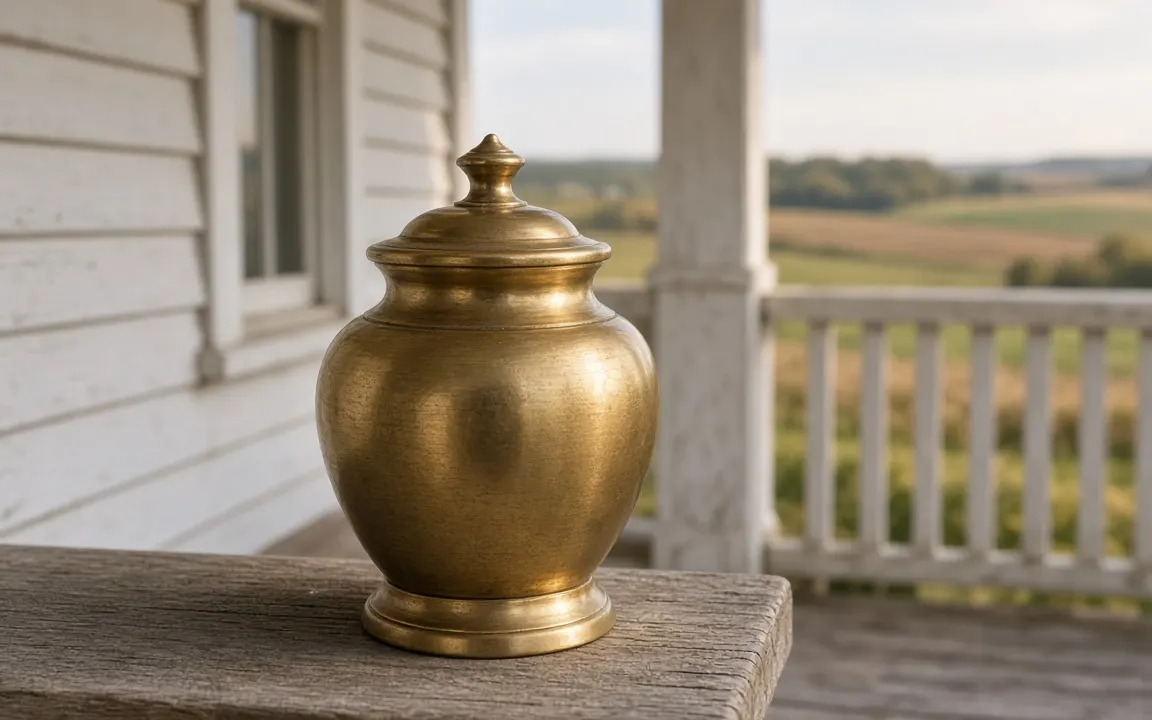
Cheyenne, Wyoming
What choosing an urn is like in Cheyenne
With a mix of state workers, ranch families and military households, memorial choices in Cheyenne vary as much as the people. Families who expect to relocate often favor portable keepsakes such as a compact urn, a clay pawprint tile, or a pendant, while those on acreage may prefer something placed outdoors. Think about where you'll be living in five years before choosing.
Wyoming's human cremation rate is close to 79%, among the higher rates in the country, and many people here think nothing of keeping ashes on a shelf or taking them somewhere meaningful. Some families split a pet's ashes so that one portion stays in Cheyenne and another goes with a child leaving for college or service. Tell the provider beforehand if you want several containers.
Farm families around Cheyenne sometimes need urns for animals most urn sellers don't think about: a working collie, a pair of barn cats, a much-loved goat. For larger animals, check capacity carefully, since extra-large urns are less common and cost more. For several small animals, a shelf of matching simple boxes, or a single garden memorial with the ashes buried beneath, can be easier than a separate urn for each.
With roughly 66,507 residents, Cheyenne is the largest of the 10 Wyoming communities we cover.
The closest communities we cover are Fort Collins (41 miles, a larger centre), Laramie (43 miles) and Windsor (46 miles). Providers serving those towns often travel to Cheyenne too, so it can be worth asking them for a quote.
Our estimate
24,500
Estimated dog- or cat-owning households in Cheyenne
How we calculated this
66,507 ÷ 2.5 = 26,603 households; × 53% (dog) + 39% (cat) = 24,500. Multi-pet homes count once.
Our estimate
2,050
Estimated dog and cat losses in Cheyenne each year
How we calculated this
24,500 dog/cat-owning homes ÷ average lifespan (dog: 12.69 yrs + cat: 11.18 yrs) ≈ 2,050 a year. A floor, not a ceiling.
53%[1]
53% of US households own a dog, which is about 71 million households.
12.69 years[2]
US dogs have an average life expectancy at birth of 12.69 years.
39%[3]
39% of US households own a cat, which is about 53 million households.
11.18 years[4]
US cats seen at Banfield hospitals have an average life expectancy at birth of 11.18 years.
If a number here surprises you, the primary material is Montoya et al. 2023, Frontiers in Veterinary Science and American Pet Products Association (APPA) 2025 State of the Industry; we only apply it to this.
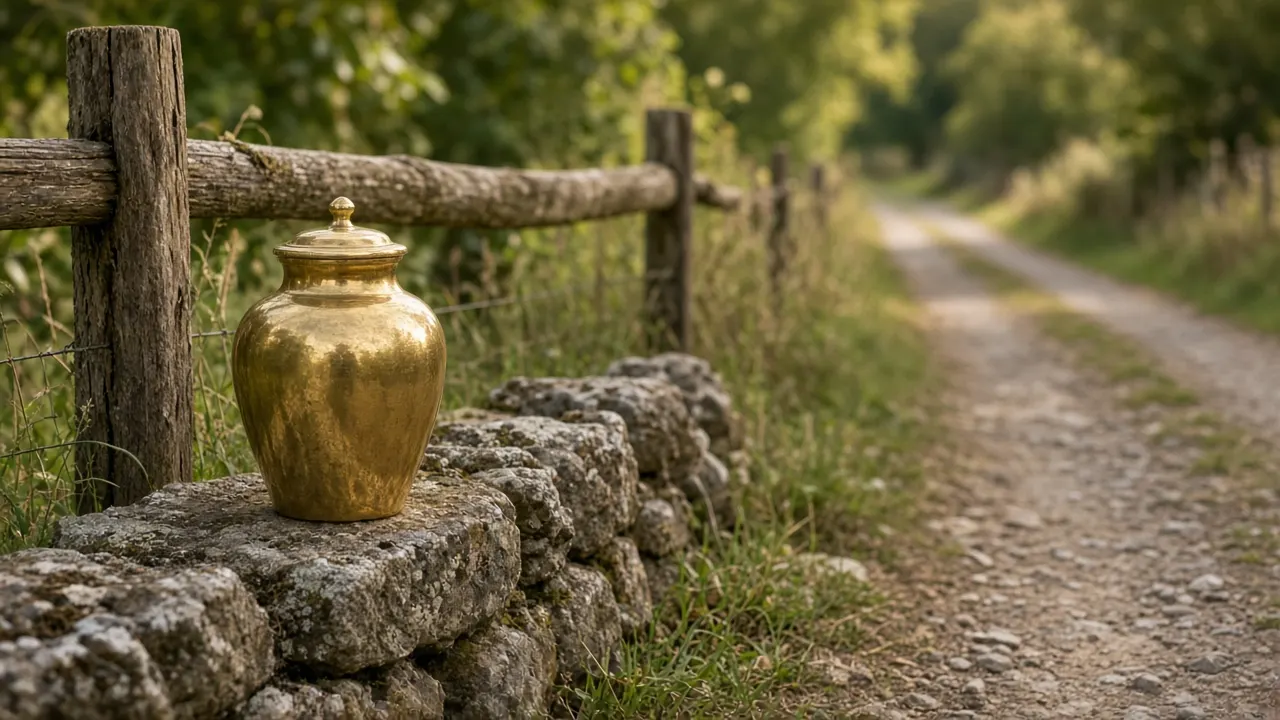
Keeping ashes at home: the local attitude
When cremation covers around 78.5%[5] of deaths, as it does in Wyoming, ashes stop being an awkward subject at the dinner table. That openness helps with a pet. Relatives are more likely to ask for a small share, and friends may already know a potter or an engraver. Tell people you're choosing an urn; the most useful leads often come from someone who did it recently.
We take the Wyoming rate from NFDA 2024 Cremation & Burial Report state projections (via Occasional Sage) (2024). It is a human statistic; there is no equivalent pet figure for Cheyenne, and we would rather show a real number than invent one.
Seasons, scattering and delivery in Cheyenne
Cold months are a good time for indoor decisions. The 6 months with freezing lows are when many Cheyenne families settle on the urn, order engraving and plan a spring planting or scattering. Doing the choosing indoors in winter means that when the ground thaws, everything is ready, and the day itself can be about your pet rather than errands.
Freeze and thaw are hard on some urn materials left outdoors. Water that seeps into unglazed ceramic, terracotta or porous stone expands when it freezes and can crack the piece over one winter. If the urn will live outside in Cheyenne, choose granite, sealed stone or metal rated for outdoor use, or bring it indoors for the 6 coldest months.
Urn prices by material, and what adds to them
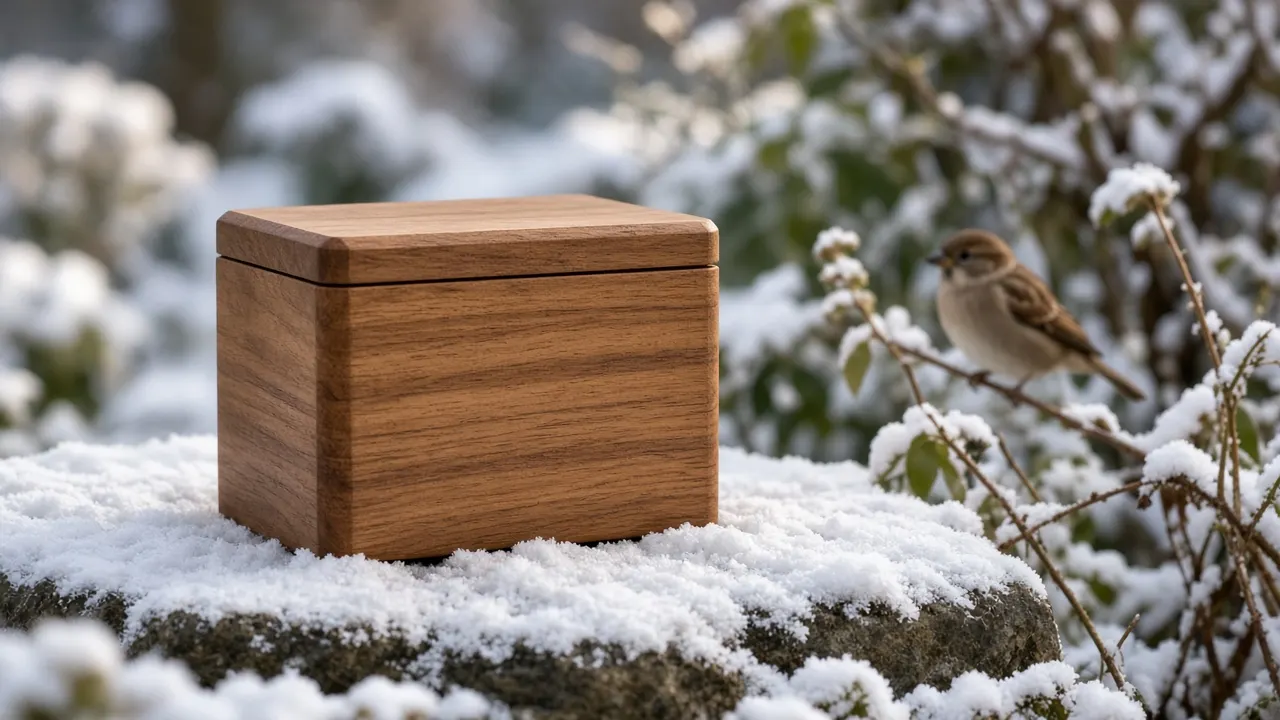
One industry report says personalized pet urns range from about $50 to more than $1,000[6], and most of that spread comes from hand work: a sculpted figurine or a commissioned ceramic takes far longer than a laser-engraved box. Basic urns start at around $50[7]. For most Cheyenne families, the sweet spot is a solid wooden or ceramic urn with name engraving, well under $200 all in.
The Wyoming price table breaks costs down by product; our services page explains what sits behind each line.
Free tool
Memorial budget planner
Add up cremation, urn, keepsakes and a farewell so the total holds no surprises.
Before you scatter or bury in Wyoming
Pet ashes are sterile, mineral remains, so the rules around them are lighter than for burying a body. Still, a few things are worth checking before you scatter or bury: who owns the land, whether a park or beach has its own policy and, if you'll bury an urn, whether it's biodegradable. Here's what applies in Wyoming.
To find your county or city office in Wyoming, start with the official Wyoming local government directory.
Start with the Wyoming rules, which cover burial, scattering and oversight for the whole state, and treat Cheyenne's local ordinances as a possible extra layer.
A simple plan for the urn decision
- Bring the ashes home as they are. That interim box is closed and secure; they can stay in it as long as you like.
- Weigh up how many people want a share. A partner, a child away at college, a parent in another state: decide before buying anything.
- Work out the capacity you need. The rule of thumb is one cubic inch for every pound your pet weighed when well; the urn size calculator does the sum for you.
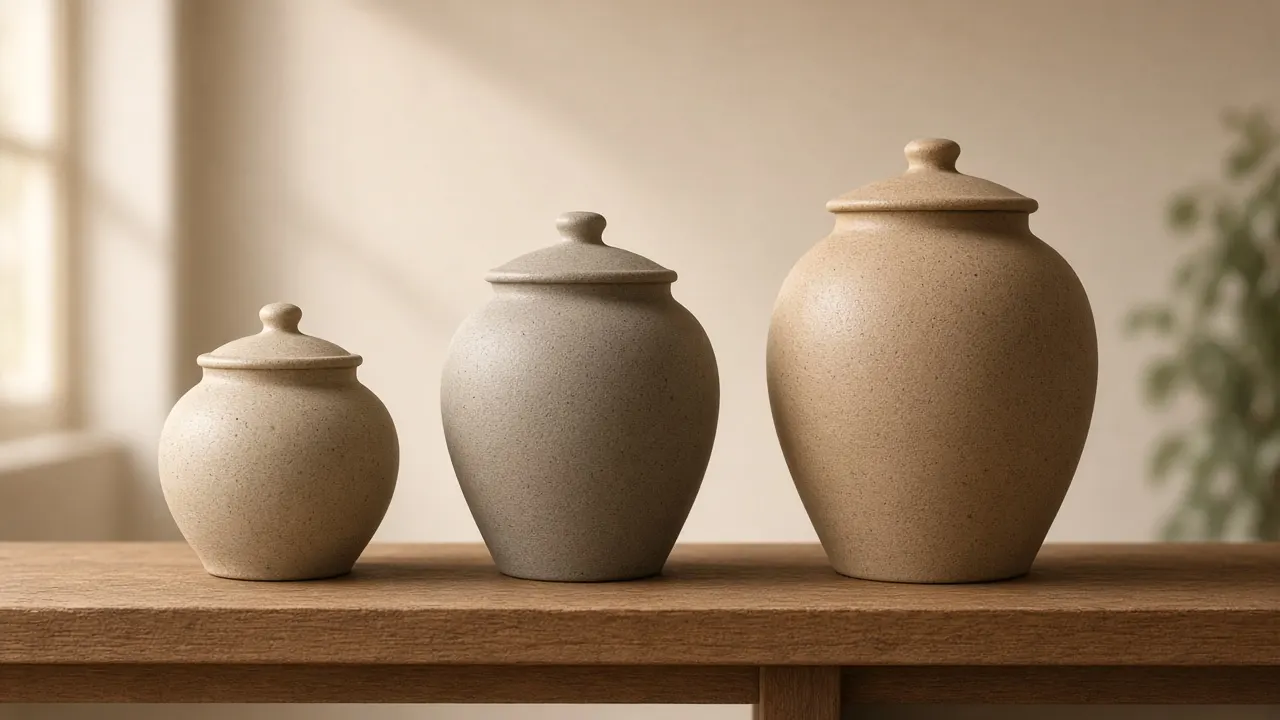
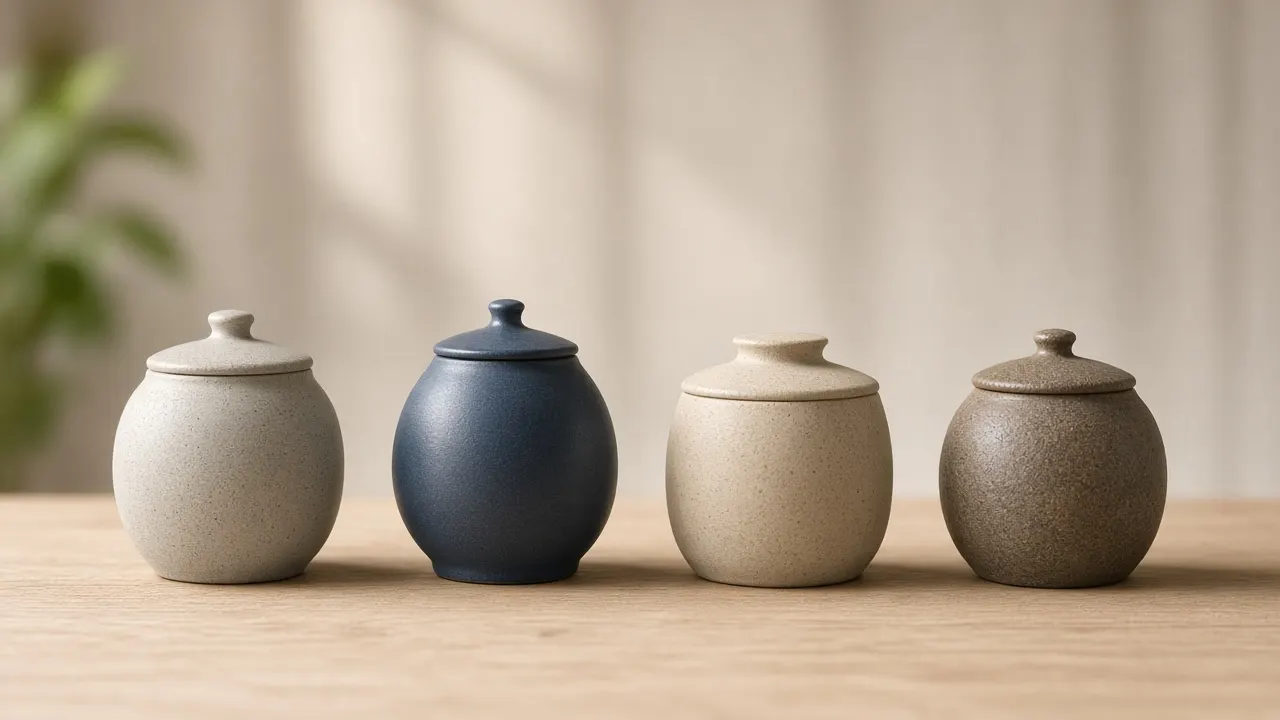
- Choose the material for the room it will live in. A warm room suits wood, a colorful one ceramic; brass fits a narrow shelf and stone lasts longest.
- Approve a written proof before anything is engraved, reading the name letter by letter a second time.
- Move the ashes in their sealed bag straight into the urn, or ask the crematory to do it for you.
Remembering your pet, in Cheyenne and beyond
Anything left outside in Cheyenne must stand up to relentless wind, hail, intense high-altitude sun and deep winter cold. Heavy granite, bronze and well-anchored stone weather those conditions; lightweight garden ornaments can blow over or fade within a season. Anyone hoping to plant a tree above a plant-based urn should hold off until the ground softens, which at this altitude is often not before May.
See what each option includes on our services page, or see what other families chose in the poll results, browse in-depth guides or recent articles, try the free planning tools. More local pages: Laramie, Evanston, Sheridan and Rock Springs, the Wyoming overview and every city in the United States.

Reader polls
What would you choose?
Vote anonymously and see how other readers answered. The results are live counts from people who visit this site, so they show real opinions, not a scientific sample.
If you were choosing your pet's urn today, which material would you pick?
Tap an answer to vote and see how others answered. Anonymous.
How would you move the ashes from the temporary container into the urn?
Tap an answer to vote and see how others answered. Anonymous.
If you had to decide today, which aftercare would you choose for your pet?
Tap an answer to vote and see how others answered. Anonymous.

Free tools to help you plan
Memorial budget planner
Add up cremation, urn, keepsakes and a farewell so the total holds no surprises.
Urn size calculator
Find the urn volume you need from your pet's weight, plus keepsake and sharing options.
Ashes sharing planner
Split ashes fairly between family members, keepsake urns and jewelry.
Questions people ask
Is Cheyenne big enough to have several pet aftercare providers?
Probably, on the numbers. By our estimate about 24,500 Cheyenne households keep a dog or cat and around 2,050 lose one each year, which is enough steady demand to support more than one provider. We derive that from population (about 66,507), household size and national ownership and lifespan figures.
How does Cheyenne's weather affect pet aftercare?
July is the hottest month in Cheyenne, with average highs around 84°F, so prompt collection matters most then. Average lows drop below freezing in January, February, March, April, November and December, which can make digging a grave hard until spring.
Which nearby towns can I compare with Cheyenne?
The closest communities we cover are Fort Collins (about 41 miles), Laramie (about 43 miles) and Windsor (about 46 miles). Providers based in those places often serve Cheyenne too. Ask each one for a written total that includes collection, so the distance is priced in.
Why does the Cheyenne page quote a human cremation rate?
Because it is the best local signal we have. NFDA 2024 Cremation & Burial Report state projections (via Occasional Sage) (2024) reports about 78.5%[5] of Wyoming residents are cremated. There is no official pet equivalent, and inventing one would be worse than quoting a real, clearly labelled number.
Is there free support if I'm struggling after my pet's death?
Yes. Several US veterinary schools run free pet loss helplines. Tufts University's helpline is free[9] and volunteer-staffed on weekday evenings, with voicemail at other times, and Cornell's hotline is staffed by veterinary students trained by grief counselors. Talking to someone can make practical choices, like the urn, feel less heavy.
Is it safe to open the bag of pet ashes?
Yes. Cremated remains are dry, sterile bone fragments with no smell, and handling them carries no health risk. They're coarser and heavier than most people expect, a little like pale sand. If you do open the bag, work indoors over a tray, away from open windows and fans, and keep pets out of the room. Wash your hands afterwards, as you would after gardening.


Sources and our estimates
- [1] 53% of US households own a dog, which is about 71 million households. American Pet Products Association (APPA) 2025 State of the Industry, 2025.
- [2] US dogs have an average life expectancy at birth of 12.69 years. Montoya et al. 2023, Frontiers in Veterinary Science - Banfield Pet Hospital life expectancy tables (13.3 million dogs, 2.4 million cats, 2013-2019), 2023.
- [3] 39% of US households own a cat, which is about 53 million households. American Pet Products Association (APPA) 2025 State of the Industry, 2025.
- [4] US cats seen at Banfield hospitals have an average life expectancy at birth of 11.18 years. Montoya et al. 2023, Frontiers in Veterinary Science - Banfield Pet Hospital life expectancy tables (13.3 million dogs, 2.4 million cats, 2013-2019), 2023.
- [5] The NFDA projected Wyoming's cremation rate at 78.5% for 2024. NFDA 2024 Cremation & Burial Report state projections (via Occasional Sage), 2024.
- [6] Personalized pet urns range from about USD 50 to more than USD 1,000. Astute Analytica via GlobeNewswire — Global Pet Preservation Services Market to Hit USD 112.7 Million by 2032 (Apr 2, 2024), 2024.
- [7] CareCredit says basic pet urns start at around $50, and private cremation ashes usually come back within a week or two. CareCredit – How Much Does Pet Cremation Cost?, 2023.
- [8] Marble pet urns cost about 3 times ceramic ones, consistently across a price guide and a crematory price list. Our estimate: Memorials.com midpoints marble $190 / ceramic $60 = 3.2×; Final Gift marble $260 / ceramic figurine $90 = 2.9×. How we calculate.
- [9] Tufts University's Pet Loss Support Helpline (508-839-7966) is free and volunteer-staffed, 6–9 pm ET Monday to Thursday, with 24-hour voicemail. Tufts Cummings School of Veterinary Medicine, 2026.
Tell us about your pet and your space
Tell us what you need and where you are. We'll reply by email with clear options and prices so you can decide in your own time.