Choosing a pet urn in Battle Ground
Battle Ground has an estimated 8,650 dog- or cat-owning households. When a pet's ashes come home, the urn is often the last thing chosen and the thing kept longest. Here's how to get it right.
- Honest price ranges for Battle Ground
- Indoor and outdoor options for your climate
- Scattering basics for Washington
Battle Ground, Washington
How Battle Ground families shop for a pet urn
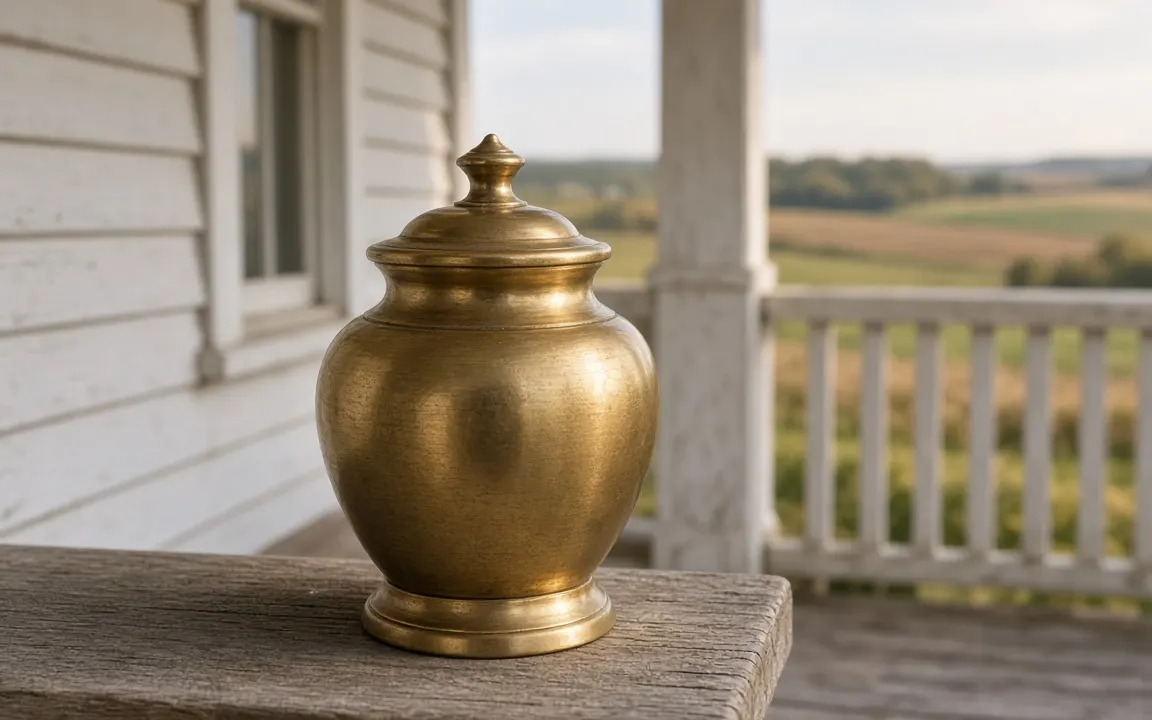
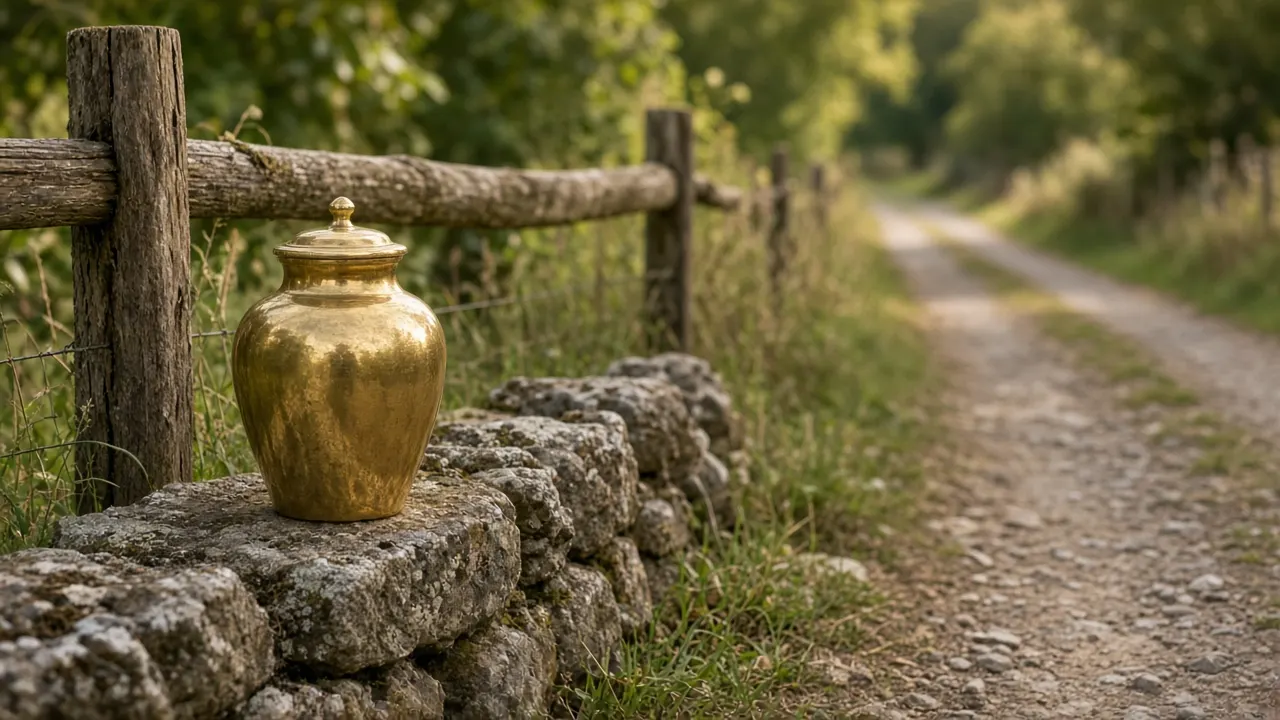
Many Battle Ground lots have room for something permanent outside: a flat granite stone set by the pasture fence, a young vine maple, or a clump of perennials in whatever patch of sun your companion always claimed. Other families would rather keep a tribute indoors, such as an urn set among framed family photos, or a pendant worn daily. Those paths aren't exclusive; a spoonful of ashes can be held back for jewelry before the rest goes into the ground.
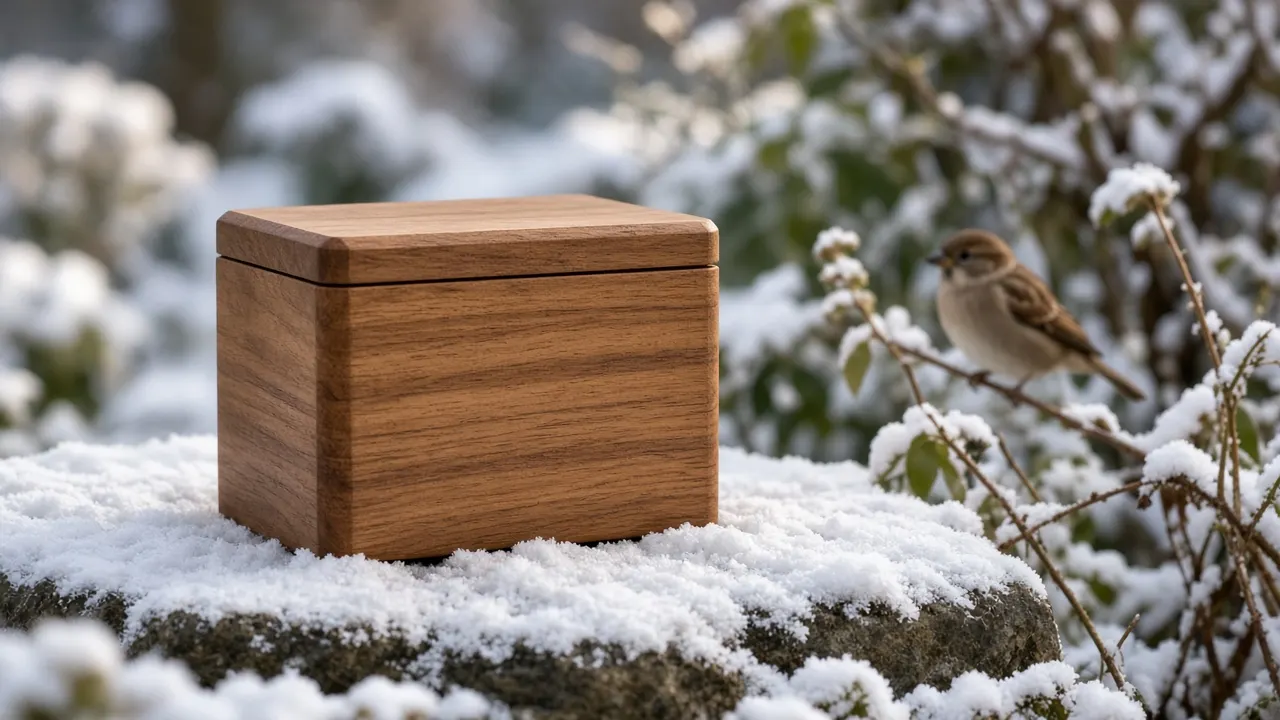
Roughly four in five Washington funerals for people now involve cremation, so the idea of keeping ashes nearby or returning them to a meaningful landscape is familiar to many Battle Ground families. For an animal, options are just as broad: a carved wooden chest, a plantable urn for a new tree, or small portions mailed to adult children scattered across other states. No decision has to be final the afternoon the box is handed back.
Living further from a crematory often means the ashes come back through your vet clinic in Battle Ground, sometimes a week or two after the cremation. That wait is a useful window. Use it to decide whether you want the standard container, one of the crematory's catalog urns or something of your own, and let the clinic know before the ashes are sent back.
Battle Ground is home to about 23,513 people, the 50th-largest of the 67 Washington communities we cover. Portland, roughly 19 miles off, is the closest larger centre, and a share of the providers who cover Battle Ground run from there.
Battle Ground sits within easy reach of Vancouver (10 miles, a larger centre), Camas (13 miles) and Washougal (16 miles). A provider based in any of them will usually collect from Battle Ground; ask what the mileage adds to the bill.
Our estimate
8,650
How many dog- or cat-owning households Battle Ground has (estimate)
How we calculated this
23,513 ÷ 2.5 = 9,405 households; × 53% (dog) + 39% (cat) = 8,650. Multi-pet homes count once.
Our estimate
720
Battle Ground families who lose a dog or cat each year (estimate)
How we calculated this
8,650 dog/cat-owning homes ÷ average lifespan (dog: 12.69 yrs + cat: 11.18 yrs) ≈ 720 a year. The real figure is unlikely to be lower.
53%[1]
53% of US households own a dog, which is about 71 million households.
12.69 years[2]
US dogs have an average life expectancy at birth of 12.69 years.
39%[3]
39% of US households own a cat, which is about 53 million households.
11.18 years[4]
US cats seen at Banfield hospitals have an average life expectancy at birth of 11.18 years.
If a number here surprises you, the primary material is American Pet Products Association (APPA) 2025 State of the Industry and Montoya et al. 2023, Frontiers in Veterinary Science; we only apply it to this.
How Washington thinks about cremation and urns
Cremation is the usual choice in Washington: about 79.1%[5] of people there are cremated. When cremation is this familiar, keeping ashes at home isn't unusual, and most people have seen an urn on a relative's shelf. That tends to carry over to pets. Families here rarely feel they need to explain why their dog's or cat's ashes live in the living room, and local crematories are used to selling urns alongside the cremation.
The Washington percentage above is from Direct Cremate (citing CANA) (2024) and refers to human funerals. Treat it as context for Battle Ground, not as a count of pets.
Seasons, scattering and delivery in Battle Ground
Cold months are a good time for indoor decisions. The 3 months with freezing lows are when many Battle Ground families settle on the urn, order engraving and plan a spring planting or scattering. Doing the choosing indoors in winter means that when the ground thaws, everything is ready, and the day itself can be about your pet rather than errands.
Freeze and thaw are hard on some urn materials left outdoors. Water that seeps into unglazed ceramic, terracotta or porous stone expands when it freezes and can crack the piece over one winter. If the urn will live outside in Battle Ground, choose granite, sealed stone or metal rated for outdoor use, or bring it indoors for the 3 coldest months.
Budgeting for an urn and keepsakes in Battle Ground
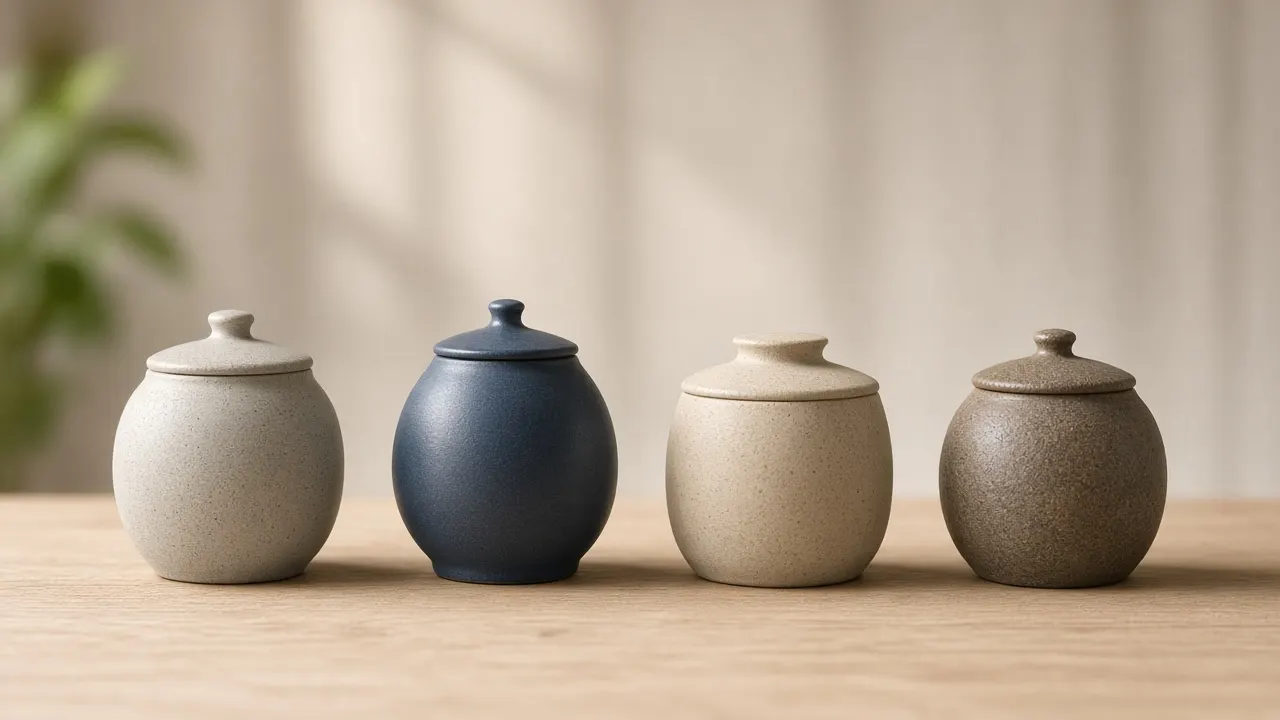
One industry report says personalized pet urns range from about $50 to more than $1,000[6], and most of that spread comes from hand work: a sculpted figurine or a commissioned ceramic takes far longer than a laser-engraved box. Basic urns start at around $50[7]. For most Battle Ground families, the sweet spot is a solid wooden or ceramic urn with name engraving, well under $200 all in.
For a line-by-line price table, see the Washington overview; for what's included in each option, see our services.

Free tool
Memorial budget planner
Add up cremation, urn, keepsakes and a farewell so the total holds no surprises.
Scattering and burial rules in Washington
If you'd like to bury the urn itself, the material matters for more than looks. A biodegradable urn breaks down within a few seasons, while metal, resin or sealed hardwood stays intact for years, which some cemeteries and landowners prefer and others don't accept. Check before you order. The notes below summarize Washington.
The official Washington local government directory lists every county and city office, which is the quickest way to find who to ask in Battle Ground.
The Washington page sets out who oversees pet cremation and what the state says about burial and scattering. Battle Ground's own bylaws can sit on top of that, so ask before you dig.
From temporary container to urn
- Talk to the family first. Find out who wants a small share, and whether some ashes are going into the ground or the wind.
- Set aside the shares before filling the main urn; the ashes sharing planner shows how much each person can have.
- Buy matching keepsakes for relatives in other cities, and hand them over in person where you can.
- If you must post ashes, read your carrier's rules before packing. USPS is the only US service that takes them, and only via Priority Mail Express.
- Choose the main urn last, after the shares are out, sized to what remains.
- Plan any scattering for a calm, dry day, and keep a little back in case someone wants to join later.
Keepsakes, displays and living memorials
Seven months of drizzle test any outdoor memorial in Clark County. Untreated cedar greys and softens within a few seasons, and thin sheet metal pits, whereas granite, glazed stoneware and cast bronze look much the same after a decade outside. Choose outdoor pieces with that weather in mind, and keep anything fragile, like a pressed-clay paw impression or a printed photograph, on a dry shelf in the house.
or see what other families chose in the poll results, Every option Battle Ground families choose between is on the services page, try the free planning tools, read our guides and latest articles. You can also browse every city in the United States. Nearby, we also cover Spokane, Seattle, Vancouver and Kent, and every city in Washington.

Reader polls
What would you choose?
Vote anonymously and see how other readers answered. The results are live counts from people who visit this site, so they show real opinions, not a scientific sample.
If you were choosing your pet's urn today, which material would you pick?
Tap an answer to vote and see how others answered. Anonymous.
How would you move the ashes from the temporary container into the urn?
Tap an answer to vote and see how others answered. Anonymous.
If you had to decide today, which aftercare would you choose for your pet?
Tap an answer to vote and see how others answered. Anonymous.

Free tools to help you plan
Memorial budget planner
Add up cremation, urn, keepsakes and a farewell so the total holds no surprises.
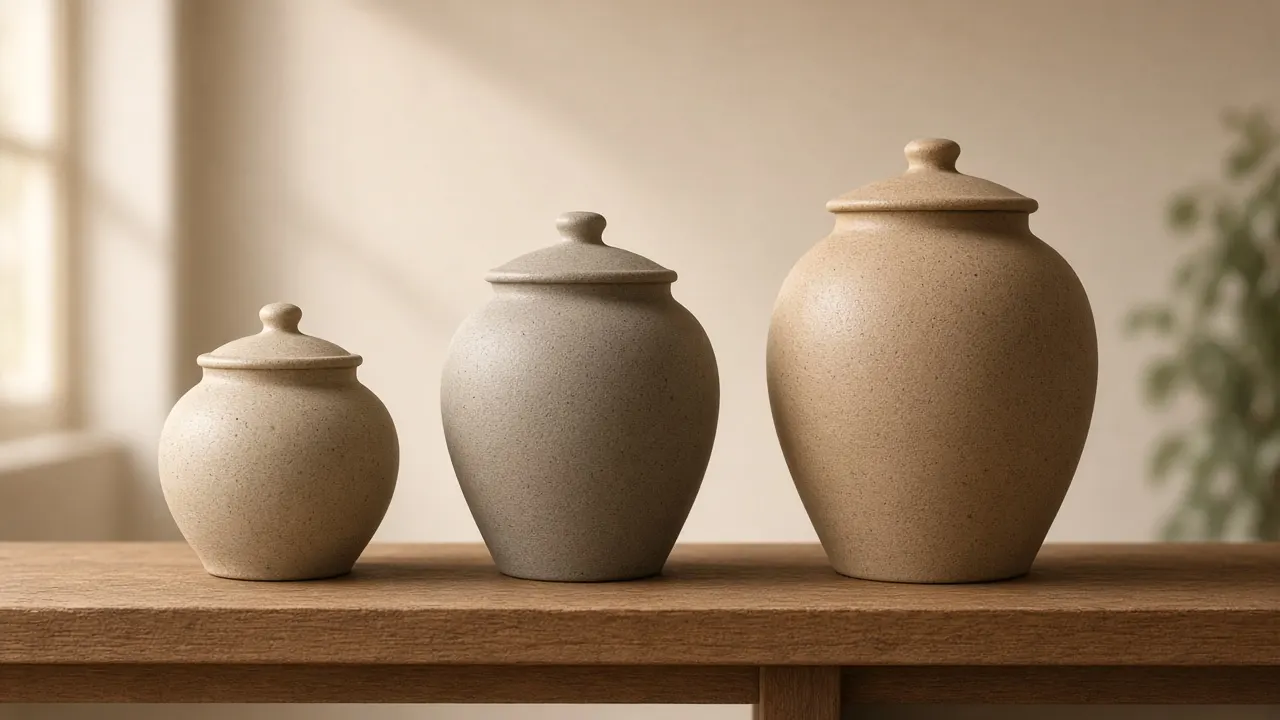
Urn size calculator
Find the urn volume you need from your pet's weight, plus keepsake and sharing options.
Ashes sharing planner
Split ashes fairly between family members, keepsake urns and jewelry.
Questions people ask
Why does the Battle Ground page quote a human cremation rate?
Because it is the best local signal we have. Direct Cremate (citing CANA) (2024) reports about 79.1%[5] of Washington residents are cremated. There is no official pet equivalent, and inventing one would be worse than quoting a real, clearly labelled number.
Which nearby towns can I compare with Battle Ground?
The closest communities we cover are Vancouver (about 10 miles), Camas (about 13 miles) and Washougal (about 16 miles). Providers based in those places often serve Battle Ground too. Ask each one for a written total that includes collection, so the distance is priced in.
Will I have to travel to Portland to arrange things?
Not usually. Providers based in Portland (roughly 19 miles from Battle Ground) collect from here as a matter of routine, and the paperwork is done by email or phone. If you want to be present for a witnessed cremation, that is when the drive matters.
Does the Battle Ground climate change what I should do first?
Only the timing. In August, with highs near 80°F, cool the body and book collection the same day. In January, February and December, when lows sit below freezing, a home burial may have to wait for a thaw, so cremation with ashes returned keeps your options open.
Can I move my pet's ashes into the urn myself?
Yes, and it's usually simpler than people fear. Most ashes come back in a sealed plastic bag, which you can lift out and place straight into the urn. If the bag won't fit through the opening, work over a tray indoors, away from drafts, and use a spoon or wide funnel. Some crematories will transfer the ashes for you if you drop the urn off.
My vet in Battle Ground uses a crematory near Portland. Can I still choose my own urn?
Yes. You can ask for the ashes to come back in the standard container and buy any urn you like, or ask the vet for the crematory's catalog and choose from that so the ashes return already in it. Either way, there's no extra charge for simply declining an urn upgrade.


Sources and our estimates
- [1] 53% of US households own a dog, which is about 71 million households. American Pet Products Association (APPA) 2025 State of the Industry, 2025.
- [2] US dogs have an average life expectancy at birth of 12.69 years. Montoya et al. 2023, Frontiers in Veterinary Science - Banfield Pet Hospital life expectancy tables (13.3 million dogs, 2.4 million cats, 2013-2019), 2023.
- [3] 39% of US households own a cat, which is about 53 million households. American Pet Products Association (APPA) 2025 State of the Industry, 2025.
- [4] US cats seen at Banfield hospitals have an average life expectancy at birth of 11.18 years. Montoya et al. 2023, Frontiers in Veterinary Science - Banfield Pet Hospital life expectancy tables (13.3 million dogs, 2.4 million cats, 2013-2019), 2023.
- [5] Washington had a 79.1% cremation rate in 2024, among the highest in the US. Direct Cremate (citing CANA), 2024.
- [6] Personalized pet urns range from about USD 50 to more than USD 1,000. Astute Analytica via GlobeNewswire — Global Pet Preservation Services Market to Hit USD 112.7 Million by 2032 (Apr 2, 2024), 2024.
- [7] CareCredit says basic pet urns start at around $50, and private cremation ashes usually come back within a week or two. CareCredit – How Much Does Pet Cremation Cost?, 2023.
- [8] Using the industry rule of thumb of 1 cubic inch of urn space per pound of body weight, a 12 lb cat needs an urn of about 12 cubic inches; a 70 lb dog needs about 70 cubic inches. Our estimate: urn cu in = body weight lb x 1 (industry rule of thumb, not a measured value). How we calculate.
Find an urn that fits, delivered to Battle Ground
Tell us what you need and where you are. We'll reply by email with clear options and prices so you can decide in your own time.